


تلاش
 Responding to Drug-Related Offending
Coordinated efforts between law enforcement, courts, treatment providers, and social services to reduce reoffending, promote recovery, and address the underlying causes of drug-related crime.



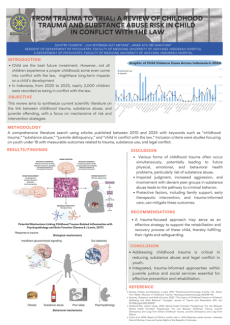
From Trauma to Trial: A Review of Childhood Trauma and Substance Abuse Risk in Child in Conflict with the Law
| Introduction. Child in conflict with the law often present with complex psychosocial backgrounds, prominently featuring histories of childhood trauma. Emerging evidence suggests a strong correlation between early traumatic... |
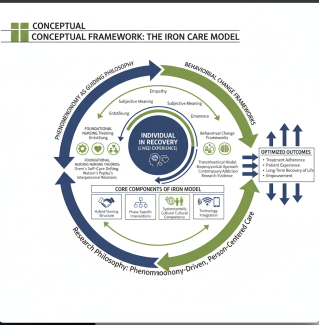
The Integrated Recovery-Oriented Nursing (IRON) Care Model: A Theoretical Framework for Optimizing Addiction Treatment Outcomes
Abstract
Title: The Integrated Recovery-Oriented Nursing (IRON) Care Model: A Theoretical Framework for Optimizing Addiction Treatment Outcomes
Authors: Ahmad Muneer, MSc, RN; Hessa Abdel Qader, MSc, RN
Affiliations: Maudsley Health, Al...
Drug Treatment Courts: An Evidence-Based Review with Recommendations for Improvement
This policy brief by the Canadian Centre on Substance Use and Addiction critically evaluates the role and effectiveness of Drug Treatment Courts (DTCs) in Canada. DTCs are intended to divert individuals with substance use disorders (SUDs)...
NIJ’s Courts Research: Examining Alternatives to Incarceration for Veterans and Other Policy Innovation
This article presents key studies from the National Institute of Justice’s (NIJ) Courts Research Portfolio that examine pretrial, prosecution, and sentencing policies promoting alternatives to incarceration, such as Veterans Treatment...
Annotated Bibliography
This document highlights resources to support your work in reducing drug related crime.
Exploring the Impact of Technical Violations on Probation Revocations in the Context of Drug Court
ABSTRACT
Prior research indicates a large number of drug court participants commit technical violations, subsequently increasing the likelihood of revocation. However, there is limited research investigating the potential heterogeneous...
Effects of medication-assisted treatment on mortality among opioids users: a systematic review and meta-analysis
ABSTRACT
Opioid use disorder (OUD) is associated with a high risk of premature death. Medication-assisted treatment (MAT) is the primary treatment for opioid dependence. We comprehensively assessed the effects of different MAT-related...
Probation clients’ barriers to access and use of opioid use disorder medications
ABSTRACT
Background
There is a gap between evidence-based treatment with medications for opioid use disorders (OUDs) and current practices of probation departments who supervise individuals with OUDs. Many probationers with OUDs cannot...
Substance use profile, treatment compliance, treatment outcomes and related factors in probation: a retrospective file review
Abstract
Objective
In this study, we aimed to investigate the sociodemographic characteristics of the individuals who mandated to the probation unit as the substances they use, their compliance with the programs, treatment outcomes and...
Substance use treatment services utilization and outcomes among probationers in drug courts compared to a matched cohort of probationers in traditional courts
Abstract
Background and objectives: Drug courts provide an array of substance use treatments and community-based services for probationers struggling with substance use disorders. We assessed substance use treatment services utilization...
Effectiveness of a computerized motivational intervention on treatment initiation and substance use: Results from a randomized trial
Highlights
- Motivational computer intervention (MAPIT) increased treatment initiation at 2-month follow-up.
- The significance of MAPIT diminished by the 6-month follow-up.
- Motivational interviewing (MI) was not significant in any model. ...
Substance Involvement and Probation Outcomes: Evidence From a Cohort Study
Abstract
Substance use disorders are common among justice-involved populations, the majority of whom are under community supervision in the form of probation. Substance involvement can amplify the challenges of complying with requirements...
A randomized study of the use of screening, brief intervention, and referral to treatment (SBIRT) for drug and alcohol use with jail inmates
Abstract
Background
Screening, brief intervention, and referral to treatment (SBIRT) is an evidence-based practice that has been shown to reduce alcohol and drug use in healthcare, educational, and other settings, but research on the...
Electronic-Screening, Brief Intervention and Referral to Treatment (e-SBIRT) for Addictive Disorders: Systematic Review and Meta-Analysis
Abstract
Background: Addictive disorders are significant global public health burdens. Treatment uptake with these disorders is low and outcomes can be mixed. Electronic screening, brief intervention, and referral to treatment (e-SBIRT)...
Effect of screening, brief intervention and referral to treatment for unhealthy alcohol and other drug use in mental health treatment settings: a randomized controlled trial
Abstract
Aims
To test the efficacy of a brief intervention to reduce alcohol or drug use and to promote use of addiction services among patients seeking mental health treatment.
Design and setting
A multi-centre, longitudinal, two-group...
Effectiveness of Extended Screening and Brief Intervention (X-SBI) on Substance Misuse and Related Outcomes in Correctional Settings
Abstract
Background:
Screening and brief intervention (SBI), effective in community health care, show inconsistent results in correctional settings (CS). We hypothesized that SBI needs adaptation for the incarcerated population. The study...
Screening and brief interventions for substance use in emergency departments in the Western Cape province of South Africa: views of health care professionals
Abstract
As part of the formative phase of screening and brief interventions (SBIs) for substance use amongst patients presenting for emergency services in South Africa, the present study explored health care providers’ attitudes and...
Patient outcomes and experience of a task-shared screening and brief intervention service for problem substance use in South African emergency centres: a mixed methods study.
ABSTRACT
Background
Screening, brief intervention and referral to treatment (SBIRT) programmes have resulted in generally positive outcomes in healthcare settings, particularly for problem alcohol use, yet implementation is hampered by...
Implementation of a screening, brief intervention and referral to treatment programme for risky substance use in South African emergency centres: A mixed methods evaluation study
Abstract
Background
Screening, brief intervention, and referral to treatment (SBIRT) for risky substance use is infrequently included in routine healthcare in low-resourced settings. A SBIRT programme, adopted by the Western Cape...
Substance use disorder screening and brief intervention in routine clinical practice in specialist adult mental health services: A systematic review
Abstract
Background and Objectives:
Substance use disorders co-occurring with other mental health disorders are common and harmful. Clinical guidelines often recommend substance use screening and brief intervention though evidence about...