
Hledat
 Prevention
Evidence-informed strategies and interventions designed to reduce the likelihood of substance use and related harms. Prevention efforts aim to reduce risk factors and strengthen protective factors at the individual, family, community, and societal levels. These approaches may include education, family and school-based programmes, community initiatives, and policies that promote healthy environments. Prevention can be universal (targeting entire populations), selective (targeting groups at higher risk), or indicated (targeting individuals already showing early signs of risk). By addressing the factors that influence substance use before problems develop or escalate, prevention plays a key role in comprehensive responses to substance use disorders and related social and health challenges.


Webinar Reflection: Reimagining Prevention, The Role of Generative Artificial Intelligence
ISSUP, in partnership with the International Consortium of Universities for Drug Demand Reduction (ICUDDR), recently hosted an engaging and forward-looking webinar titled “Reimagining Prevention: The Role of Generative Artificial...
Evaluación de Programas de prevención en Colombia: evidencia, resultados y lecciones para la prevención del consumo de sustancias en jóvenes.
ISSUP Colombia presenta su seminario web sobre Evaluación de Programas de prevención en Colombia: evidencia, resultados y lecciones para la prevención del consumo de sustancias en jóvenes.
Teachers Training workshop at Hambanthota NDDCB Ministry of Health Ministry of Education
About programme The Preventive Education and Training Division of the National Dangerous Drugs Control Board (NDDCB), Sri Lanka, successfully conducted the Guru Shiksha Teachers Training Programme from 22nd to 24 September 2025 at the...
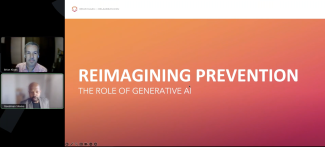
Reimagining Prevention: The Role of Generative AI
ISSUP, in collaboration with ICUDDR, present a webinar on Reimagining Prevention: The Role of Generative AI.
GURU SHIKSHA, 17-19TH SEPTEMBER 2025 AT HECTOR KOBBEKADUWA TRAINING CENTER COLOMBO
THE PREVENTIVE EDUCATION AND TRAINING DIVISION OF THE NATIONAL DANGEROUS DRUGS CONTROL BOARD (NDDCB), SRI LANKA, SUCCESSFULLY CONDUCTED THE GURU SHIKSHA TEACHERS TRAINING PROGRAMME FROM 17 TH TO 19 TH SEPTEMBER 2025 AT THE HECTOR...
GURU SHIKSHA 18-20 SEPTEMBER 2025 @ WAKWELLA TRAINING CENTER - GALLE
The Preventive Education and Training Division of the National Dangerous Drugs Control Board (NDDCB), Sri Lanka, successfully conducted the Guru Shiksha Teachers Training Programme from 18th to 20th September 2025 at the Wakwella Training...
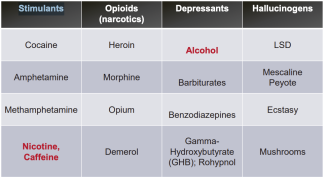
Classification of Psychoactive Substances
This section from the UPC 2 Physiology and Pharmacology for Prevention Professionals (p130-133) introduces the main types of psychoactive substances, explains their effects on the brain and body, and clarifies that some commonly used legal...
Safeguarding the Demographic Bonus: BNN's Prevention Strategy for Children, Youth, and Communities
This presentation was featured at Indonesia 2025, on the 18.09.2025.
Author: Tri Julianto Djatiutomo
Abstract:
Indonesia is currently in a demographic bonus period, where the majority of the population is of productive age. This window...
ISSUP Nigeria Knowledge Update Series (29th Session): Beyond Tokenistic Roles: Harnessing The Power of Young People in Drug Use Prevention
ISSUP Nigeria presents the 29th session of its bi-monthly webinar in the Knowledge Update Series. This webinar will focus on the topic 'Beyond Tokenistic Roles: Harnessing The Power of Young People in Drug Use Prevention'.
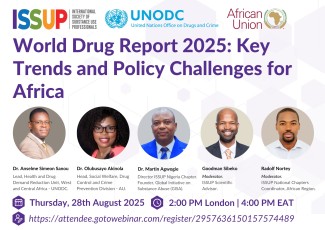
World Drug Report 2025: Webinar on Key Trends and Policy Challenges for Africa
As a follow-up to our previous webinar outlining the Key Findings of the World Drug Report 2025, ISSUP on 28 August 2025 presented a review of the World Drug Report 2025 through an African lens. The webinar was moderated by Radolf Nortey...
Three-day Teacher TOT, Second Phase in Kurunagala District
Preventive Education and Training Division of National Dangerous Drugs Control Board collaboratively with Ministry of Health, Sri Lanka has conducted a Three-day TOT program for counseling teachers in kurunagala District (Second Phase).
S...

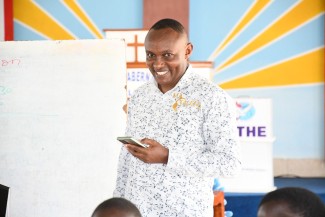
STRENGTHENING SOBRIETY TO STRENGTHEN ADDICTION PREVENTION.
STRENGTHENING SOBRIETY TO STRENGTHEN ADDICTION PREVENTION.
Working with young people over the years—teenagers in high schools, students in colleges, and community youth in different neighborhoods—I have learned something powerful: the...
Toolkit on Stakeholder Engagement: Implementing the United Nations Convention against Transnational Organised Crime (UNTOC)
The UNODC has developed a Toolkit designed to strengthen the capacity of civil society, academia, and the private sector to support the implementation of the UN Convention against Transnational Organised Crime (UNTOC) and its Protocols.
...
MODELLING ACCOUNTABILITY IN THE RECOVERY PROCESS.
Addiction is a complex disease that requires everyone to understand the science behind it. In the treatment and recovery process, it is not unusual to come across stigma, blame, and disbelief. However, reframing accountability in addiction...
Community-Based Approaches in Substance Use Disorder Treatment: Field Experiences from Jammu & Kashmir, India
Title: Community-Based Approaches in Substance Use Disorder Treatment: Field Experiences from Jammu & Kashmir, India.
Introduction
Substance use has become a growing concern across India, with youth being disproportionately affected. In...
Community-Based Recovery in Asia: Integrating Mental Health and Addiction Services at the Grassroots Level, Thailand
The rising prevalence of substance use in Thailand—particularly methamphetamine and cannabis—has led to a significant increase in psychiatric comorbidities, including mood disorders, anxiety, psychosis, and cognitive impairment. In response, Thailand has implemented an integrated, community-based recovery approach that connects mental health and addiction services at the grassroots level.
Community-based Approach in Asia: Integration of SUD Services at the Grassroots Level
Addiction and social issues remain a persistent global challenge, demanding innovative, integrated, and sustainable approaches for effective intervention related to prevention, treatment, recovery and after care, rehabilitation and social reintegration. The growing prevalence of substance use, abuse and use disorders (SUD), particularly in disadvantaged and marginalized groups, underscores the need for comprehensive and sustainable intervention strategies to mitigate their impact at the grassroots level.
“Guru Shiksha” Three-Day Teacher Training Program
This report details the successful execution of a three-day residential teacher training program on school-based drug prevention, branded as the "Shiksha" program. Held from July 29th to 31st, 2025, at the Sarvodaya Training Center in...
lmplementing MyAIM™ as a Smartphone-based App Intervention for Youth Stimulant Use in a Middle-Income Country: Challenges and Proposed Solutions
The rise of stimulant use is a global concern as highlighted by the United Nations Office on Drugs and Crime (UNODC). This is especially true for Southeast Asian nations where there has been steady increase in stimulant seizures yearly. Although interventions for stimulant use are present, access to them remains an issue.
Application of the Theoretical Domains Framework on Substance Use Services: A Scoping Review
Access to evidence-based practices (EBP) in substance use prevention and treatment programs remains a challenge despite systematic efforts toward dissemination. The delay in the integration of EBP results in costly and substandard quality of care. A key to promoting its uptake is to understand the determinants that influence the implementation of addiction programs.