
Hledat
 Psychoactive Substances
Psychoactive substances are natural or synthetic substances that act on the central nervous system and alter mental processes such as mood, perception, cognition, consciousness, and behaviour. These substances may be legally prescribed medications (e.g., pain medications or sedatives), legally available substances such as alcohol or caffeine, or controlled or illicit drugs. Psychoactive substances can be used for medical, social, cultural, or recreational purposes, but some carry risks of misuse, dependence, and health or social harms when used in harmful ways.
World Drug Report 2022
The 2022 World Drug Report provides a global overview of the supply and demand of opiates, cocaine, cannabis, amphetamine-type stimulants and new psychoactive substances (NPS), as well as their impact on health.
Association of Prenatal Exposure to Maternal Drinking and Smoking With the Risk of Stillbirth
Abstract
Importance Prenatal smoking is a known modifiable risk factor for stillbirth; however, the contribution of prenatal drinking or the combination of smoking and drinking is uncertain.
Objective To examine whether prenatal...
Another Milestone for Kenya: Launch of the National Standard on Management of Persons with Substance Use Disorders
According to the International Standards for the Treatment of Drug Use Disorders (2020), the use of psychoactive drugs or narcotic drugs and psychotropic substances without medical supervision is associated with significant health risks...

Accreditation of Study Programs on Addictions in Nigerian Universities: Challenges, Opportunities, and the Need for Advocacy
INTRODUCTION:
Access to drug treatment services in Nigeria remains low due to a severe shortage in the drug treatment workforce. Plans are underway to address the workforce shortage by introducing drug addiction training programs in...
AddictologyIssue 1/2022
Série webinářů o nových psychoaktivních látkách (NPS)
Různé NPS významně změnily obraz užívání drog v různých zemích. Nyní jsou na trhu s drogami velmi prominentní. Mnohé z těchto látek jsou skutečně určeny k obcházení protidrogových zákonů a jsou prodávány jako "legální" náhrady konopí...
Involvement of the ghrelin system in the maintenance and reinstatement of cocaine-motivated behaviors: a role of adrenergic action at peripheral β1 receptors
Abstract
Cocaine addiction is a significant medical and public concern. Despite decades of research effort, development of pharmacotherapy for cocaine use disorder remains largely unsuccessful. This may be partially due to insufficient...
The prevalence of comorbid serious mental illnesses and substance use disorders in prison populations: a systematic review and meta-analysis
Comorbid mental illnesses and substance use disorders are associated with adverse criminal, social, and health outcomes. Yet, their burden is not reliably known among prison populations. We therefore aimed to estimate the prevalence of comorbid serious mental illnesses and substance use disorders (dual disorders) among people in prison worldwide.
New Psychoactive Substances (NPS): Black market and policy of new psychoactive substances in the Asia region
ISSUP Kazakhstan presented the Third Webinar in the Series on New Psychoactive Substances, with a focus on Black market and policy of new psychoactive substances in the Asia region.
New Psychoactive Substances: Reading List
New psychoactive substances (NPS) are a diverse group of substances designed to replicate the effects of substances like cannabis, cocaine and ecstasy.
Project NEPTUNE training modules
In partnership with the Royal College of Psychiatrists, Project NEPTUNE has developed training modules to improve clinical practice in the management of harms resulting from the use of club drugs and novel psychoactive substances.
These...
Guidance on the Clinical Management of Acute and Chronic Harms of Club Drugs and Novel Psychoactive Substances
This document provides guidance on the clinical management of harms resulting from acute intoxication and from the harmful and dependent use of club drugs and Novel Psychoactive Substances (NPS).
This is an extensive and comprehensive...
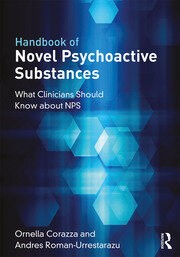
Handbook of Novel Psychoactive Substances: What Clinicians Should Know about NPS
Handbook of Novel Psychoactive Substances (NPS) provides a comprehensive overview of the challenges that clinicians face when dealing with NPS and discusses how the profile of patients and their socio-demographic characteristics frame the...
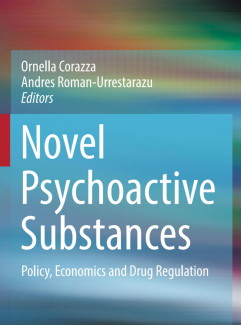
Novel Psychoactive Substances: Policy, Economics and Drug Regulation
In light of the recent emergence of Novel Psychoactive Substances (NPS) on a global scale, this book provides a timely analysis of the social and economic impact of the NPS phenomenon, and of the global policy and regulatory responses to it...
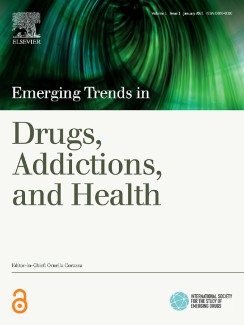
Emerging Trends in Drugs, Addictions, and Health
Emerging Trends in Drugs, Addictions, and Health is a new international journal devoted to the rapid publication of authoritative papers on Novel Psychoactive Substances (NPS), Addiction and associated health phenomena.
The Journal has a...
New psychoactive substances: A review and updates
New psychoactive substances (NPS) are a diverse group of substances that are linked with a number of health and social harms on an individual and societal level. NPS toxicity and dependence syndromes are recognised in primary care...
Poradenství UNODC v oblasti včasného varování před novými psychoaktivními látkami
Rychlý nástup velkého počtu nových psychoaktivních látek na světovém trhu s drogami představuje významné riziko pro veřejné zdraví a výzvu pro protidrogovou politiku. Často je málo známo o nepříznivých účincích na zdraví a společenských...

Nové psychoaktivní látky
Přehled
Nová psychoaktivní látka je definována jako "nová omamná nebo psychotropní droga v čisté formě nebo v přípravě, která nepodléhá kontrole protidrogových úmluv OSN, ale která může představovat srovnatelnou hrozbu pro veřejné zdraví...

Associations of common mental disorder with alcohol use in the adult general population
Research has shown that alcohol use and common mental disorders co-occur; however, little is known about how the global prevalence of alcohol use compares across different mental disorders.
This review examined:
(i) report global...
From harm to hope: A 10-year drugs plan to cut crime and save lives
Executive summary
The 10-year UK Government plan to combat illegal drugs sets out how we are doing more than ever to cut off the supply of drugs by criminal gangs and give people with a drug addiction a route to a productive and drug-free...
Studie o relapsu a souvisejících faktorech mezi uživateli drog v Bangladéši - Iqbal Masud , Den 5, 11:00-12:31
Prezentováno jako součást akce Sjednocení globální komunity, aby čelila výzvě závislosti, online dne 16. května 2022
Prezentace:
- Studie o relapsu a souvisejících faktorech mezi uživateli drog v Bangladéši - Iqbal Masud
Abstraktní:
- ...