


Search
 Psychoactive Substances
Psychoactive substances are natural or synthetic substances that act on the central nervous system and alter mental processes such as mood, perception, cognition, consciousness, and behaviour. These substances may be legally prescribed medications (e.g., pain medications or sedatives), legally available substances such as alcohol or caffeine, or controlled or illicit drugs. Psychoactive substances can be used for medical, social, cultural, or recreational purposes, but some carry risks of misuse, dependence, and health or social harms when used in harmful ways.
Measurement of Striatal Dopamine Release Induced by Neuropsychological Stimulation in Positron Emission Tomography With Dual Injections of [11C]Raclopride
Objectives: Positron emission tomography (PET) with [11C]raclopride has been applied to measure changes in the concentration of endogenous dopamine induced by pharmacological challenge or neuropsychological stimulation by evaluating the...
Treating co-occurring substance use and mental health disorders using tools from CBT
Presented by Jo Cassar (The Matilda Centre for Research in Mental Health and Substance Use, University of Sydney), by the end of this webinar, attendees will be able to:
- Recognise the importance of assessing for substance use when a...
Eating disorders and AOD use: what clinicians need to know
Presented by Associate Professor Sarah Maguire (Director, InsideOut Institute), by attending this webinar, attendees will learn:
- How to recognise the most common eating disorder symptoms;
- Eating disorder interventions and how workers...
Kenya to include smoking cessation drugs as essential medicines
The Ministry of Health has been advised to add two non-nicotine drugs to Kenya’s Essential Medicines List, to help smokers quit tobacco and nicotine addiction.
The World Health Organization said the two drugs bring “a powerful shift in the...

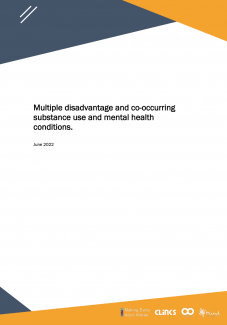
Multiple disadvantage and co-occurring substance use and mental health conditions.
Substance use and mental health needs are two of the primary concerns for many people experiencing multiple disadvantage. We know that people who experience both issues at the same time (also known as “co-occurring conditions” or “dual...
The impact of discrimination on substance use disorders among sexual minorities
This paper aimed to review the literature regarding the impact of discrimination on substance use disorders among Sexual Minorities, with a focus on alcohol, opioids, stimulants, polydrug use, chemsex, cannabis and tobacco, as well as...
Ecolink Institute opens UTC training in Hindi
Ecolink Institute starts UTC training in Hindi
Mangalore: The Mangalore based Ecolink Institute of well-being, an approved training provider of the Colombo Plan has started a special training on “Understanding addiction and its treatment...

New psychoactive substances (NPS) - the Irish situation.
This factsheet summarises information and statistics on new psychoactive substances gathered from recent reports on prevalence, treatment, mortality and legislation in Ireland.
The cardiovascular risks and benefits of quit smoking medicines
In this presentation, the speakers reported the results of a series of three population-based cohort studies relating to the use and effects of smoking cessation pharmacotherapies. The first of these studies provided evidence on how the...
World Drug Report 2022
The 2022 World Drug Report provides a global overview of the supply and demand of opiates, cocaine, cannabis, amphetamine-type stimulants and new psychoactive substances (NPS), as well as their impact on health.
Association of Prenatal Exposure to Maternal Drinking and Smoking With the Risk of Stillbirth
Abstract
Importance Prenatal smoking is a known modifiable risk factor for stillbirth; however, the contribution of prenatal drinking or the combination of smoking and drinking is uncertain.
Objective To examine whether prenatal...
Another Milestone for Kenya: Launch of the National Standard on Management of Persons with Substance Use Disorders
According to the International Standards for the Treatment of Drug Use Disorders (2020), the use of psychoactive drugs or narcotic drugs and psychotropic substances without medical supervision is associated with significant health risks...

Accreditation of Study Programs on Addictions in Nigerian Universities: Challenges, Opportunities, and the Need for Advocacy
INTRODUCTION:
Access to drug treatment services in Nigeria remains low due to a severe shortage in the drug treatment workforce. Plans are underway to address the workforce shortage by introducing drug addiction training programs in...
AddictologyIssue 1/2022
New Psychoactive Substances (NPS) Webinar Series
Various NPS have significantly changed the picture of drug use in different countries. They are now very prominent in the drug market. Indeed, many of these substances are intended to circumvent drug laws and are sold as ‘legal’...
Involvement of the ghrelin system in the maintenance and reinstatement of cocaine-motivated behaviors: a role of adrenergic action at peripheral β1 receptors
Abstract
Cocaine addiction is a significant medical and public concern. Despite decades of research effort, development of pharmacotherapy for cocaine use disorder remains largely unsuccessful. This may be partially due to insufficient...
The prevalence of comorbid serious mental illnesses and substance use disorders in prison populations: a systematic review and meta-analysis
Comorbid mental illnesses and substance use disorders are associated with adverse criminal, social, and health outcomes. Yet, their burden is not reliably known among prison populations. We therefore aimed to estimate the prevalence of comorbid serious mental illnesses and substance use disorders (dual disorders) among people in prison worldwide.
New Psychoactive Substances (NPS): Black market and policy of new psychoactive substances in the Asia region
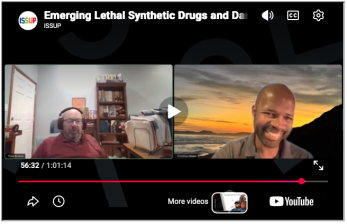
ISSUP Kazakhstan presented the Third Webinar in the Series on New Psychoactive Substances, with a focus on Black market and policy of new psychoactive substances in the Asia region.
New Psychoactive Substances: Reading List
New psychoactive substances (NPS) are a diverse group of substances designed to replicate the effects of substances like cannabis, cocaine and ecstasy.

Project NEPTUNE training modules
In partnership with the Royal College of Psychiatrists, Project NEPTUNE has developed training modules to improve clinical practice in the management of harms resulting from the use of club drugs and novel psychoactive substances.
These...
Guidance on the Clinical Management of Acute and Chronic Harms of Club Drugs and Novel Psychoactive Substances
This document provides guidance on the clinical management of harms resulting from acute intoxication and from the harmful and dependent use of club drugs and Novel Psychoactive Substances (NPS).
This is an extensive and comprehensive...