

Hledat
Behavioural Therapy Interventions
Psychological interventions that address the underlying cognitive and emotional drivers of substance use e.g., Cognitive Behavioural Therapy (CBT) and Motivational Interviewing (MI).


How Childhood Trauma Rewires the Brain: New Insights and Hope for Healing
Childhood trauma leaves an indelible mark not just on a person’s memories, but on the very structure and function of their brain. A groundbreaking study from the University of Essex, led by Dr. Megan Klabunde, has shed new light on how...

A Call for Trauma-Informed Justice Reform in Nigeria: Breaking the Cycle of Substance Use, Mental Illness, and Incarceration
By Seye Omiyefa
Across Nigeria and many parts of the world, thousands of individuals, particularly youth and economically marginalized people, are trapped in a revolving door of arrest, incarceration, and reentry. Much of this cycle is...
Effectiveness of mindfulness-based relapse prevention in individuals with substance use disorders:
Abstract
Objectives: This systematic review aimed to understand the current state of the art about the effectiveness of mindfulness-based relapse prevention (MBRP) on individuals with substance use disorders (SUD), taking into account not...
Psychological interventions for antisocial personality disorder.
Abstract
Background: Antisocial personality disorder (AsPD) is associated with poor mental health, criminality, substance use and relationship difficulties. This review updates Gibbon 2010 (previous version of the review).
Objectives: To...
The outcome of integrated motivational interviewing and cognitive-behavioral therapy in Egyptian patients with substance use disorder.
Abstract
Objectives
The authors aimed to evaluate the outcome of combined motivational interviewing and cognitive-behavioural therapy (MICBT) for substance use disorder compared to the twelve-step facilitation (TSF) therapy in terms of...
Evidence-based treatment and supervision practices for co-occurring mental and substance use disorders in the criminal justice system.
ABSTRACT
Background:
Over seven million persons in the United States are supervised by the criminal justice system, including many who have co-occurring mental and substance use disorders (CODs). This population is at high risk for...
A meta-analysis of cognitive-behavioral therapy for alcohol or other drug use disorders: Treatment efficacy by contrast condition.
Abstract
Objective.
This meta-analysis examined 30 randomized controlled trials (32 study sites; 35 study arms) that tested the efficacy of cognitive-behavioral therapy (CBT) for alcohol or other drug use disorders (AUD/SUD). The study...
Evidence-based treatment and supervision practices for co-occurring mental and substance use disorders in the criminal justice system.
Abstract
Background: Over seven million persons in the United States are supervised by the criminal justice system, including many who have co-occurring mental and substance use disorders (CODs). This population is at high risk for...
Psychological therapies for post‐traumatic stress disorder and comorbid substance use disorder
ABSTRACT
Background
Post‐traumatic stress disorder (PTSD) is a debilitating mental health disorder that may develop after exposure to traumatic events. Substance use disorder (SUD) is a behavioural disorder in which the use of one or more...
Seeking safety intervention for comorbid post-traumatic stress and substance use disorder: A meta-analysis
Abstract
Problem statement: Seeking Safety (SS) is a widely implemented cognitive-behavioral therapy for comorbid post-traumatic stress disorder (PTSD) and substance use disorder (SUD). It is a present-focused coping skills model that is...
The effects of cognitive behavioral therapy on recidivism among parolees in Central America: evidence from a Honduran experiment
ABSTRACT
Objectives
Cognitive behavioral therapy (CBT) has shown promise as a tool for rehabilitating offenders in the USA and other developed nations. However, little is known about the effectiveness of CBT outside the developed world...
Family Treatment Drug Court Cost Analysis: An In-depth Look at the Cost and Savings of a Southeastern Family Treatment Drug Court
ABSTRACT
This study examines the cost and benefits of a family treatment drug court (FTDC) in an urban county in a southeastern state. This study utilized a cost–benefit analysis that enters the costs of family treatment drug court and...
The Impact of Traumatic Stress, Social Support, and Substance Problems on Graduation Among Female Offenders in a Prescription Drug Court Program
ABSTRACT
Trauma exposure and comorbid substance use are highly prevalent among female drug court participants. Despite the pervasiveness of the issue, few studies have investigated the impact of posttraumatic stress symptoms (PTSS) and...
Reentry interventions that address substance use: A systematic review.
Justice-involved individuals with substance use problems have heightened risk of relapse and recidivism after release from incarceration, making reentry a critical time to provide evidence-based treatments (EBTs) for substance use; however...
Outcomes of Psychological Therapies for Prisoners With Mental Health Problems: A Systematic Review and Meta-Analysis
ABSTRACT
Objective: Prisoners worldwide have substantial mental health needs, but the efficacy of psychological therapy in prisons is unknown. We aimed to systematically review psychological therapies with mental health outcomes in...
ISSUP Nigeria Knowledge Update Series (27th Session): Exploring the Intersection of Substance Use Disorders and Mental Health: Challenges and Effective Interventions
ISSUP Nigeria presents the 27th session of its bi-monthly webinar in the Knowledge Update Series. This webinar focuses on the topic of 'Exploring the Intersection of Substance Use Disorders and Mental Health: Challenges and Effective Interventions.'
The repeatable battery for the assessment of neuropsychological status (RBANS) and substance use disorders: a systematic review
Background
Cognitive deficits are common in patients with substance use disorder (SUD) and can impact treatment outcomes. The Repeatable Battery for the Assessment of Neuropsychological Status (RBANS) is a widely used tool that could help...
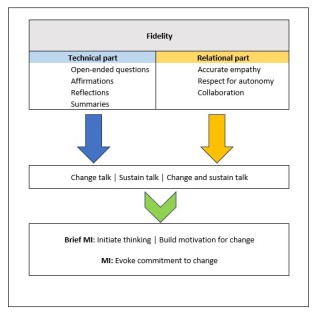
Motivational Interviewing: A Pathway to Partnership in Care
Motivational Interviewing (MI) has long been a personal favourite amongst intervention modalities. Much of the work my teams and I have done in the Addiction Psychiatry Division at the University of Cape Town has been anchored in MI’s core...
Unravelling Risk-Taking in Youth: Pathways to Positive Change
ISSUP India presents its webinar, "Unravelling Risk-Taking in Youth: Pathways to Positive Change," which focuses on understanding risk-taking behaviours in adolescents and youth.
Introduction to Motivational Interviewing: A way of being
ISSUP South Africa presents its webinar on Introduction to Motivational Interviewing: A way of being.