
Rechercher
 Law Enforcement
The activities of authorised agencies such as police, customs, border services, and investigative bodies to enforce drug control laws and address criminal activities related to the production, trafficking, and distribution of illicit substances. These activities may include investigations, intelligence gathering, interdiction, and collaboration with national and international partners to disrupt organised crime networks. Law enforcement plays an important role in protecting public safety and maintaining the rule of law, and is most effective when coordinated with broader public health, prevention, treatment, and recovery efforts as part of a balanced and comprehensive response to substance use.

UN Toolkit on Synthetic Drugs
The UN Toolkit on Synthetic Drugs is a practical online resource coordinated by UNODC that brings together tools, guidance, and operational resources from across the UN system to support responses to the global synthetic drug problem...
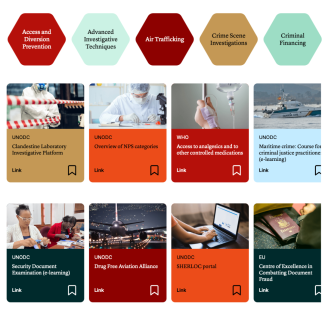
NEW Security Document Examination module in the UN Toolkit on Synthetic Drugs
UNODC has launched a new Security Document Examination module within the UN Toolkit on Synthetic Drugs, developed in collaboration with the UNODC Laboratory and Scientific Services. The module aims to help law enforcement, border control...

EU controls nine drug precursors following first EUDA assessments
The European Commission has introduced new controls on nine high-risk chemical precursors used in illicit drug production under Delegated Regulation (EU) 2026/314. Most of these substances are linked to synthetic cathinones, while one is...
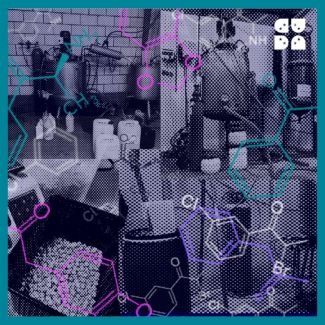
Feasibility and tolerability of group cognitive behavioral therapy on improving functioning and managing craving and psychosocial factors among incarcerated women with methamphetamine use disorder
Women with methamphetamine use disorder (MUD) in correctional settings often face complex challenges, including trauma histories, stigma, mental health difficulties, and limited access to evidence-based treatment. In Indonesia, structured...
2026 National Drug Control Strategy - The White House
The 2026 National Drug Control Strategy outlines a comprehensive roadmap to reduce illicit drug use and protect communities across the United States. It prioritizes stopping the flow of drugs and precursor chemicals at all borders through...
Playing legislative catch-up: Drug law reform in the Pacific
Drug trafficking in the Pacific is rapidly expanding, shifting countries from transit points to consumer and production markets. However, many national laws remain outdated, as they were designed for earlier challenges like cannabis and are...

Global Organized Crime Index 2025 - Europe Overview
The 2025 Global Organized Crime Index shows that overall crime levels in Europe remain stable, and the region continues to rank among the least affected globally. However, this stability hides a more complex reality, with criminal markets...
Policy Brief: Scam Centres – Combating a Global Phenomenon
Short Summary
Scam centres are a fast-growing global organized crime threat, generating over $1 trillion in losses in 2024. They use technology and psychological manipulation to target victims worldwide, supported by global criminal...
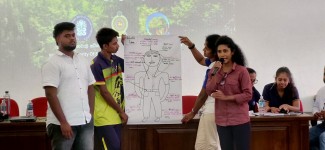
Youth-based Training Series - 2026
Drug use in Sri Lanka has become an increasingly serious public health and social challenge in recent years. The misuse of both traditional substances like cannabis and emerging drugs such as heroin and methamphetamine has affected various...
Medetomidine in the U.S. Illegal Fentanyl Supply Increasing Risk for Overdose and Severe Withdrawal Syndrome
The Centers for Disease Control and Prevention (CDC), in conjunction with the White House Office of National Drug Control Policy (ONDCP), is issuing this Health Advisory to notify public health professionals, clinicians, laboratorians, and...
Youth Training Program Series in Mahaweli Areas in Sri Lanka - 2025.
Drug use in Sri Lanka has become an increasingly serious public health and social challenge in recent years. The misuse of both traditional substances like cannabis and emerging drugs such as heroin and methamphetamine has affected various...

Integrated Support for Co-occurring Mental Health and Substance Use Disorders
ISSUP in Pakistan presents a webinar on Integrated Support for Co-occurring Mental Health and Substance Use Disorders
Integrated Support for Co-occurring Mental Health and Substance Use Disorders
ISSUP Global presents a webinar on Integrated Support for Co-occurring Mental Health and Substance Use Disorders.
A Reading List on Responding to Drug-Related Offending through Science-Based Policy and Practice
As justice systems increasingly shift their focus from punishment to rehabilitation, it becomes essential to understand the complex relationship between substance use, criminal behaviour, and treatment, particularly among individuals whose involvement with the system stems from substance use.

ISSUP Bangladesh Chapter Launch Ceremony
ISSUP Bangladesh presents the launch of the ISSUP Bangladesh Chapter. Organised in collaboration with Dhaka Ahsania Mission, the ceremony will bring together national and international experts, policymakers, youth leaders, and development partners working in substance use prevention, treatment, and recovery support.
Huduma ya Tiba Saidizi kwa uraibu wa afyuni: Nafasi ya Asasi za Kiraia
ISSUP Tanzania, inaandaa semina mtandaoni kuhusu Tiba Inayosaidiwa na Madaktari kwa Matatizo ya Matumizi ya Opioidi: Nafasi ya Mashirika ya Jamii ya Kiraia
AHMAD SHAH
From a U.S.-supported exchange to global leadership, Ahmed Shah’s journey shows how international exposure can create lasting impact.
An Emerging Leaders of Pakistan (ELP) 2013 alumnus, Ahmed turned his exchange experience into a career...
Prevention Unpacked with Dr. Zili Sloboda: Workforce, Capacity & Global Development Pt.3
In this third episode of Prevention Unpacked with Dr. Zili Sloboda, the focus shifts from science to the people who make prevention possible.
إدارة خدمات علاج اضطرابات تعاطي المخدرات بما يتماشى مع "معايير الجودة الدولية الرئيسي"
تقدّم ISSUP والاتحاد الدولي للجودة (ICQ) ندوة الإطلاق لكتاب
إدارة خدمات علاج اضطرابات تعاطي المخدرات بما يتماشى مع "معايير الجودة الدولية الرئيسية": دليل للمديرين.
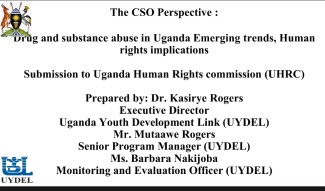
A CSO PERSPECTIVE: Drug and substance abuse in Uganda Emerging trends,Human rights implications
Due to the rising incidence of narcotics-related cases and associated crime, there is an urgent need to expand and strengthen alternatives to criminal activity. This concern was emphasized by Dr. Rogers Kasirye during the 28th UHRC Annual...