


Pencarian
 Populations
Distinct groups of people within a society who share certain characteristics such as age, gender, geographic location, socioeconomic status, cultural background, or exposure to particular risk factors that may influence patterns of substance use, vulnerability to substance use disorders, and access to services. In the context of substance use systems, identifying and understanding different populations helps guide the design of prevention, treatment, recovery, and policy responses that are appropriate, equitable, and responsive to specific needs. Examples may include youth, women, people experiencing homelessness, individuals in the criminal justice system, or communities affected by specific social or economic conditions.

Empowering Recovery: The Green Crescent Women’s Forum on Addiction and Recovery (WFAR) and Gender-Responsive Models in Collaboration with the Gender Working Network (GWN)
This presentation was featured at Indonesia 2025, on the 17.09.2025.
Authors:
Sedef Erçetin Gencosmanoğlu
Hendrée E. Jones
Abstract:
The Turkish Green Crescent Society (TGCS), established in 1920, has long been a pioneer in addiction...
HOW EMPOWERMENT BENEFITS RECOVERY
In recovery work, the urge to "fix" can often overshadow the real goal: empowering autonomy. As a recovery ally, I’ve learned that sustainable healing happens when we honour the individual’s journey and not impose our values on it. True...
THE POWER OF LOCALLY AVAILABLE RESOURCES IN ADDICTION PREVENTION
THE POWER OF LOCALLY AVAILABLE RESOURCES IN ADDICTION PREVENTION.
Addiction prevention efforts are most successful when they are rooted in the local context—using what is available within a community to address its unique challenges. This...
Substance and Drug consumption in schools
ABSTRACT
INTRODUCTION
In 2012, about 3.3 million net deaths, or 5.9% of all global deaths, were attributable to alcohol consumption. There are significant sex differences in the proportion of global deaths attributable to alcohol, for...
Words Matter: Language and Stigma Reduction
ISSUP Global, in collaboration with Faces & Voices of Recovery, presents its webinar titled 'Words Matter: Language and Stigma Reduction.'
New Psychoactive Substances: Studies from Central Asia and China
Recommended Reading: New Psychoactive Substances: Studies from Central Asia and China
We are pleased to present the book "New Psychoactive Substances: Studies from Central Asia and China", prepared by an international team of experts and...
Returning to Basics: Successful Advocacy 101
ISSUP Global, in collaboration with Faces & Voices of Recovery, presents its webinar titled 'Returning to Basics: Successful Advocacy 101'
Moral norms and risk perceptions toward driving under the influence of recreational versus medical cannabis among Israeli young adults
ABSTRACT
Many studies have compared individuals who use cannabis for recreational versus medical purposes, but little is known about the moral norms and risk perceptions toward recreational versus medical cannabis while driving. This study...
Applying the theory of planned behavior to predict online addiction treatment intention
Abstract
Scant research has been published on online addiction treatment, with few studies focusing on the Theory of Planned Behavior (TPB) in relation to addiction treatment. Therefore, this study aims to explain the TPB's predictability...
A Deeper Look into the Roots of Substance Use Disorders
Addiction is often seen through the lens of poor choices or lack of willpower, but this view oversimplifies what is, in reality, a highly complex mental health condition. Through my academic journey in addiction counseling, I’ve come to...

A Deeper Look into the Roots of Substance Use Disorders
Addiction is often seen through the lens of poor choices or lack of willpower, but this view oversimplifies what is, in reality, a highly complex mental health condition. Through my academic journey in addiction counseling, I’ve come to...

BENEFITS OF ALLY AND PEER COLLABORATIONS IN RECOVERY WORK
Recovery Allies and Peer Recovery Support Specialists are highly resourceful individuals who can work collaboratively through actions that align with recovery principles. By working together from a science-based position and incorporating...
Beneath the Surface: Unraveling Childhood Trauma’s Role in Drug Addiction
Childhood is often painted as a carefree canvas, but for too many, it’s a battleground where unseen wounds are carved and wounds that echo into adolescence and beyond. In my project, Understanding the Impact of Childhood Trauma on Drug...

Resources for Building Compassionate and Responsive Recovery Systems
Recovery is not a one-size-fits-all process—it is dynamic, multifaceted, and deeply individual. To truly support individuals on their recovery journey, practitioners must access tools, systems, and knowledge that reflect the realities of those they serve.

Women’s Substance Use Treatment and Recovery
This report from the Centre of Excellence for Women’s Health reviews what we know about women’s substance use treatment and recovery in Canada. It highlights the need for trauma-informed, culturally sensitive, and family-focused care. Since...
World Drug Report 2025
On July 2nd, 2025, ISSUP had the privilege of hosting a webinar outlining highlights from the 2025 edition of the World Drug Report (WDR), presented by Ms. Giovanna Campello, Chief of the Prevention, Treatment and Rehabilitation Section at...
A Call for Trauma-Informed Justice Reform in Nigeria: Breaking the Cycle of Substance Use, Mental Illness, and Incarceration
By Seye Omiyefa
Across Nigeria and many parts of the world, thousands of individuals, particularly youth and economically marginalized people, are trapped in a revolving door of arrest, incarceration, and reentry. Much of this cycle is...
Making a Difference Across Illinois
BOOSTING TREATMENT SUCCESS & VALUE
People referred to substance use treatment by the justice system (courts, probation, parole) are significantly more likely to complete it when they also receive TASC (Treatment Accountability for Safer...
A PREVENTIONIST AND HERO IN THE MAKING!
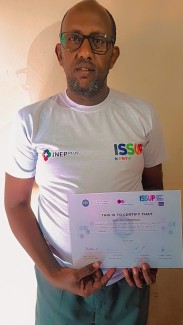
The inspiring journey of Adan Noor – INEP Plus graduate, cohort 3 (2025)
Adan Noor, a graduate of the INEP Plus Cohort 3 (2025) in Kenya, is a powerful example of how prevention education has the potential to transform not only individuals...
Psychological interventions for antisocial personality disorder.
Abstract
Background: Antisocial personality disorder (AsPD) is associated with poor mental health, criminality, substance use and relationship difficulties. This review updates Gibbon 2010 (previous version of the review).
Objectives: To...