


Іздестіру
 Prevention
Evidence-informed strategies and interventions designed to reduce the likelihood of substance use and related harms. Prevention efforts aim to reduce risk factors and strengthen protective factors at the individual, family, community, and societal levels. These approaches may include education, family and school-based programmes, community initiatives, and policies that promote healthy environments. Prevention can be universal (targeting entire populations), selective (targeting groups at higher risk), or indicated (targeting individuals already showing early signs of risk). By addressing the factors that influence substance use before problems develop or escalate, prevention plays a key role in comprehensive responses to substance use disorders and related social and health challenges.

STRENGTHENING SOBRIETY TO STRENGTHEN ADDICTION PREVENTION.
STRENGTHENING SOBRIETY TO STRENGTHEN ADDICTION PREVENTION.
Working with young people over the years—teenagers in high schools, students in colleges, and community youth in different neighborhoods—I have learned something powerful: the...

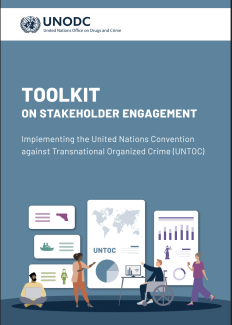
Toolkit on Stakeholder Engagement: Implementing the United Nations Convention against Transnational Organised Crime (UNTOC)
The UNODC has developed a Toolkit designed to strengthen the capacity of civil society, academia, and the private sector to support the implementation of the UN Convention against Transnational Organised Crime (UNTOC) and its Protocols.
...
MODELLING ACCOUNTABILITY IN THE RECOVERY PROCESS.
Addiction is a complex disease that requires everyone to understand the science behind it. In the treatment and recovery process, it is not unusual to come across stigma, blame, and disbelief. However, reframing accountability in addiction...
Community-Based Approaches in Substance Use Disorder Treatment: Field Experiences from Jammu & Kashmir, India
Title: Community-Based Approaches in Substance Use Disorder Treatment: Field Experiences from Jammu & Kashmir, India.
Introduction
Substance use has become a growing concern across India, with youth being disproportionately affected. In...
Community-Based Recovery in Asia: Integrating Mental Health and Addiction Services at the Grassroots Level, Thailand
The rising prevalence of substance use in Thailand—particularly methamphetamine and cannabis—has led to a significant increase in psychiatric comorbidities, including mood disorders, anxiety, psychosis, and cognitive impairment. In response, Thailand has implemented an integrated, community-based recovery approach that connects mental health and addiction services at the grassroots level.
Community-based Approach in Asia: Integration of SUD Services at the Grassroots Level
Addiction and social issues remain a persistent global challenge, demanding innovative, integrated, and sustainable approaches for effective intervention related to prevention, treatment, recovery and after care, rehabilitation and social reintegration. The growing prevalence of substance use, abuse and use disorders (SUD), particularly in disadvantaged and marginalized groups, underscores the need for comprehensive and sustainable intervention strategies to mitigate their impact at the grassroots level.
“Guru Shiksha” Three-Day Teacher Training Program
This report details the successful execution of a three-day residential teacher training program on school-based drug prevention, branded as the "Shiksha" program. Held from July 29th to 31st, 2025, at the Sarvodaya Training Center in...
lmplementing MyAIM™ as a Smartphone-based App Intervention for Youth Stimulant Use in a Middle-Income Country: Challenges and Proposed Solutions
The rise of stimulant use is a global concern as highlighted by the United Nations Office on Drugs and Crime (UNODC). This is especially true for Southeast Asian nations where there has been steady increase in stimulant seizures yearly. Although interventions for stimulant use are present, access to them remains an issue.
Application of the Theoretical Domains Framework on Substance Use Services: A Scoping Review
Access to evidence-based practices (EBP) in substance use prevention and treatment programs remains a challenge despite systematic efforts toward dissemination. The delay in the integration of EBP results in costly and substandard quality of care. A key to promoting its uptake is to understand the determinants that influence the implementation of addiction programs.
Outcomes Of The Family Empowerment Program - An Online Therapy For Rural Australians Caring For Someone With A Substance Problem
This study aimed to evaluate the effectiveness of The Family Empowerment Program- an online delivery of the Community Reinforcement and Family Training (CRAFT) intervention improving the psychological wellbeing and coping resources of Concerned Significant Others (CSOs) of people with substance problems and living in rural and remote Australia.
From Urgency to Impact: Advancing Prevention Science to Address Global Challenges in Polysubstance Use and Behavioral Health Disparities
As the global landscape of substance use continues to evolve—with the rise of polysubstance misuse, increasing commercialization of addictive products, and persistent behavioral health inequities—there is an urgent need to innovate, integrate, and sustain effective prevention approaches.
Dynamic Anti-Drug Strategies for Sustainable Community-Based Prevention for Children of Drug Users
The increasing challenge of drug abuse necessitates innovative strategies for effective prevention. The ALAB-BBM program introduces a dynamic anti-drug mechanism aimed at developing community-based prevention programs for children of persons who use drugs (PWUDs). This approach combines data-driven decision-making, community engagement, and adaptive interventions to create sustainable impacts.
Combat Drug Abuse and Trafficking in Indonesian High-Risk Areas
Indonesia faces a persistent and complex challenge from drug abuse and illicit trafficking, a situation the government has declared a national emergency. The archipelagic nation's unique geography and socio-economic dynamics contribute significantly to its vulnerability, making it a critical focus for comprehensive intervention strategies.
ISSUP Nigeria Knowledge Update Series (28th Session): Trauma and Substance Use: Understanding the Connection and Promoting Trauma-Informed Prevention in Nigeria
ISSUP Nigeria presents the 28th session of its bi-monthly webinar in the Knowledge Update Series. This webinar will focus on the topic of 'Understanding the Connection and Promoting Trauma-Informed Prevention in Nigeria'.
World Drug Report 2025: Key Trends and Policy Challenges for Africa
ISSUP Global, UNODC, and the African Union presents their webinar on the World Drug Report 2025, focusing on key trends and policy challenges for Africa.
Empowering Communities Across Borders: Adapting School and Family Based Prevention for Global Impact
This presentation will explore how culturally adaptable, evidence-based prevention programs rooted in school and family setting can be scaled across borders to address substance use and mental health challenges in diverse, low resource communities.
THE POWER OF LOCALLY AVAILABLE RESOURCES IN ADDICTION PREVENTION
THE POWER OF LOCALLY AVAILABLE RESOURCES IN ADDICTION PREVENTION.
Addiction prevention efforts are most successful when they are rooted in the local context—using what is available within a community to address its unique challenges. This...
Massive Study Flips Our Story of Addiction and the Brain
A large U.S. study has found that some children and teens who start using alcohol, cannabis, or nicotine at an early age already show differences in their brains before they ever try any substance. This challenges the common belief that...

Returning to Basics: Successful Advocacy 101
ISSUP Global, in collaboration with Faces & Voices of Recovery, presents its webinar titled 'Returning to Basics: Successful Advocacy 101'
BENEFITS OF ALLY AND PEER COLLABORATIONS IN RECOVERY WORK
Recovery Allies and Peer Recovery Support Specialists are highly resourceful individuals who can work collaboratively through actions that align with recovery principles. By working together from a science-based position and incorporating...