ISSUP hosted a webinar on 4 December 2025 with Dr Sarah Kattakuzhy, exploring integrated care for the syndemic of SUD, HIV, and HCV. She highlighted that these conditions often occur together and intensify one another, making siloed approaches ineffective. The session showcased strong evidence that integrated care models; whether co-located, mobile, telemedicine-supported, or provider-integrated; improve treatment uptake, viral suppression, and HCV cure rates. Case studies illustrated how person-centred, joined-up care strengthens trust, stability, and quality of life. The discussion emphasized the significant opportunity to scale integrated, flexible, and humane care models across diverse health systems.
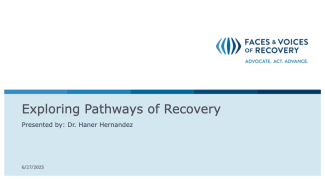
ISSUP, in collaboration with Faces & Voices of Recovery, has launched a new Global Recovery Network webinar series to spotlight diverse perspectives on recovery. The first webinar featured Dr. Haner Hernández, a respected expert in the field and a person in long-term recovery. Dr. Hernández currently serves as a Senior Consultant to the Massachusetts Department of Public Health and plays a key role in advancing health equity, workforce development, and recovery support. His presentation provided an insightful and inclusive overview of multiple pathways to recovery, grounded in both...
ISSUP Ukraine are pleased to present the Second Webinar in their Three-Part Series on 'Mental Health of Youth and Substance'. The Second Webinar will focus specifically on Mood Disorders in Children and Adolescents.
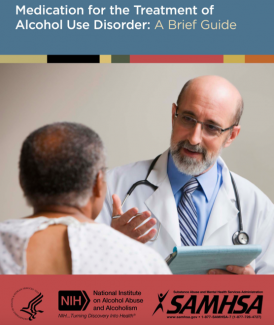
Current evidence shows that medications are underused in the treatment of alcohol use disorder, including alcohol abuse and dependence.
Although many experts in addiction believe that patients with moderate or severe alcohol-related problems should be offered medication-assisted treatment (MAT) on a routine basis, considerable resistance to the use of MAT persists.
To clarify the situation, the National Institute on Alcohol Abuse and Alcoholism (NIAAA) and the Substance Abuse and Mental Health Services Administration (SAMHSA) analysed the evidence on the effectiveness of available...
Nelson LF, Yocum VK, Patel KD, Qeadan F, Hsi A, Weitzen S. Cognitive Outcomes of Young Children After Prenatal Exposure to Medications for Opioid Use Disorder: A Systematic Review and Meta-analysis. JAMA Netw Open. 2020;3(3):e201195. doi:10.1001/jamanetworkopen.2020.1195
Abstract
Importance: The number of children with prenatal opioid exposure to medication for addictiontreatment (MAT) with methadone and buprenorphine for maternal opioid use disorder is increasing, but the associations of this exposure with cognitive outcomes are not well understood.
Objective: To examine the strength and consistency of findings in the medical literature regarding the association of prenatal exposure to MAT with early childhood cognitive development, particularly when accounting for variables outside MAT exposure.
Data Sources: A search strategy obtained publications from...
The Substance Abuse and Mental Health Services Administration (SAMHSA)
The success of treatment and recovery of individuals with opioid use disorder (OUD) can vary. Most often, a combination of factors adds complexities to evaluating the effectiveness of services and interventions.
Worldwide, overdose is the leading cause of avoidable death among people who inject drugs. An important area of concern for the Substance Abuse and Mental Health Services Administration (SAMHSA) is promoting policies and practices to lower the risk of overdose for persons with opioid use disorder who are, or have been, in contact with criminal justice systems.
Moeini, Mina, Abdoallah Omidi, Mojtaba Sehat, and Hamid Reza Banafshe. "The Effects of Oxytocin on Withdrawal, Craving and Stress Response in Heroin-Dependent Patients: A Randomized, Double-Blind Clinical Trial." European addiction research 25, no. 1 (2019): 41-48.