Buscar
 Quality Assurance
Quality assurance refers to the systematic processes used to monitor, evaluate, and improve the quality of services addressing substance use disorders. These processes help ensure that prevention, treatment, and recovery services are safe, effective, ethical, and aligned with recognised professional standards and evidence-based practices. Quality assurance may include service standards, accreditation, supervision, monitoring of outcomes, client feedback, and continuous quality improvement mechanisms. By promoting accountability and consistent service delivery, quality assurance supports better health outcomes and strengthens substance use systems of care.


Faith-Based Approaches: The Role of Faith and Religious Institutions in Addressing Substance Use
Faith, spirituality and faith-based organisations can play an important role in addressing substance use, supporting recovery and responding to related vulnerabilities as well as crime. Across different cultural and community settings, they...
Protecting young people from substance use and crime: building safer communities and pathways to support
Protecting young people from substance use and crime: building safer communities and pathways to support
Young people's involvement in substance use and crime cannot be understood without considering the environments in which they grow up...
From Evidence to Practice: Advances in Substance Use Disorder Care
Evidence-based interventions can improve prevention, treatment and recovery outcomes, but knowing what works does not guarantee that people will benefit. Effective responses depend on trained professionals, supportive systems, coordinated...
WHO Expert Committee on Drug Dependence: forty-eighth report
The forty-eighth meeting of the WHO Expert Committee on Drug Dependence (ECDD) was convened from 20 to 22 October 2025 and was coordinated from WHO headquarters in Geneva. The forty-eighth WHO ECDD critically reviewed four substances...
Handbook on the crime prevention guidelines: Making them work
The present Handbook is one of a series of practical tools developed by the United Nations Office on Drugs and Crime (UNODC) to support countries in the implementation of the standards and norms in crime prevention and criminal justice...
We know what works, why don’t we use it? Some reflections from our work with Member States
For more than 15 years, UNODC has been promoting evidence-based practice on drug use, as well as treatment, harm reduction and recovery services for people who use drugs and people with drug use disorders, both in the community and when in...
Recent U.S. drug alerts: Turning emerging evidence into workforce preparedness
Recent United States alerts on fentanyl analogues, medetomidine, cychlorphine, drug mixtures and concentrated 7-OH products highlight evolving challenges across the substance use workforce. They invite us to review local preparedness, understand testing limitations and strengthen links between frontline services, laboratories and public-health partners. A useful response brings together clinical, prevention, recovery and peer perspectives, with clear responsibilities for turning relevant findings into action. For the global ISSUP community, these alerts offer lessons in preparedness while requiring careful consideration of local evidence, resources and service arrangements. Staying informed through trusted sources and sharing practical responses through ISSUP can help translate emerging knowledge into safer care and more responsive support for individuals, families and communities.

The prevalence, risk and protective factors and service needs in relation to the comorbidity of substance use and neurodiversity
This report was commissioned by Citywide because Community Drugs Projects had recognised a need for support to develop better service delivery for people who were neurodivergent. Citywide Drugs Crisis Campaign is a national network of...
Substance Use and Health Competencies for All Prescribers
Developed by the Canadian Centre on Substance Use and Addiction (CCSA), the Workforce Competencies provide an evidence-informed framework outlining the knowledge, skills, values and behaviours needed by professionals working in substance...
Foundational Habits for Early Career Professionals
This webinar discusses the how, why, and what of foundational habits. Foundational habits are beneficial actions we make part of our routine to be successful long-term.
The Role of Faith Communities in Addressing Substance Use and Crime – Reading List (Part 2)
In this second reading list, we continue exploring the growing evidence on the role and contribution of faith communities and faith-based organisations in addressing substance use and crime, with a particular focus on treatment engagement...

Explore the UNODC World Drug Report 2026: Drug Market Patterns and Trends
The UNODC World Drug Report 2026 introduces a new interactive platform that allows users to explore the latest global, regional, and subregional trends in drug demand and supply through dynamic data visualisations, maps, graphs, and...
The Role of Law Enforcement in the Reduction of Substance Use and Other Behavioral Health Risks: Substance Use as a Focus: United States as an Example
This paper explores how law enforcement can contribute to the prevention of substance use and other behavioural health risks beyond their traditional enforcement role. Using the United States as an example, it argues that police and other...

European Drug Report 2026: Trends and Developments
The European Drug Report 2026: Trends and Developments provides the latest overview of the drug situation across Europe, drawing on data from EU Member States, Türkiye, and Norway. The report examines patterns of drug use, drug-related...
Spirituality and Harmful or Hazardous Alcohol and Other Drug Use
This meta-analysis reviewed 55 longitudinal studies involving more than 540,000 participants to examine the relationship between spirituality and harmful or hazardous alcohol and other drug use. The findings show that spiritual and...

Problematic Pornography Use as a Predictor of Depressive and Apathetic Symptoms in Slovak Young Adults
INTRODUCTION: Problematic pornography use (PPU) has been increasingly recognized as a relevant factor in mental health research, mainly in relation to depression and apathy. Its association with apathy, reflecting diminished motivation and...
AddictologyIssue 1/2026
Online Gambling In Europe: Prevalence, Risk and Regulatory Challenges In The Digital Era
INTRODUCTION: Digital transformation and market liberalisation have intensified the growth of online gambling and related risks, underscoring the need for targeted research, regulation, and prevention. This study synthesises evidence on the...
AddictologyIssue 1/2026
Online time of Slovak and Czech adults and its relation to Big Five
INTRODUCTION: In the present article, we focused on the relationship between time spent online and factors of Big Five in the population of adults. We assume that there exist the specifics of time spent online in the relation to age, sex...
AddictologyIssue 1/2026
UN Toolkit on Synthetic Drugs
The UN Toolkit on Synthetic Drugs is a practical online resource coordinated by UNODC that brings together tools, guidance, and operational resources from across the UN system to support responses to the global synthetic drug problem...

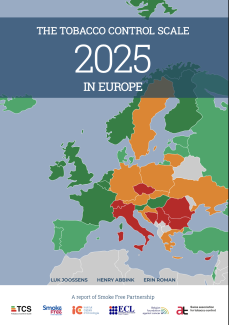
The Tobacco Control Scale 2025 in Europe
The Tobacco Control Scale 2025 shows that progress in tobacco control across Europe has slowed, with more countries recording lower scores than in previous years. Key reasons include the failure to regulate heated tobacco products in the same way as cigarettes and the lack of adjustments to tobacco taxes and prices to keep pace with inflation.