De Pourcq, K. Deneckere, S., & De Wachter, D. (2023). Implementing quality measurement in the field of drug treatment and harm reduction: A case study in Flanders. Adiktologie, 23(1), 63–72. https://doi.org/10.35198/01-2023-002-0005
BACKGROUND: Implementing quality measurement is still a challenge in the field of drug treatment and harm reduction. In this case study, we investigate which strategies can be used to enhance the implementation of a policy in which quality indicators are made public.
METHODS: Building on an evidence-based methodology, this case study shows how an organisation in Flanders – the Flemish Institute for Quality of Care – develops quality indicators along with its strategies to implement the measurement of the indicators.
RESULTS: The study shows three types of quality indicators in the field of...
Mutatayi, C. (2023). The ASPIRE standards: Taking a step towards quality assurance in drug prevention in France – A case study. Adiktologie, 23(1), 55–61. https://doi.org/10.35198/01-2023-002-0001
INTRODUCTION: In the favourable political climate of the mid-2010s, the standards for Assessment & Selection of Prevention programmes Issued from the Review of EDPQS (ASPIRE) were developed to support project planning in drug prevention.
METHODS: This case study is a narrative from the main coordinator responsible for drafting this quality assurance material.
RESULTS: The framework that led to the creation of the ASPIRE standards is described. The production process is then explained and, thereby, the 12 ASPIRE standards resulting from it are presented. These quality standards and their...
Coughlan, E., Mckeown, P., Corrigan, N., & Harris, A. (2023). The implementation of quality standards (QS) at Coolmine Therapeutic Community. Adiktologie, 23(1), 47–53. https://doi.org/10.35198/01-2023-002-0003
BACKGROUND: Coolmine’s implementation of quality standards involves a period of change management, strategic planning, and national policy development.
METHODS: A narrative case study focusing on national policy and internal strategic planning.
CONCLUSIONS: From 2000, Coolmine embarked on a change management journey that kept the organisation at the forefront of drug and alcohol treatment in Ireland and internationally while maintaining fidelity to the Therapeutic Community. The strategy for quality assurance is replicable across similar organisations.
Kyprianou, E., Mina, Ch., Stylianou, K., Yiasemi, I., Gaist, B., Symeonidou E., Matheou, M., & Mavrou, J. (2023). National implementation of quality standards in prevention and treatment services for substance use/addictions – A case study of Cyprus. Adiktologie, 23(1), 41–46. https://doi.org/10.35198/01-2023-002-0004
INTRODUCTION: The Cyprus National Addictions Authority (NAAC) is the main coordinating body for all matters related to licit and illicit substances as well as pathological gambling in Cyprus and it is responsible, inter alia, for the licensing, evaluation, funding (where possible), coordination, and reinforcement of all programmes, actions, and activities related to substances and gambling. Licensing and funding are based on the fulfilment of certain criteria and a certain level of quality.
METHODS: The process that led to the establishment of a quality standards system for licensing and...
Subata, E. (2023). Substance use disorder treatment quality standards in Lithuania 1992–2022: From grassroots initiatives to nationwide strategies. Adiktologie, 23(1), 31–39. https://doi.org/10.35198/01-2023-002-0002
BACKGROUND: The implementation of quality standards in the treatment of substance use disorders in Lithuania is not well documented in the literature. AIMS: To describe the process of the development of quality standards from grassroots initiatives to their integration into mainstream healthcare under the leadership of the Ministry of Health.
METHODS: Narrative review of retrieved documents, including related legal acts, followed by a subsequent content analysis.
RESULTS: The implementation was divided into three stages characterised by specific activities, leading stakeholders, and the...
2 سے 5 مئی، 2023 تک منعقد ہونے والے روم اتفاق رائے 2.0 سربراہ اجلاس میں شرکت کریں۔ یہ سمٹ شرکاء کے قومی اور بین الاقوامی تجربات کی بنیاد پر تیار کردہ ایک شراکتی اجلاس میں معروف ماہرین، پیشہ ور افراد، کارکنوں اور ریڈ کراس اور ہلال احمر کے رہنماؤں کے ساتھ تبادلہ خیال میں مشغول ہونے کا ایک انوکھا موقع ہے۔
سیمینار میں منشیات کے استعمال کی خرابیوں کے علاج پر یو این او ڈی سی کے کام کا جائزہ پیش کیا جائے گا جس میں ان کوششوں پر خصوصی توجہ دی جائے گی جو فوجداری انصاف کے نظام کے ساتھ رابطے میں منشیات کے استعمال کی خرابی وں میں مبتلا افراد کے لئے...
Rychlá, K., & Šťastná, L. (2022). Psychoactive prescription drug abuse: Selected psychological symptoms and quality of life in addiction treatment. Study protocol. Adiktologie, 22(4), 258–263. https://doi.org/10.35198/01-2022-004-0002
پس منظر: چیک جمہوریہ میں نفسیاتی نسخے کی ادویات کا غلط استعمال تیزی سے عام ہو گیا ہے. ان منشیات میں سکون آور ادویات، ہپنوٹکس، انزیولائٹکس (بینزوڈیازپائنز اور زیڈ-ہپنوٹکس) اور اوپیوئڈز شامل ہیں۔ ان نسخے والی ادویات کی لت میں مبتلا مریض طویل مدتی استعمال سے وابستہ علامات ظاہر کرتے ہیں ، خاص طور پر نفسیاتی اور جسمانی مسائل ، نیند میں خلل ، کمزور علمی کارکردگی ، اور چڑچڑاپن۔ ان کی ضروریات کے لئے لچکدار جواب کی ضرورت ہے.
مقصد: تحقیق کا مقصد نشے کے علاج میں نفسیاتی منشیات کے عادی افراد کی منتخب نفسیاتی علامات اور معیار زندگی کی وضاحت کرنا ہے۔ تحقیق کے اہم نتائج میں ایک جائزہ مطالعہ اور اعداد و شمار...
Riegel, K. D. (2022). Bion’s basic assumption groups in the regimen treatment of addictions: Clinical implications. Adiktologie, 22(4), 250–256. https://doi.org/10.35198/01-2022-004-0004
This article provides reflection on the potential application of Bion’s model of basic assumption groups in patients undergoing midterm inpatient addiction treatment. The clinical implications are discussed in terms of the usability of Bion’s model and its possible benefits for patients in regimen addiction treatment, as well as the pitfalls associated with its application in this treatment modality. Despite the highly theoretical nature of this model, clinical experience to date confirms that analysis of the underlying assumptions and associated protomental patterns can provide valuable...
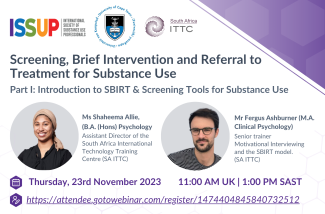
This live training on Motivational Interviewing takes place weekly on Thursdays from 10am till 11am SAST on the following dates: 9, 16, 23 & 30 March 2023.
Motivational Interviewing is a best-evidence approach for tackling harmful substance use and general motivation-related change, including that treatment non-adherence. It is an approach that does not seek to replace other therapeutic approaches, but that seeks instead to support and strengthen them.
We strongly recommend that you complete this Online Tour of Motivational Interviewing before attending this training: https:/...
This training on Screening Brief Intervention, and Referral to Treatment (SBIRT) for harmful substance use takes place weekly on Thursdays from 12 noon till 1pm SAST on the following dates: 9, 16, 23, 30 March & 6 April 2023.
Source: Shapiro, C. J., Watson MacDonell, K., & Moran, M. (2021). Provider self-efficacy in delivering evidence-based psychosocial interventions: A scoping review. Implementation Research and Practice. https://doi.org/10.1177/2633489520988258 Plain language abstract: Provider self-efficacy is known...
You are invited to attend this webinar that CICAD is co-organizing with Sweden this coming February 16th, 2023. Live English/Spanish interpretation is provided.
Substance Abuse and Mental Health Services Administration (SAMHSA)
یہ گائیڈ طرز عمل کی صحت اور رہائش فراہم کرنے والوں کے لئے حکمت عملی وں پر روشنی ڈالتا ہے تاکہ وہ بے گھر ہونے کا سامنا کرنے والے افراد تک رسائی حاصل کریں اور ان کے ساتھ مشغول رہیں ، طرز عمل کی صحت کے علاج کا استعمال شروع کریں کیونکہ وہ مستحکم رہائش حاصل کرنے کا انتظار کرتے ہیں اور ایک بار رہائش کے بعد انہیں اپنی بازیابی کی کوششوں میں برقرار رکھتے ہیں۔
یہ گائیڈ ایک پیش لفظ اور پانچ ابواب پر مشتمل ہے۔ ہر باب کو پروگرام کے منتظمین ، ڈاکٹروں ، براہ راست دیکھ بھال کے عملے ، اور کمیونٹی پارٹنرز کے لئے مختصر اور قابل رسائی بنانے کے لئے ڈیزائن کیا گیا ہے جو ذہنی صحت اور / یا مادہ کے استعمال کی خرابی...
Mills, L., Dunlop, A., Montebello, M. et al. Correlates of treatment engagement and client outcomes: results of a randomised controlled trial of nabiximols for the treatment of cannabis use disorder. Subst Abuse Treat Prev Policy 17, 67 (2022).
Introduction
There is increasing interest and evidence for the use of cannabinoid medications in the treatment of cannabis use disorder, but little examination of the correlates of successful treatment. This paper is a secondary analysis of a randomised placebo-controlled trial of nabiximols for the treatment of cannabis use disorder (CUD), aiming to identify which client and treatment characteristics impact treatment engagement and outcomes.
Method
Bayesian multiple regression models were used to examine the impact of age, gender, duration of regular cannabis use, daily quantity of...
Hall, K., Higgins, F., Beach, K.F. et al. Disruptions to U.S. local public health’s role in population-based substance use prevention and response during COVID-19. Subst Abuse Treat Prev Policy 17, 73 (2022). https://doi.org/10.1186/s13011-022-00499-7
Background
COVID-19 dramatically limited the scale and scope of local health department (LHD) work, redirecting resources to the response. However, the need for essential public health services—including substance use prevention—was not reduced.
Methods
Six quantitative data sources were examined, collected between 2016 and 2021, to explore the impact of the COVID-19 pandemic on LHD substance use-related services.
Results
Before the pandemic, the proportion of LHDs providing some level of substance use prevention services was increasing, and many were expanding their level of provision...
More than two hundred Filipino and foreign stakeholders recently adopted the Manila Declaration on Creating Alternatives to Incarceration (ATI) Systems in the Philippines