

Hledat
 Psychoactive Substances
Psychoactive substances are natural or synthetic substances that act on the central nervous system and alter mental processes such as mood, perception, cognition, consciousness, and behaviour. These substances may be legally prescribed medications (e.g., pain medications or sedatives), legally available substances such as alcohol or caffeine, or controlled or illicit drugs. Psychoactive substances can be used for medical, social, cultural, or recreational purposes, but some carry risks of misuse, dependence, and health or social harms when used in harmful ways.
Rodiny lidí, kteří užívají drogy: zdravotní a sociální reakce
Tato minipříručka je jednou z rozsáhlejších příruček, které společně zahrnují Zdravotní a sociální reakce na drogovou problematiku: evropský průvodce.
Poskytuje přehled nejdůležitějších aspektů, které je třeba vzít v úvahu při plánování...
Brief counselling by a doctor can reduce drinking
A new systematic review and meta-analysis has found that alcohol-targeted brief interventions (short, structured, one-to-one conversations about drinking designed to motivate changes in risky behaviour) delivered in doctors’ offices and...

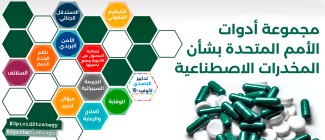
مجموعة أدوات الأمم المتحدة بشأن المخدرات الاصطناعية
تدعم مجموعة أدوات الأمم المتحدة بشأن المخدرات الاصطناعية المجتمع الدولي في تنفيذ تدابير استجابة شاملة لمواجهة مشكلة المخدرات الاصطناعية.
وضعت مجموعة الأدوات استجابة لقراري لجنة المخدرات 8/61 (2018) و4/62 (2019) اللذين دعيا مكتب الأمم...
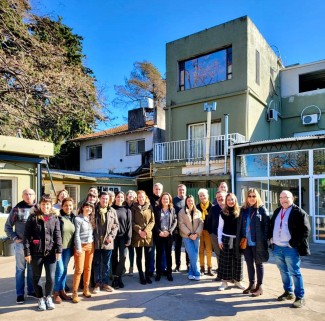
ISSUP Mexico participate at the opening of the Master in Substance Abuse Prevention led by ISSUP Argentina
The launch of the new master's degree "Problematic Consumption of Psychoactive Substances from a Social and Health Perspective" was held.
Miriam Carrillo, Director of Prevention at Centros de Integración Juvenil, A.C. (CIJ, acronym...
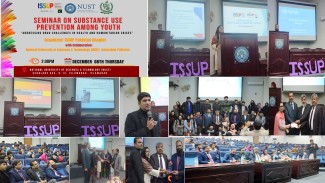
Seminar on "Substance Use Prevention Among Youth" on December 8th, 2022 at National University of Sciences and Technology, Islamabad-Pakistan
ISSUP Pakistan Chapter organized a seminar on "Substance Use Prevention Among Youth" following the theme "Addressing Drug Challenges in Health and Humanitarian Crises" in collaboration with TABA NUST SDG Student Hub NUST at the National...
Legal responses to novel psychoactive substances implemented by ten European countries: An analysis from legal epidemiology
Abstract
Introduction
Novel psychoactive substances (NPS) continue to pose challenges to law enforcement authorities, public health officers and policymakers as suppliers continuously adapt to control measures, thus remaining highly...
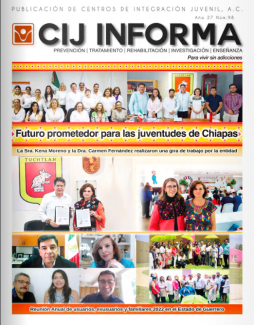
CIJ Informa 98
Ya está disponible el número más reciente de la Revista CIJ Informa, publicación trimestral de Centros de Integración Juvenil (CIJ), institución anfitriona del Capítulo ISSUP México.
Además de una variedad de temas sobre el trabajo que...
Zneužívané drogy
Drogy zneužívání poskytují jasné, vědecké informace o drogách věcným a přímočarým způsobem.
S informacemi v této příručce mohou rodiče a pečovatelé pomoci svým dětem činit chytrá rozhodnutí a vyhnout se následkům zneužívání drog.
Tato...
Názory odborníků na to, jak navrhnout fond pro kontrolu tabákových výrobků ve Spojeném království
Abstraktní
Cíl : Prozkoumat názory odborníků na potenciální hodnotu a přístupy k založení a správě fondu pro kontrolu tabáku ve Velké Británii.
Design Polostrukturované rozhovory a navazující diskusní skupiny.
Předměty Dvacet čtyři...
The power of connection: collaboration and co-design in clinical services
This presentation explored a co-design process that was implemented in clinical services in metropolitan Australia from 2019-2022.
The challenge of successfully implementing integrated care in mental health (MH) and alcohol and other drug...
Reaching smoke-free: how can we improve smoking cessation treatment?
This webinar explored the provision of smoking cessation treatments, including e-cigarettes, in the context of primary care.
It provided an overview of investigations into how smoking cessation treatment provision in the UK could be...
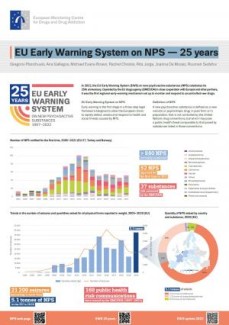
EU Early Warning System on NPS- Poster
Summary
This poster, presented during the IX International Conference on NPS(24 to 26 Oct 2022, Panama), showcases some of the work of the EU Early Warning System on new psychoactive substances. Operated by the EMCDDA, in close cooperation...
Recreational use of nitrous oxide — a growing concern for Europe
Summary
The purpose of this report is to examine the current situation, risks and responses to the recreational use of nitrous oxide in Europe. To support this, the report also provides a state-of-the-art review of the chemistry...
Correction: Interdisciplinary collaboration in the treatment of alcohol use disorders in a general hospital department: a mixed-method study
Background
Interdisciplinary collaborations (i.e., where various disciplines work coordinated and interdependently toward shared goals) are stated to yield higher team effectiveness than multidisciplinary approaches (i.e., where various...
Understanding injecting drug use in Afghanistan: A scoping review
Background
Several reports have described a growing prevalence of illicit drug use in Afghanistan, with recognition of a recent shift from traditional modes of consumption involving inhalation and oral ingestion to injecting drug use.
Obj
...Correlates of treatment engagement and client outcomes: results of a randomised controlled trial of nabiximols for the treatment of cannabis use disorder
Introduction and aims
There is increasing interest and evidence for the use of cannabinoid medications in the treatment of cannabis use disorder, but little examination of the correlates of successful treatment. This paper is a secondary...
Narušení role místního veřejného zdraví v USA v prevenci užívání návykových látek na základě populace a reakci na ni během pandemie COVID-19
Pozadí
Mimořádný stav COVID-19 bezprecedentním způsobem otestoval veřejné zdraví, lékařskou a veřejnou bezpečnostní infrastrukturu Spojených států (USA). Jako ústřední bod pro veřejné zdraví ve svých komunitách byla nástupem pandemie...
Integrated brief interventions for noncommunicable disease risk factors in primary care: the manual
Abstract
Brief interventions are recognized by WHO as an effective measure to help people quit tobacco, reduce or stop alcohol use and increase physical activity. They can also help to achieve and maintain healthy eating behaviours and...
Mortality and life-years lost following subsequent physical comorbidity in people with pre-existing substance use disorders: a national registry-based retrospective cohort study of hospitalised individuals in Czechia
Summary
Background
Substance use disorders constitute a major global public health problem, attributable largely to their subsequent comorbidity with other health conditions. This study aimed to investigate the risk of all-cause death and...
Patterns of Health Care Use 5 Years After an Intervention Linking Patients in Addiction Treatment With a Primary Care Practitioner
Abstract
Importance Substance use disorders are associated with high rates of emergency department (ED) use and challenges engaging with primary care services.
Objective To examine 5-year health care engagement and utilization outcomes...