
Hledat
 Populations
Distinct groups of people within a society who share certain characteristics such as age, gender, geographic location, socioeconomic status, cultural background, or exposure to particular risk factors that may influence patterns of substance use, vulnerability to substance use disorders, and access to services. In the context of substance use systems, identifying and understanding different populations helps guide the design of prevention, treatment, recovery, and policy responses that are appropriate, equitable, and responsive to specific needs. Examples may include youth, women, people experiencing homelessness, individuals in the criminal justice system, or communities affected by specific social or economic conditions.


Council of the European Union (2012b), Consolidated versions of the Treaty on European Union and the Treaty on the Functioning of the European Union and the Charter of Fundamental Rights of the European Union
The Publications Office of the European Union offers free access to a wide range of official EU publications. From research reports and educational resources to policy overviews and statistical studies, the site brings together knowledge...
Codeine Crisis To Care: How UNODC’s Quality Assurance Mechanisms Redefined Drug Treatment Services In Dawanau, Kano
What started with a BBC documentary exposing the harsh realities of Nigeria’s codeine crisis has since become a powerful story of change. In Kano State, UNODC, with support from the European Union, introduced Quality Assurance mechanisms...

Global Launch – Universal Nurses Addiction Curriculum (UNAC)
On June 26, 2025, the International Consortium of Universities for Drug Demand Reduction (ICUDDR) marked an important milestone with the global launch of the Universal Nurses Addiction Curriculum (UNAC). This initiative, supported by the U...
ISSUP Nigeria Knowledge Update Series (29th Session): Beyond Tokenistic Roles: Harnessing The Power of Young People in Drug Use Prevention
ISSUP Nigeria presents the 29th session of its bi-monthly webinar in the Knowledge Update Series. This webinar will focus on the topic 'Beyond Tokenistic Roles: Harnessing The Power of Young People in Drug Use Prevention'.
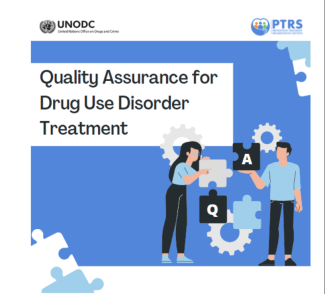
Quality Assurance for Drug Use Disorder Treatment
Over 38 million people worldwide are living with drug use disorders, yet only a fraction have access to appropriate treatment. These disorders place a heavy burden on individuals, families and communities, and their wider social costs –...
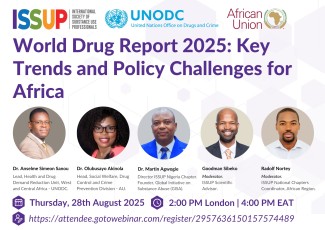
World Drug Report 2025: Webinar on Key Trends and Policy Challenges for Africa
As a follow-up to our previous webinar outlining the Key Findings of the World Drug Report 2025, ISSUP on 28 August 2025 presented a review of the World Drug Report 2025 through an African lens. The webinar was moderated by Radolf Nortey...
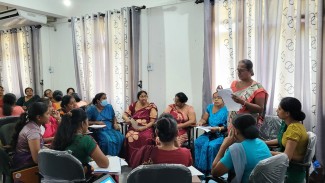
Three-day Teacher TOT, Second Phase in Kurunagala District
Preventive Education and Training Division of National Dangerous Drugs Control Board collaboratively with Ministry of Health, Sri Lanka has conducted a Three-day TOT program for counseling teachers in kurunagala District (Second Phase).
S...

Three-day Teacher TOT Program, First Phase in Kurunagala District
Preventive Education and Training Division of National Dangerous Drugs Control Board collaboratively with Ministry of Health, Sri Lanka has conducted a Three-day TOT program for counseling teachers in kurunagala District.
Substance abuse...
Elevating Leadership: A Strength-Based Heart Centered Approach to Leading
ISSUP Global, in collaboration with Faces & Voices of Recovery, presents its webinar titled 'Elevating Leadership: A Strength-Based Heart Centred Approach to Leading'
Certificate Course on Drug Abuse Prevention -20
Certificate Course in Drug Abuse Prevention
Certificate Course in Drug Abuse Prevention Empowering Schools, Families, Communities & Workplaces for a Drug-Free Future This certificate course is designed to equip educators, youth leaders...
MODELLING ACCOUNTABILITY IN THE RECOVERY PROCESS.
Addiction is a complex disease that requires everyone to understand the science behind it. In the treatment and recovery process, it is not unusual to come across stigma, blame, and disbelief. However, reframing accountability in addiction...
Awareness Seminar for school children Titled: Effects of Substance use and Prevention
Awareness Seminar: Effects of Substance use and Prevention
Substance use is a menace that not only devastates an individual's life but also poses a significant threat to the peace, tranquility, and progress of the entire society. In today...
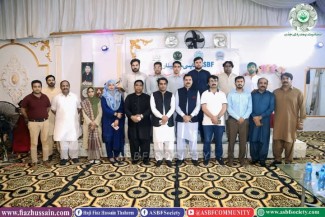
Community-Based Approaches in Substance Use Disorder Treatment: Field Experiences from Jammu & Kashmir, India
Title: Community-Based Approaches in Substance Use Disorder Treatment: Field Experiences from Jammu & Kashmir, India.
Introduction
Substance use has become a growing concern across India, with youth being disproportionately affected. In...
GOVERNMENT OFFICERS SKILLS DEVELOPMENT FOR BETTER SERVICE
Date: 22 August 2025 Time: 9:00 AM – 4:30 PM, Participants: 40 Government Officers (Development Officers and similar ranks) Theme: “Empathy in Action: Building Resilient Communities through Soft Skills & Substance Use Prevention”
WESTERN...
Community-based Approach in Asia: Integration of SUD Services at the Grassroots Level
Addiction and social issues remain a persistent global challenge, demanding innovative, integrated, and sustainable approaches for effective intervention related to prevention, treatment, recovery and after care, rehabilitation and social reintegration. The growing prevalence of substance use, abuse and use disorders (SUD), particularly in disadvantaged and marginalized groups, underscores the need for comprehensive and sustainable intervention strategies to mitigate their impact at the grassroots level.
The Evidence Speaks: What Research Says About MI Today Pt.4
What does the evidence tell us about Motivational Interviewing (MI), and what might the future of research hold?
In the final episode of the ISSUP Exchange series, Dr. Goodman Sibeko and Professor Stephen Rollnick explore the research...

Challenges Treating Drug Abuse and Addiction with Co Occurring Disorders in Nairobi and Kiambu.
Challenges Treating Drug Abuse and Addiction with Co‑Occurring Disorders in Nairobi and Kiambu.
Prepared by: Kelvin Ateko, Mental Health Nurse
Setting: Urban outpatient/inpatient mental health and addiction services in Nairob ans Kiambu i...

Preventing Opioid Overdose for 6 Months Post-Prison Release: An Evidence Based Program
Inadequate substance use disorder (SUD) treatment resources for incarcerated women and men with substance use problems leads to a pressing need for services when they are released. Those leaving incarceration were almost 11 times more likely to die of an opioid overdose in the first year following release than the general population.
Outcomes Of The Family Empowerment Program - An Online Therapy For Rural Australians Caring For Someone With A Substance Problem
This study aimed to evaluate the effectiveness of The Family Empowerment Program- an online delivery of the Community Reinforcement and Family Training (CRAFT) intervention improving the psychological wellbeing and coping resources of Concerned Significant Others (CSOs) of people with substance problems and living in rural and remote Australia.
Substance Use Disorder in Pregnancy: Navigating Confidentiality Law to Deliver Evidence- Based Collaborative Care
The Substance Abuse & Mental Health Services Administration and leading obstetrical and addiction medicine groups recommend prenatal care, medications to treat OUD, behavioral health therapy, and a cross-sector collaborative approach to address social determinant of health as best-practice treatment for pregnant individuals with OUD.