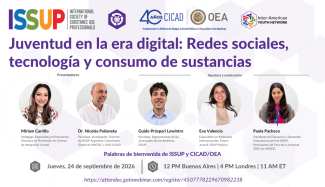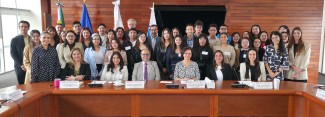
ISSUP Global y la Red Juvenil de ISSUP, en colaboración con CICAD y la Red Juvenil, presentan un seminario web sobre Juventud en la era digital: Redes sociales, tecnología y consumo de sustancias.

In this second reading list, we continue exploring the growing evidence on the role and contribution of faith communities and faith-based organisations in addressing substance use and crime, with a particular focus on treatment engagement, recovery, rehabilitation, and criminal justice. While Part 1 highlighted the contribution of faith communities to prevention, community resilience, and violence reduction, this collection examines how spirituality and religiosity may influence help-seeking, substance use outcomes, abstinence, recidivism, and successful reintegration into society.
Johnson, Byron R., and Curtis S. Schroeder, 'Religion, Crime, and Criminal Justice', Oxford Handbook Topics in Criminology and Criminal Justice (2012; online edn, Oxford Academic, 2 June 2014), https://doi.org/10.1093/oxfordhb/9780199935383.013.005, accessed 20 July 2026.
This chapter reviews the evidence on the relationship between religion, crime, and the criminal justice system. It highlights a growing body of research showing a consistent inverse association between religiosity and criminal behaviour, suggesting that higher levels of religious involvement are often linked to lower levels of offending.
The authors also discuss how these findings can inform crime prevention strategies and criminal justice policy. They argue that collaboration between faith communities and criminal justice systems may strengthen prevention efforts and contribute to more...
Valdez Bátiz, J. E., Esparza Bernal, V. H., & Burgos Dávila, C. J. . (2023). Narrativas juveniles sobre el narcotráfico en Sinaloa: ingreso, riesgos y planes a futuro. Frontera Norte, 35. https://doi.org/10.33679/rfn.v1i1.2306
This qualitative study explores the experiences of young people involved in drug trafficking in Culiacán, Sinaloa, Mexico. Based on interviews with 16 young adults, the research examines why they joined drug trafficking, how they perceived the risks, and how they viewed their future within and beyond criminal networks.
The findings suggest that many participants were attracted by the prospect of financial gain, social acceptance, recognition, and the hope of achieving a successful future. For many, drug trafficking was viewed not only as a source of income but also as a pathway for personal...
Consejo Episcopal Latinoamericano y Caribeño CELAM Avenida Boyacá N.° 169D-75
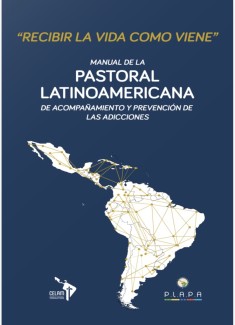
Nos complace compartir el lanzamiento del Manual de Pastoral de Adicciones, una iniciativa desarrollada por la Pastoral Latinoamericana de las Adicciones (PLAPA) y el CELAM.
Este manual ofrece una guía pastoral para la prevención, el acompañamiento y la reconstrucción de vidas afectadas por el consumo de sustancias psicoactivas, promoviendo un enfoque integral, comunitario y centrado en la dignidad de la persona. Basado en la metodología Ver – Juzgar – Actuar, reúne experiencias, orientaciones y herramientas prácticas para parroquias, diócesis, escuelas y organizaciones eclesiales...
Maguire, Edward & Gordon, C.. (2015). Faith-Based Interventions for Reducing Gang Violence in the Caribbean: Reflections from a Professor and a Priest
This book chapter explores the role of faith-based interventions in preventing and reducing gang violence in Trinidad and Tobago. Drawing on the experiences of a criminologist and a religious leader, it argues that gang violence should be viewed not only as a criminal justice issue but also as a community challenge that requires coordinated responses from multiple sectors.
The chapter describes faith-based initiatives implemented in a community affected by gang violence and highlights how religious organizations can contribute through community engagement, social support, mentorship, and...
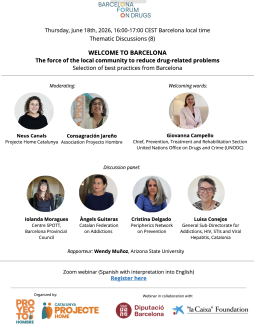
On the way to the Barcelona Forum on Drugs, the 8th Thematic Discussion aims to pay tribute to local communities around the world in addressing drug-related problems. A selection of best practices from Barcelona will be presented, the city...
UNODC has launched a new Security Document Examination module within the UN Toolkit on Synthetic Drugs to help law enforcement, border control, and forensic professionals detect and respond to document fraud linked to synthetic drug...
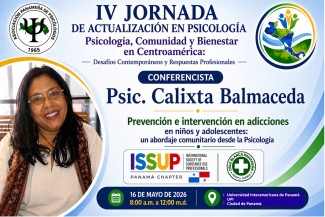
Agradecemos la invitación de la Asociación Panameña de Psicólogos a este importante espacio de aprendizaje, donde la Directora de ISSUP Panamá Calixta Aronátegui de Balmaceda participó con el tema:
“Prevención e intervención en adicciones en niños y adolescentes: un abordaje comunitario desde la psicología”.
Durante el conversatorio se destacó la importancia del trabajo comunitario, la prevención temprana y el fortalecimiento de redes de apoyo para promover el bienestar integral de niños, niñas y adolescentes.
Seguimos comprometidos con la formación continua y la construcción de estrategias...
ISSUP, en colaboración con la CICAD/OEA, continúa fortaleciendo la cooperación regional en enfoques basados en la fe para abordar los desafíos relacionados con el consumo de sustancias y los delitos relacionados a las drogas en América Latina.
Como parte de estos esfuerzos continuos, representantes de los Capítulos Nacionales de la ISSUP en toda la región se reunieron el martes 12 de mayo de 2026 para una sesión regional de intercambio de conocimientos, enfocada en fortalecer la colaboración, compartir experiencias y explorar oportunidades para futuras actividades conjuntas de...
El día martes 12 de mayo se realizó en la Sede del Sindicato Unión Ferroviaria, la primera reunión del proyecto “Prevención de Adicciones y Juventud Sindical” conducido por el Instituto Forum Vitae de la Obra Social Ferroviaria, ISSUP Argentina y ITTC Argentina.
En este primer encuentro participaron 32 jóvenes referentes sindicales, de diferentes provincias de Argentina. Estos jóvenes comenzarán la formación del INEP Plus (Introduction to Evidence-Based Prevention) con la guía y la tutoría del equipo de ISSUP Argentina, del Instituto Forum Vitae y representantes del ITTC Argentina.
La ISSUP y la OEA/CICAD siguen fortaleciendo sus esfuerzos conjuntos para establecer y coordinar una Red Latinoamericana de Jóvenes Líderes. Esta iniciativa reúne a representantes juveniles de 10 países de la región, cada uno en representación de su respectivo Capítulo Nacional de la ISSUP.
La red busca garantizar que las voces de los jóvenes sean escuchadas activamente y se integren de manera significativa en las respuestas globales al consumo de sustancias y los desafíos relacionados con las drogas. Un enfoque clave es abordar la vulnerabilidad de la juventud al consumo de drogas y la...
Drug trafficking in the Pacific is rapidly expanding, shifting countries from transit points to consumer and production markets. However, many national laws remain outdated, as they were designed for earlier challenges like cannabis and are not equipped to address synthetic drugs and cocaine.
Governments are under pressure to respond, leading in some cases to tougher punitive proposals, but legislative reform alone is not keeping pace with the evolving threat. Fiji’s recent approach shows a more integrated model, combining law enforcement, public health, and community engagement through broad...
ISSUP Mexico continues to advance its strategic agenda with a strong focus on empowering youth leaders in high-risk communities. This commitment was recently reinforced through the successful completion of the “Engaging Youth” training course, delivered in collaboration with OAS/CICAD.
A cohort of 30 young leaders from Mexico has now successfully completed the programme, marking a significant milestone in strengthening youth-led efforts. Through this initiative, participants have been equipped with the knowledge and tools to act as agents of change, working to reduce violence, substance use...
ISSUP was pleased to host a global webinar titled “Faith Communities and Religion in Addressing Substance Use” bringing together a diverse audience of professionals working in substance use and drug-related crime issues, alongside community and religious leaders, policymakers, and researchers.
The strong participation highlighted the importance of coordinated, inter-sectoral approaches to addressing substance use in a comprehensive and sustainable way.
At ISSUP, we remain committed to strengthening the global workforce and promoting evidence-informed practices across the full continuum of...
Ha dado inicio el curso “Involucrando a los Jóvenes en la Prevención”, organizado por la Comisión Interamericana para el Control del Abuso de Drogas (CICAD) de la Organización de los Estados Americanos (OEA), en colaboración con ISSUP México, y con sede en los Centros de Integración Juvenil (CIJ). Esta iniciativa forma parte de un esfuerzo de colaboración internacional que promueve el intercambio de experiencias, conocimientos y mejores prácticas en jóvenes líderes.
Un eje central de la agenda es el involucramiento activo de los jóvenes en prevenir el reclutamiento de jóvenes por parte del...
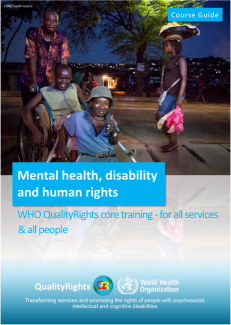
As part of the QualityRights Initiative, WHO has developed a comprehensive package of training and guidance materials. The materials can be used to build capacity among mental health practitioners, people with psychosocial, intellectual and cognitive disabilities, people using mental health services, families, care partners and other supporters, nongovernmental organizations, organizations of persons with disabilities and others on how to implement a human rights and recovery approach in the area of mental health in line with the UN Convention on the Rights of Persons with...
Whittaker, J., Kellom, K., Chatterjee, A. et al. Navigating opioid use disorder treatment for pregnant and parenting people: composite narratives for policy action. Subst Abuse Treat Prev Policy (2026). https://doi.org/10.1186/s13011-025-00694-2
Opioid use during pregnancy and the postpartum period is increasing in the United States, yet many pregnant and parenting people face serious barriers to accessing effective treatment and supportive services. These barriers arise from fragmented systems such as healthcare, health insurance, child welfare, childcare, and the criminal justice system. This study uses in-depth interviews with healthcare providers, treatment leaders, local government officials, and pregnant and parenting people in a mid-Atlantic state to explore access to medication for opioid use disorder (MOUD), key treatment...
ISSUP was honoured to participate in the 78th Regular Session of the Inter-American Drug Abuse Control Commission (CICAD), where Joanna Travis Roberts, Chief Executive of the International Society of Substance Use Professionals (ISSUP), delivered remarks to representatives of Member States, civil society organisations, experts, and partners from across the Americas.
Speaking to the importance of collective and evidence-informed responses to substance use, Joanna highlighted that challenges related to drugs intersect with public health, social development, community safety, and human rights...