Counselors: Need a tool to help people leaving criminal justice facilities stay drug-free? The Drugs & the Brain Wallet Card is designed specifically for people transitioning back to a less structured environment.
Kelly, J. F., Greene, M. C., Bergman, B. G., White, W. L., & Hoeppner, B. B. (2019). How many recovery attempts does it take to successfully resolve an alcohol or drug problem? Estimates and correlates from a national study of recovering U.S. adults. Alcoholism: Clinical and Experimental Research, 43(7), 1533-1544. doi: 10.1111/acer.14067
This retrospective cohort study asks people who are in recovery or have not used alcohol or drugs for at least two years following meeting diagnostic criteria for having a SUD how many quit attempts they had made prior to success. The range was 0-100 previous attempts.
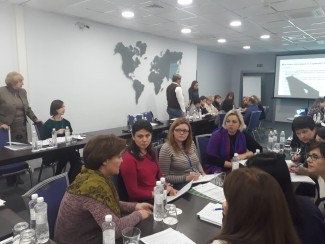
Kyiv (Ukraine), 18 December 2019 - The United Nations Office on Drugs and Crime (UNODC) jointly with the World Health Organization (WHO) in the framework of the UNODC-WHO Programme on Drug Dependence Treatment and Care, organized an International training on Identification and Management of Substance Use Disorders in Pregnancy.
More than 30 health practitioners, including obstetricians, gynecologists, neonatal care specialists, nurses, as well as specialists in substance use disorders treatment from Ukraine, Moldova and Belarus participated in the three-day workshop, held from 11 to 13...
Many who find themselves established in recovery are left with a lingering, internal void that represents a lack of meaning or sense of purpose in life. This lack of meaning or purpose can be a constant threat to one’s recovery...
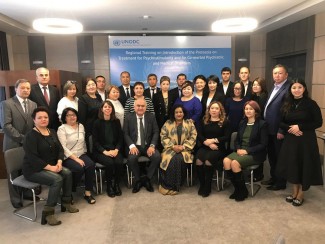
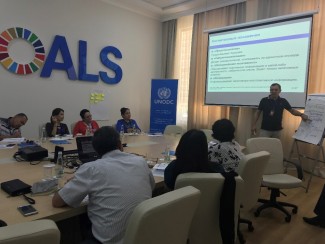
On 4-8 November 2019 in Tashkent, Uzbekistan, 24 specialists from the drug treatment centres, narcology clinics and institutions of Kazakhstan, Kyrgyzstan, Tajikistan, Turkmenistan and Uzbekistan participated in the Regional Training on introduction of the protocols on treatment for psychostimulants and for co-morbid psychiatric and medical disorders organized by UNODC global project GLOJ71 “Treating drug dependence and its health consequences: Treatnet” in collaboration with Sub-programme 3 “Prevention, treatment and rehabilitation and HIV prevention” of the UNODC Programme for Central Asia...
The UNODC’s Regional Office for West and Central Africa (ROSEN), the Prevention Treatment and Rehabilitation Section (PTRS) and UNAIDS jointly organized a TREATNET training on drug use disorder treatment and care from July 30th to August 2nd 2019 in Saly-Mbour, Senegal.
Participants included the Ministry of Health, along with twenty-five health and social work professionals, national defence and security forces’ representatives from the different regions of Senegal.
TREATNET is a UNODC capacity building strategy, aiming to strengthen capacities, knowledge, competencies and skills of service...
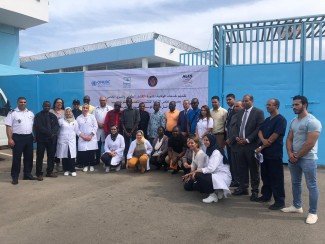
From 6 to 12 October 2019, as part of the UNODC - PTRS / GLOK32 activities to guide the introduction of assisted pharmacological treatment of opioid dependence, 10 representatives, policy makers and treatment experts, and 2 psychiatrists from Côte d'Ivoire, convened at a study visit in Morocco to improve knowledge of high-level experts in addiction and policy measures for treating opioid dependence. The visit was essential to guide treatment and care services in Côte d'Ivoire with specific focus on patients with opioid addiction.
The study visit began with a meeting with the Ministry of...
Madson, Michael & Schumacher, Julie & Baer, John & Martino, Steve. (2016). Motivational Interviewing for Substance Use: Mapping Out the Next Generation of Research. Journal of Substance AbuseTreatment. 65. 10.1016/j.jsat.2016.02.003.
Harmful use of alcohol kills more than 3 million people each year. 35 million people are estimated to be suffering from drug use disorders. Tobacco contributes to the death of more than 8 million people a year around the world.
It is important that people who have substance use problems receive interventions that are of high quality, ethical and have strong evidence-base.
Motivational interviewing (MI) can be used as a psychological treatment that aims to help people cut down or stop using substances.
Typically, a counsellor who is trained in MI works with a client to support them making...
Opioid-related morbidity and mortality in the U.S. has been steadily increasing over the last two decades. In 2017 alone, 2.1 million Americans suffered from opioid use disorder (OUD), and 47,600 died from opioid overdose.
Predictably, the damage done to individuals with OUD involved in the criminal justice system has been even more devastating. Drug overdose is among the leading causes of death for persons reentering society after incarceration, with most of those overdoses attributed to opioids.
You may be feeling overwhelmed by the number of new terms, theories, and practices you are learning. With all of the clinical information, you are consuming it can be easy to gloss over the concepts of transference and countertransference.
You know it makes sense that as a clinician you may be triggered by a client or you remind the client of someone they know. You may feel it’s common sense and it will be easy to identify in the clinical setting. However, transference and countertransference can be the areas that cause the most significant issues for you as a clinician. Here is why these...
OARS is a skills-based, client-centered model of interactive techniques. These skills include verbal and non-verbal responses and behaviors that need to be culturally sensitive and appropriate. This model integrates the five principles of providing quality counseling from the QFP recommendations. Using these skills will help establish and maintain rapport with your client, assess your client’s needs, and personalize your counseling and education responses.
OARS is a skill-based model of interactions adapted from a client-centered approach used in Motivational Interviewing. These skill-based techniques include verbal and non-verbal responses and behaviors. Both verbal and non-verbal techniques need to be adapted to be culturally sensitive and appropriate.
OARS stands for:
O = Open Ended Questions
A = Affirmations
R = Reflections
S = Summaries
As a health care professional it is your role to utilize each of these skills with intention.
To be intentional is the rationale for you to choose a specific response at a specific time. Without...
A Entrevista Motivacional fornece uma base para ajudar os indivíduos a desenvolver a justificativa para iniciar a mudança em suas vidas. Este recurso fornece informações básicas sobre os princípios de comunicação usando entrevistas motivacionais.
Entrevista Motivacional: O Básico, OARS (Adaptado de folhetos de David Rosengren e de Miller & Rollnick, Motivational Interviewing, 2ª edição, 2002)
A Entrevista Motivacional é uma "abordagem de aconselhamento empática e centrada na pessoa que prepara as pessoas para a mudança, ajudando-as a resolver a ambivalência, aumentar a motivação intrínseca e...
This paper presents the results of a study on the factors promoting the rehabilitation of adolescents treated for paco addiction, from the point of view of resilience, i.e. the understanding and ability to cope with life's difficulties, overcome them and be transformed positively by them. A cross-sectional study was conducted with key informants and the application of quantitative and qualitative methods for data collection with the aim of identifying resilient areas in young people under treatment for paco addiction in the village 21/24, in Barracas ( Buenos Aires, Argentina, 2010). The...
INL just released a video on its efforts to support prevention, treatment and recovery worldwide in this short video in support of recognizing recovery month
Morton Substance AbuseTreatment, Prevention, and Policy (2019) 14:33 https://doi.org/10.1186/s13011-019-0221-6
Abstract
Background
The spatial distribution of substance use services impacts their use, with greater access to services associated with more positive outcomes. Findings from availability of primary healthcare indicate service shortages exist in areas characterized by social deprivation. This study investigated whether community social deprivation was associated with a lack of availability of substance use treatment or mutual aid recovery support services.
Methods
This is an ecological analysis investigating the availability of substance use services at a community level in the state of...
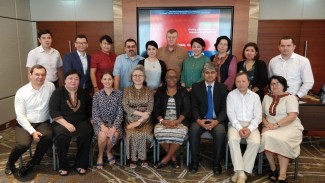
From 23-31 July 2019, a team of master trainers from Central Asia attended the Regional Training of Trainers for Central Asia held in Dubai, United Arab Emirates.
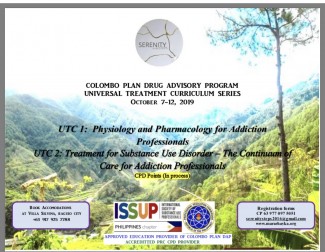
The training was organized by Colombo Plan Drug Advisory Programme (DAP) within the framework of UNODC joint capacity building activity with Colombo Plan.
There were 14 regional master trainers from five Central Asia countries trained on the two following Advanced UTC courses:
Course 14: Working with Families with Substance Use Disorders (SUD)
From 15-21 July 2019 team of national trainers from Turkmenistan attended the National Training of Trainers held in Ashgabat, Turkmenistan.
There were 12 representatives of drug dependence treatment service of the Ministry of Health of Turkmenistan and non-profit organizations (ICAP 1 holders) trained on the two following courses of Advanced Level UTC:
Course 12: Cognitive-Behavioral Therapy
Course 15: Managing Co-Occurring Disorders
Trainer-led presentations, small-group and reflective exercises, role-plays and case study discussions helped participants to improve their knowledge and...
The Training of Trainers on Advance UTC Courses 9 & 14 in Malaysia ran from 17-25 June 2019. It was held at NADA Training Center, Sungai Petani, Kedah.
Register now at: https://thenationalcouncil-org.zoom.us/meeting/register/P--Da0mhRmG-vbJ0pjt0cQ Thursday, May 21, 2026, 15:30 - 17:00 ET (Washington, DC time) Join the Providers Clinical Support System – Medications for Alcohol Use Disorder...