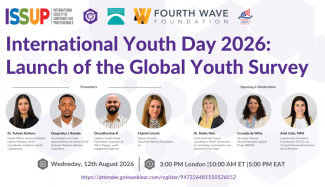
ISSUP Global Youth Network, in collaboration with Drug Free America Foundation, World Federation Against Drugs and Fourth Wave Foundation, presents a webinar to celebrate International Youth Day on 12 August. Join us as we mark International Youth Day with the launch of the Global Youth Survey, an initiative designed to better understand the needs, strengths, challenges, and aspirations of young people and early career professionals working in substance use and related fields.
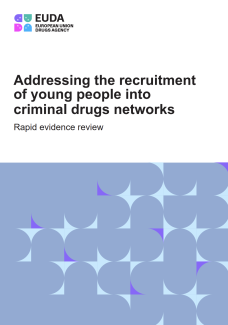
European Union Drugs Agency (2026), Addressing the recruitment of young people into criminal drugs networks, Publications Office of the European Union, Luxembourg.
This report examines how and why young people are recruited into criminal drug networks across Europe. It highlights the range of factors that can increase vulnerability to recruitment, including social and economic disadvantage, peer influence, family circumstances, and community environments.
Drawing on international evidence, the report identifies several promising approaches to prevention, including family-based support, school-based interventions, community engagement, digital prevention initiatives, and targeted efforts to disrupt criminal networks. It also emphasizes the importance of...
The second edition of F.O.C.U.S. – Future-Oriented Careers in Understanding Substance Use, is now live!
This special edition newsletter is created for early-career professionals and students stepping into the field of substance use.
In this edition, we’re spotlighting something you’ll feel quickly as you step into this work: the substance use field is truly multi-sectoral. It’s shaped by parents and teachers, schools and healthcare teams, recovery communities and people with lived experience, researchers and community organisations, law enforcement and policymakers, courts and governments...
The Centers for Disease Control and Prevention (CDC), in conjunction with the White House Office of National Drug Control Policy (ONDCP), is issuing this Health Advisory to notify public health professionals, clinicians, laboratorians, and people at risk for overdose about increasing reports from U.S. jurisdictions detecting medetomidine in the illegal drug supply and a severe withdrawal syndrome due to medetomidine exposure. Medetomidine (also known as 'rhino tranq,' 'mede,' or 'dex') is not approved for human use but is approved for sedation and analgesia in dogs. Its dextro-isomer...
Priyadarshini, S.R., Pradhan, S., Sahu, S. et al. Efficiency of behaviour support interventions for smokeless tobacco cessation by dentists. Subst Abuse Treat Prev Policy (2026). https://doi.org/10.1186/s13011-025-00695-1
Smokeless tobacco use is very common in South Asia, but there is limited evidence on effective ways to help users quit. This randomized study evaluated a face-to-face behavioural support program (BISCA) compared with self-help materials among adult smokeless tobacco users attending a dental hospital. One hundred participants who were motivated to quit were included. The BISCA group showed better outcomes for most tobacco withdrawal symptoms and slightly higher quit rates than the self-help group, though the difference was not statistically significant. Given the high prevalence of smokeless...
Whittaker, J., Kellom, K., Chatterjee, A. et al. Navigating opioid use disorder treatment for pregnant and parenting people: composite narratives for policy action. Subst Abuse Treat Prev Policy (2026). https://doi.org/10.1186/s13011-025-00694-2
Opioid use during pregnancy and the postpartum period is increasing in the United States, yet many pregnant and parenting people face serious barriers to accessing effective treatment and supportive services. These barriers arise from fragmented systems such as healthcare, health insurance, child welfare, childcare, and the criminal justice system. This study uses in-depth interviews with healthcare providers, treatment leaders, local government officials, and pregnant and parenting people in a mid-Atlantic state to explore access to medication for opioid use disorder (MOUD), key treatment...
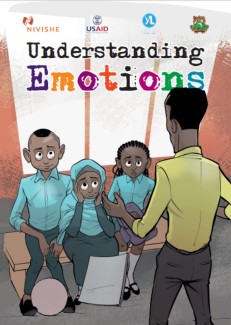
Nivishe Foundation successfully launched “Understanding Emotions,” the first chapter in its groundbreaking Brainwaves Comic Book Series, one of Africa’s first comic books dedicated to mental health education.
The series uses relatable storytelling and vibrant illustrations to help young people understand emotions, break mental health stigma, and build resilience. It transforms complex psychological concepts into simple, accessible lessons that speak directly to the realities of adolescents and youth in Kenya’s informal settlements.
Since its launch in Nairobi, the comic has reached over 2...
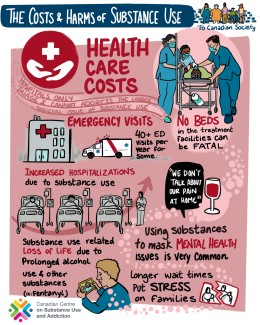
The Canadian Centre on Substance Use and Addiction (CCSA) transforms complex data into insights that reflect real human experiences. Every aspect of the Canadian Substance Use Cost and Harms (CSUCH) project represents individuals with lived or living experience of substance use, along with their families, workplaces, and communities.
A new resource highlights these journeys and the human cost of substance use through illustrated stories from people with lived experience and their families. The illustrations cover three key areas of the CSUCH project: healthcare, lost productivity, and...
Govarthnapany, N., Dékány, L., Gabrhelík, R., & Singh, D. (2025). Clinical outcomes and healthcare perspectives on adolescent kratom use in the Czech Republic: A study protocol. Adiktologie, 25(1), pp-pp
ABSTRACT: Kratom (Mitragyna speciosa), a plant native to Southeast Asia, has gained global popularity due to both its dose-dependent stimulant and sedative effects. This has raised concerns, particularly around adolescent use, as regular consumption can lead to dependence and withdrawal symptoms. In the Czech Republic, kratom is reportedly used alongside cannabis among adolescents. However, there is limited clinical data on the impact of kratom dependence within this demographic. This study aims to address this gap by exploring adolescent kratom use from the clinical and healthcare policy...
Screen4Success – A Tool for Health, Wellness, and Well-being Assessment
SAMHSA’s new “Talk. They Hear You.”® campaign mobile app helps parents and caregivers prepare for some of the most important conversations they may ever have with their kids. Screen4Success is a new screening tool developed to support individuals, families, and caregivers by providing a structured way to assess aspects of personal health, wellness, and well-being.
Key Points:
Screen4Success offers a user-friendly format to help individuals recognise potential areas where additional support might be needed.
Previous studies have shown that when students perceive their parents set strict limits on underage drinking, they tend to consume less alcohol. However, the best ways to communicate these limits effectively remain unclear. To explore this, a recent study examined the potential impact of hypothetical text messages focused on drinking limits on students' estimated alcohol consumption.
The study involved 253 undergraduate students who participated in an online survey. They were asked to imagine a scenario where they planned to attend a night event that involved drinking. Each participant was...
Lukavská, K., Urešová, A., & Gabrhelík, R. (2023). Contribution of gaming to overall leisure screen time in primary school children. Adiktologie, 23(3), 195–206. https://doi.org/10.35198/01-2023-003-0005
INTRODUCTION:
This study aimed to (i) analyse the prevalence of gaming in young elementary school-aged children; (ii) assess the effect of gaming frequency on excessive screen use; and (iii) identify sociodemographic variables associated with frequent gaming.
METHODS:
A survey was conducted in April–June 2021 with parents of children attending grades 1–3 in randomly selected elementary schools in Czechia, Slovakia, and Finland. Parents (n = 1871) reported the daily screen time and the weekly gaming frequency of their children during a typical week and provided sociodemographic information.
The goal of the present handbook is to offer encouragement, examples, rationales and concrete advice on how to increase youth participation in substance use prevention, harnessing the insights of young people on the most important target group in prevention efforts: their peers. It is designed to enable all decision makers to capitalise on the power of youth participation, exploring the full potential of young people as a force for change. The guidance is aimed at leaders in charge of substance use prevention and health promotion efforts at the local, regional, national and international...
Čerešník, M., & Čerešníková, M. (2022). Risk behaviour of adolescents aged 10–15 in Slovakia. Relation to sex, age, and body mass index. Adiktologie, 22(3), 162–170. https://doi.org/10.35198/01-2022-003-0001
BACKGROUND: As a theoretical base we used Jessor’s concept of the Syndrome of Risk Behaviour in Adolescence, the self-concept, and the concept of body image.
AIM: The main aim of the contribution was research on the relations between the self-schema, specifically the physical proportions represented by BMI, and risk behaviour. The secondary aims were research on the relations between the self-schema, specifically the physical proportions represented by BMI, and sex and age.
METHOD: In the research we used the 46-item modified version of the Risk Behaviour Questionnaire (Čerešník, 2016).
Kirtadze, I., Mgebrishvili, T., Beselia, A., Gvasalia, T., Chokheli, M., Ompad, D. C., & Otiashvili, D. (2022). No good time without drugs: Qualitative study among nightlife attendees in Tbilisi, Georgia. Adiktologie, 22(3), 152–160. https://doi.org/10.35198/01-2022-003-0003
INTRODUCTION: Individuals who visit nightclubs and electronic dance music (EDM) festivals tend to use psychoactive substances, often multiple substances, in this setting and are at risk of serious negative health effects. This paper aims to explore respondents’ experiences and perceptions in order to have a better understanding of patterns and motives related to psychoactive substance use and high-risk behaviours in EDM event attendees.
METHODS: In-depth and focus group interviews with 30 EDM event attendees who reported psychoactive substance use at nightlife events. The data was analysed...
Nafeh, F., Fusigboye, S. & Sornpaisarn, B. Understanding injecting drug use in Afghanistan: A scoping review. Subst Abuse Treat Prev Policy 17, 65 (2022). https://doi.org/10.1186/s13011-022-00491-1
Background
Several reports have described a growing prevalence of illicit drug use in Afghanistan, with recognition of a recent shift from traditional modes of consumption involving inhalation and oral ingestion to injecting drug use.
Objective
Conduct a comprehensive review of existing literature to map the injecting drug use situation in Afghanistan. The review intends to describe risk factors and impacts of injecting drug use, drug use characteristics and risk behaviours among people who inject drugs (PWID), and access to harm reduction and treatment.