

Buscar
 Populations
Distinct groups of people within a society who share certain characteristics such as age, gender, geographic location, socioeconomic status, cultural background, or exposure to particular risk factors that may influence patterns of substance use, vulnerability to substance use disorders, and access to services. In the context of substance use systems, identifying and understanding different populations helps guide the design of prevention, treatment, recovery, and policy responses that are appropriate, equitable, and responsive to specific needs. Examples may include youth, women, people experiencing homelessness, individuals in the criminal justice system, or communities affected by specific social or economic conditions.

Addressing Youth Substance Use and Crime: Prevention and Recovery Lessons from Kinshasa
ABSTRACT
Youth substance use and involvement in crime rarely result from a single risk factor. Vulnerability can increase when individual, family, peer, school, community, and socio-economic risks accumulate, particularly where protective...
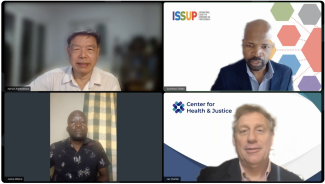
Making intersectoral collaboration work: connecting people, services and communities
ISSUP’s 2026 conference session on intersectoral collaboration explored how health, justice and community services can work together to help people access and stay connected to appropriate support. Presentations from Thailand, Kenya and Ghana, alongside an introduction to deflection, highlighted clearer referral pathways, shared responsibilities, workforce wellbeing and earlier opportunities for care. These themes connected with the wider conference discussions on evidence-informed practice, youth prevention, recovery and faith-based support. Members were encouraged to adapt the learning to their roles and local circumstances, involve people using services in improvements, and assess changes in health, relationships and everyday life alongside service activity. The session recording offers a starting point for further learning, discussion across professions and practical collaboration through ISSUP National Chapters and professional networks.
Breaking Silos: Building Multi-Sector Partnerships to Address Substance Use Disorders
|
Substance use disorders (SUDs) pose significant challenges in academic environments, impacting students' health, academic performance, and campus well-being. This panel presentation outlines the collaborative efforts of Trinity... |

Dream-Catchers: A Scalable Youth Mentoring Model for Substance Use Prevention in Nigeria
|
Background |

MeWeSports: A community sports-based intervention for preventing adolescent substance use and promoting mental health - Development and pilot insights from India
|
Background |

Recent U.S. drug alerts: Turning emerging evidence into workforce preparedness
Recent United States alerts on fentanyl analogues, medetomidine, cychlorphine, drug mixtures and concentrated 7-OH products highlight evolving challenges across the substance use workforce. They invite us to review local preparedness, understand testing limitations and strengthen links between frontline services, laboratories and public-health partners. A useful response brings together clinical, prevention, recovery and peer perspectives, with clear responsibilities for turning relevant findings into action. For the global ISSUP community, these alerts offer lessons in preparedness while requiring careful consideration of local evidence, resources and service arrangements. Staying informed through trusted sources and sharing practical responses through ISSUP can help translate emerging knowledge into safer care and more responsive support for individuals, families and communities.

Juventud en la era digital: Redes sociales, tecnología y consumo de sustancias
ISSUP Global y la Red Juvenil de ISSUP, en colaboración con CICAD y la Red Juvenil, presentan un seminario web sobre Juventud en la era digital: Redes sociales, tecnología y consumo de sustancias.
The prevalence, risk and protective factors and service needs in relation to the comorbidity of substance use and neurodiversity
This report was commissioned by Citywide because Community Drugs Projects had recognised a need for support to develop better service delivery for people who were neurodivergent. Citywide Drugs Crisis Campaign is a national network of...
Psychosocial determinants of recidivism risk among incarcerated individuals with a history of substance use: A systematic review
The prevalence of recidivism among individuals with a history of substance use and incarceration remains a significant concern for criminal justice systems worldwide. With significant social and economic ramifications, preventing people...

The product may not be what it says: What emerging synthetic drugs and dangerous mixtures mean for practice
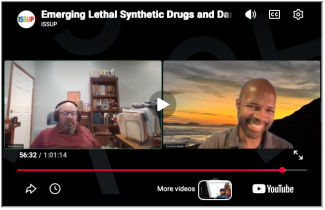
The clearest message from our recent ISSUP Global webinar was a simple but important one: we should stop assuming that an unregulated drug product contains only what it is sold as containing. That uncertainty now has direct implications for prevention, clinical care, recovery support, toxicology, law enforcement, policy and the administration of justice.
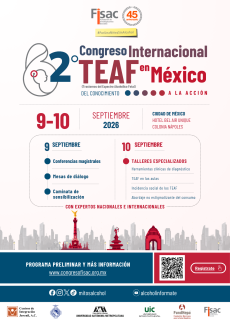
2.° Congreso Internacional sobre Trastornos del Espectro Alcohólico Fetal en México
El Congreso TEAF es un espacio de encuentro, actualización e intercambio de conocimiento en torno a los Trastornos del Espectro Alcohólico Fetal (TEAF), una condición derivada de la Exposición Prenatal al Alcohol que requiere mayor...
Is it time for Bangladesh to rejig its rehabilitation policies on mobile addiction in children
Just the other day a distraught parent came into my office looking for a rehab center for their teen. The crisis was not substance abuse but smartphone addiction. The situation has reached a level where the child experiences a great deal of...
The Family's Role in Substance Use Prevention: A Practical Guide for Educators and Prevention Professionals
This practical brief explains why the family is the earliest and strongest setting for substance use prevention, and how educators and prevention professionals can help strengthen it. Grounded in the UNODC/WHO International Standards on...

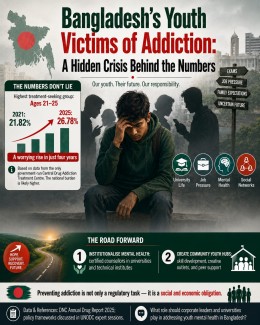
Bangladesh’s Youth Victims of Addiction: A Hidden Crisis Behind the Number
Introduction
In Bangladesh, drug addiction has ceased to be only a law enforcement problem. It has become a serious social and psychological disaster. Its principal victims are the most promising population of the country: the youth. A...
International Youth Day 2026: Launch of the Global Youth Survey
ISSUP Global Youth Network, in collaboration with Drug Free America Foundation, World Federation Against Drugs and Fourth Wave Foundation, presented a webinar to celebrate International Youth Day on 12 August.
Foundational Habits for Early Career Professionals
This webinar discusses the how, why, and what of foundational habits. Foundational habits are beneficial actions we make part of our routine to be successful long-term.
Assessment of the threat posed by highly potent synthetic opioids in Europe
This threat assessment examines the potential risks posed by highly potent synthetic opioids (HPSOs) in Europe over the next two years. Drawing on early warning data, forensic and clinical evidence, and expert input, the report explores how...
Bangladesh’s Youth Victims of Addiction: A Hidden Crisis Behind the Number
Introduction
In Bangladesh, drug addiction has ceased to be only a law enforcement problem. It has become a serious social and psychological disaster. Its principal victims are the most promising population of the country: the youth. A...
Beyond Borders: Is the Synthetic Drug Crisis Outrunning Our Public Health Infrastructure
I had the chance to review a compelling research presentation hosted by the International Society of Substance Use Professionals (ISSUP), which revealed significant data from a large-scale study on methamphetamine (‘Crystal Meth/Ice’) use...
Building Safer Communities: The Role of Community Policing in Substance Use, Violence and Crime Prevention in Uganda
ISSUP Uganda presents its webinar, " Building Safer Communities: The Role of Community Policing in Substance Use, violence and Crime Prevention in Uganda"