
Buscar
 Responding to Drug-Related Offending
Coordinated efforts between law enforcement, courts, treatment providers, and social services to reduce reoffending, promote recovery, and address the underlying causes of drug-related crime.



TRAJECTOIRES SOUS EMPRISE : COMPRENDRE L’EXPLOITATION CRIMINELLE DES MINEURS DANS UN ÉCOSYSTÈME CRIMINEL FRAGMENTÉ DEPUIS 2018
Le Centre international pour la prévention de la criminalité publie Trajectoires sous emprise : comprendre l’exploitation criminelle des jeunes dans un écosystème criminel fragmenté depuis 2018, un nouveau rapport qui examine les...
Victimisation des jeunes et dynamiques urbaines de la violence
Dans un contexte urbain marqué par des transformations sociales, économiques et technologiques rapides, la compréhension des dynamiques de victimisation chez les jeunes dans l’agglomération de Montréal apparaît essentielle pour soutenir l...
Protecting young people from recruitment into criminal drug networks: Research gaps and priorities for stronger prevention and intervention in the European Union
Safe futures is an initiative supported by the European Union Drugs Agency to strengthen shared understanding of, and responses to, the recruitment and exploitation of young people into criminal drugs networks across Europe. The initiative...
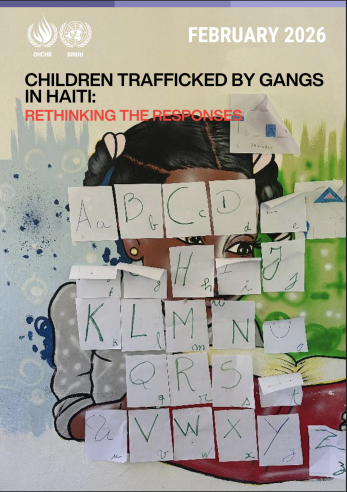
CHILDREN TRAFFICKED BY GANGS IN HAITI: RETHINKING THE RESPONSES
This joint report by the United Nations Integrated Office in Haiti (BINUH) and the Office of the United Nations High Commissioner for Human Rights (OHCHR) examines the trafficking and exploitation of children by gangs in Haiti. It...
Deflection and Cross-Sector Collaboration
ABSTRACT
Jac Charlier will explore deflection as a collaborative approach to addressing substance use, highlighting how communities can connect individuals with appropriate health, treatment, recovery, and social support services while...
EXPLORING THE COURT-MANDATED AND POLICE REQUEST FORMS INDUCTION AT SHIMO MAT CLINIC FOR A PERIOD OF 2020-2025.
EXPLORING THE COURT-MANDATED AND POLICE REQUEST FORMS INDUCTION AT SHIMO MAT CLINIC FOR A PERIOD OF 2020-2025.
AUTHORS AND AFFILIATION
JUSTUS OTIENO1
1 MOMBASA COUNTY DEPARTMENT OF HEALTH - SHIMO MAT CLINIC
BACKGROUND
Injection of...
Psychosocial Care for Offenders with Mild Substance Use Disorders
ABSTRACT
Thailand’s justice system has long faced challenges in addressing drug-related offenses, as punishment alone is insufficient to address the psychological and social factors underlying repeated offending. In response to evolving...
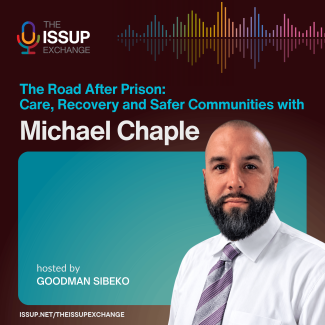
The Road After Prison: Care, Recovery and Safer Communities with Michael Chaple Pt.3
In this third episode, Professor Goodman Sibeko and Michael Chaple look at what happens when re-entry support exists but the systems around it do not work together. Michael shares his experience of the barriers that can limit successful reintegration, from gaps in resources and competing priorities to organisations working in isolation.
Addressing Youth Substance Use and Crime: Prevention and Recovery Lessons from Kinshasa
ABSTRACT
Youth substance use and involvement in crime rarely result from a single risk factor. Vulnerability can increase when individual, family, peer, school, community, and socio-economic risks accumulate, particularly where protective...
National Dialogue for Peace in Mexico: for a shared and habitable future
ABSTRACT
Mexico is facing a profound crisis of violence, disappearance, impunity, and social fragmentation. One of its most painful expressions is the recruitment of children, adolescents, and young people by organized crime. This...
Making intersectoral collaboration work: connecting people, services and communities
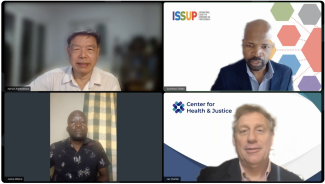
ISSUP’s 2026 conference session on intersectoral collaboration explored how health, justice and community services can work together to help people access and stay connected to appropriate support. Presentations from Thailand, Kenya and Ghana, alongside an introduction to deflection, highlighted clearer referral pathways, shared responsibilities, workforce wellbeing and earlier opportunities for care. These themes connected with the wider conference discussions on evidence-informed practice, youth prevention, recovery and faith-based support. Members were encouraged to adapt the learning to their roles and local circumstances, involve people using services in improvements, and assess changes in health, relationships and everyday life alongside service activity. The session recording offers a starting point for further learning, discussion across professions and practical collaboration through ISSUP National Chapters and professional networks.
The Road After Prison: Care, Recovery and Safer Communities with Michael Chaple Pt.2
In this second episode, Professor Goodman Sibeko is joined by Michael Chaple to explore the critical first weeks after release and what continuity of care looks like in practice.
The Road After Prison: Care, Recovery and Safer Communities with Michael Chaple Pt.1
In this first episode of The Road After Prison: Care, Recovery and Safer Communities, Professor Goodman Sibeko is joined by Michael Chaple, an internationally recognised expert in correctional behavioural health, implementation science, and justice systems integration.
Organized crime groups: A systematic review of individual-level risk factors related to recruitment
Background:
Studies from multiple contexts conceptualize organized crime as comprising different types of criminal organizations and activities. Notwithstanding growing scientific interest and increasing number of policies aiming at...

Psychosocial determinants of recidivism risk among incarcerated individuals with a history of substance use: A systematic review
The prevalence of recidivism among individuals with a history of substance use and incarceration remains a significant concern for criminal justice systems worldwide. With significant social and economic ramifications, preventing people...
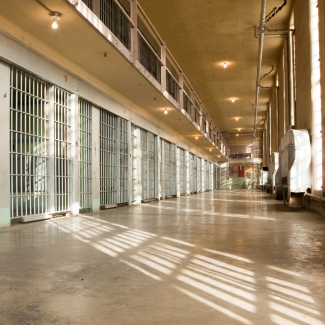
Rehabilitation and Re-entry Programmes for Justice-Involved Individuals and Their Effectiveness in Social Reintegration: A Systematic Review
Prison rehabilitation and community re-entry programmes implemented during incarceration or in the transitional period serve as significant mechanisms for facilitating justice-involved individuals in their post-release adaptation. This...

The Changing Approach to Addiction — From Incarceration to Treatment and Recovery Support
It’s been more than 50 years since the United States launched a “war on drugs.” History has demonstrated the ineffectiveness of “tough-oncrime” drug-use policies, including laws requiring mandatory minimum sentencing for possession of...
Community-based substance use treatment programs for reentering justice-involved adults: A scoping review
Introduction:
For adults involved with the criminal justice system who are reentering their communities postincarceration, there is a large need for community-based substance use treatment. Little is known, however, about the types...

Drug Diversion Schemes Linked to Lower Reoffending Rates, New Research Finds
New research examining more than 62,000 criminal incidents across 13 police forces in England found that police-led drug diversion schemes are associated with significantly lower reoffending rates than traditional prosecution for drug...

Do Drug Diversion Schemes Work? Insights from the Thames Valley Police Drugs Diversion Pilot
This paper examines the development and early outcomes of the Thames Valley Police Drugs Diversion Pilot in West Berkshire, which offers people found in possession of drugs an opportunity to engage with treatment rather than receive a...