
Buscar
Treatment Settings
Various treatment formats, either in a live-in facility or through regular visits to a clinic, are designed for ongoing support, to help maintain recovery, and to prevent relapse.

Effects of medication-assisted treatment on mortality among opioids users: a systematic review and meta-analysis
ABSTRACT
Opioid use disorder (OUD) is associated with a high risk of premature death. Medication-assisted treatment (MAT) is the primary treatment for opioid dependence. We comprehensively assessed the effects of different MAT-related...
Probation clients’ barriers to access and use of opioid use disorder medications
ABSTRACT
Background
There is a gap between evidence-based treatment with medications for opioid use disorders (OUDs) and current practices of probation departments who supervise individuals with OUDs. Many probationers with OUDs cannot...
Substance use profile, treatment compliance, treatment outcomes and related factors in probation: a retrospective file review
Abstract
Objective
In this study, we aimed to investigate the sociodemographic characteristics of the individuals who mandated to the probation unit as the substances they use, their compliance with the programs, treatment outcomes and...
Substance use treatment services utilization and outcomes among probationers in drug courts compared to a matched cohort of probationers in traditional courts
Abstract
Background and objectives: Drug courts provide an array of substance use treatments and community-based services for probationers struggling with substance use disorders. We assessed substance use treatment services utilization...
Effectiveness of a computerized motivational intervention on treatment initiation and substance use: Results from a randomized trial
Highlights
- Motivational computer intervention (MAPIT) increased treatment initiation at 2-month follow-up.
- The significance of MAPIT diminished by the 6-month follow-up.
- Motivational interviewing (MI) was not significant in any model. ...
Substance Involvement and Probation Outcomes: Evidence From a Cohort Study
Abstract
Substance use disorders are common among justice-involved populations, the majority of whom are under community supervision in the form of probation. Substance involvement can amplify the challenges of complying with requirements...
A randomized study of the use of screening, brief intervention, and referral to treatment (SBIRT) for drug and alcohol use with jail inmates
Abstract
Background
Screening, brief intervention, and referral to treatment (SBIRT) is an evidence-based practice that has been shown to reduce alcohol and drug use in healthcare, educational, and other settings, but research on the...
Electronic-Screening, Brief Intervention and Referral to Treatment (e-SBIRT) for Addictive Disorders: Systematic Review and Meta-Analysis
Abstract
Background: Addictive disorders are significant global public health burdens. Treatment uptake with these disorders is low and outcomes can be mixed. Electronic screening, brief intervention, and referral to treatment (e-SBIRT)...
Effect of screening, brief intervention and referral to treatment for unhealthy alcohol and other drug use in mental health treatment settings: a randomized controlled trial
Abstract
Aims
To test the efficacy of a brief intervention to reduce alcohol or drug use and to promote use of addiction services among patients seeking mental health treatment.
Design and setting
A multi-centre, longitudinal, two-group...
Patient outcomes and experience of a task-shared screening and brief intervention service for problem substance use in South African emergency centres: a mixed methods study.
ABSTRACT
Background
Screening, brief intervention and referral to treatment (SBIRT) programmes have resulted in generally positive outcomes in healthcare settings, particularly for problem alcohol use, yet implementation is hampered by...
Implementation of a screening, brief intervention and referral to treatment programme for risky substance use in South African emergency centres: A mixed methods evaluation study
Abstract
Background
Screening, brief intervention, and referral to treatment (SBIRT) for risky substance use is infrequently included in routine healthcare in low-resourced settings. A SBIRT programme, adopted by the Western Cape...
Screening, brief intervention, and referral to treatment (SBIRT) for cannabis: A scoping review
Highlights
• Scoping review found inconsistent support for SBIRT for cannabis.
• Use of cannabis-specific screening could increase engagement.
• Modifications to brief interventions yielded inconsistent outcomes.
• Limited research has...
A randomized study of the use of screening, brief intervention, and referral to treatment (SBIRT) for drug and alcohol use with jail inmates
Abstract
Background: Screening, brief intervention, and referral to treatment (SBIRT) is an evidence-based practice that has been shown to reduce alcohol and drug use in healthcare, educational, and other settings, but research on the...
Considerations for Introducing SBIRT into a Jail Setting.
INTRODUCTION
Nearly all chronic substance users enter the criminal justice system at some time in their use career. Drug use is closely associated with crime, and its prevalence among offenders is high (MacCoun et al., 2003; Newcomb et al...
Substance use and recidivism outcomes for prison-based drug and alcohol interventions.
ABSTRACT
We conducted a systematic review to examine the substance use and recidivism outcomes of prison-based substance use interventions. We searched public health, criminology, and psychology databases, and conducted forward and...
Lessons Learned from a Mixed Methods Evaluation of a Jail-based Co-Occurring Disorders Treatment Program.
ABSTRACT
This study evaluated the planning, implementation, and preliminary outcomes of a US Bureau of Justice Assistance funded justice mental health focused reentry program for offenders with co-occurring substance use and mental health...
Quality Standards in Drug Use Disorder Treatment – Reading List
In this reading list, we provide resources to help engage our members with the latest knowledge, tools, and case studies on quality standards in substance use disorder treatment. These materials highlight international frameworks, research...

The Recovery Allies Link and Lend Inventive Engaging Support (ALLIES)
The Recovery Allies Link and Lend Inventive Engaging Support (ALLIES) Model introduced by NDDCB appears to be part of a growing global movement to professionalize and deepen recovery support services. In 2024, 18 members of the National...
Prioritizing Abstinence-Based Prevention, Regulation, and Recovery to Reduce Substance-Related Harm and Promote Mental Health at a Population-Level
Abstract: This commentary argues the need to prioritize regulation and abstinence-based prevention and recovery as critical services in efforts to maximize the reduction of substance-related harm and the promotion of mental health at a...
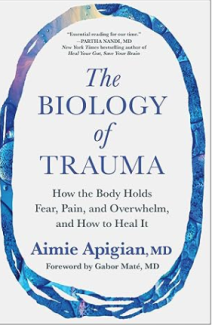
The Biology of Trauma
This groundbreaking book breaks down the latest research to reveal how trauma impacts our bodies on a cellular level and offers an empowering path to whole-body healing.
Today, we know more about mental health than ever before, but...