

Buscar
 Responding to Drug-Related Offending
Coordinated efforts between law enforcement, courts, treatment providers, and social services to reduce reoffending, promote recovery, and address the underlying causes of drug-related crime.



Indicators of Mental Health Problems Reported by Prisoners and Jail Inmates, 2011–12
About 1 in 7 state and federal prisoners (14%) and 1 in 4 jail inmates (26%) reported experiences that met the threshold for serious psychological distress (SPD) in the 30 days prior to a survey conducted between February 2011 and May 2012...
Severe mental illness and substance use disorders in prisoners in low-income and middle-income countries: a systematic review and meta-analysis of prevalence studies
Summary
Background
Although more than two thirds of the world's incarcerated individuals are based in low-income and middle-income countries (LMICs), the burden of psychiatric disorders in this population is not known. This review...
The prevalence of comorbid serious mental illnesses and substance use disorders in prison populations: a systematic review and meta-analysis
Summary
Background
Comorbid mental illnesses and substance use disorders are associated with adverse criminal, social, and health outcomes. Yet, their burden is not reliably known among prison populations. We therefore aimed to estimate...
Prevalence of severe mental illness among people in prison across 43 countries: a systematic review and meta-analysis
Summary
Background
Prison populations have been increasing worldwide. Previous studies suggest that there is a high burden of psychiatric morbidity in people in prison, but, to our knowledge, the last published meta-analysis of prevalence...
Webinar reflection: Exploring Multiple Pathways of Recovery
ISSUP, in collaboration with Faces & Voices of Recovery, has launched a new Global Recovery Network webinar series to spotlight diverse perspectives on recovery. The first webinar featured Dr. Haner Hernández, a respected expert in the...
Principios rectores de la recuperación
ISSUP Global, en colaboración con Faces & Voices of Recovery, presenta su seminario web, "Principios rectores de la recuperación".
From Policy to Possibility: Rethinking Municipal Impact Through Intersectionality and Prevention
This blog post explores how Sweden’s municipal policymaking often falls short of its stated commitments to equality and evidence-based governance—particularly when it comes to addressing intersecting identities and structural inequalities...

Explorando múltiples vías de recuperación
ISSUP Global, en colaboración con Faces & Voices of Recovery, presenta su seminario web, "Explorando múltiples vías de recuperación".
CALL FOR PAPERS – Health Policy and Planning supplment: Changing Health Systems: Advancing Justice and Sustainability through Research, Policy and Practice
Health systems are undergoing rapid and often unpredictable transformations. These changes are driven by technological advancements, shifting demographic patterns, climate change, and geopolitical tensions. The COVID-19 pandemic, for...
Towards an Empowered Future
As the first quarter of 2025 comes to an end, the ISSUP Philippine Chapter continues to strengthen its partnerships and broaden its influence across national and international platforms. The past months have been marked by crucial...
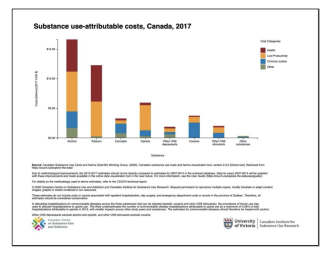
Canadian Substance Use Costs and Harms Online Data Visualisation Tool
CSUCH’s data visualisation tool can be used to estimate substance use trends across the country. The data helps inform programs, practices, and research to protect communities, save lives, and improve the well-being of people in Canada.
...
The changing DNA of serious and organised crime
Europol’s EU Serious and Organised Crime Threat Assessment (EU-SOCTA) 2025, published today, reveals how the very DNA of crime is shifting – reshaping the tactics, tools and structures employed by criminal networks.
The EU-SOCTA offers one...

NAADAC 2025 Annual Conference: Call for Presentations
We invite you to submit a proposal at the NAADAC Annual Conference: Addiction Pros 2025! NAADAC, the Association for Addiction Professionals, will hold its 2025 Annual Conference on October 11-13, 2025, in Seattle, WA, at the Hyatt Regency...
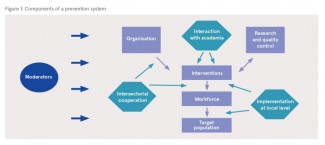
A Reflection on Prevention Systems: A European perspective
Prevention science over the past years has accumulated evidence on the effectiveness of drug prevention interventions (Sloboda et al. 2014). In Europe this improvement has been a consequence of priorities defined by EU drug strategies since...
10 щорічна конференція Асоціації психіатрів України з міжнародною участю «Можливості у сфері психічного здоров’я в країні, що перебуває у стані війни»
10 щорічна конференція Асоціації психіатрів України з міжнародною участю «Можливості у сфері психічного здоров’я в країні, що перебуває у стані війни» відбулася у Києві 10-11 жовтня 2024 р. у гібридному форматі (офлайн і онлайн).
В...

Considering the Youth
Youth is defined by the United Nations, as the age between 15 and 24. This period represents a period of remarkable change for individuals, where they must move from a dependence on parent figures to establishing their own identity and independence.

Recontre entre une delegation comorienne et une delegation americaine dans le cadre de la lutte contre la drogue de synthese a Antananarivo ce mardi 22 octobre 2024 a l’hotel Novotel Antananarivo, Madagascar
L’Union Africaine organise à Antananarivo du 22 au 26 octobre 2024 une conférence de « Consultation Continentale de la coalition mondiale de l’Union Africaine sur la réduction de l’offre de drogue de synthèse ». Il s’agit de renforcer les...

Building Bridges: Enhancing Global Recovery Systems for International Recovery Day
ISSUP Global, in collaboration with the Recovered Users Network (RUN), presents a joint webinar titled "Building Bridges: Enhancing Global Recovery Systems for International Recovery Day " to celebrate International Recovery Day.
Conceptos básicos de ATI: Modelos de alternativas al encarcelamiento (ATI)
El ISSUP, en colaboración con el ICATI, presenta el último episodio de su serie de seminarios web sobre Conceptos básicos de ATI, titulado "Modelos de alternativas al encarcelamiento (ATI)".
Day 3, 14:00 - 15:30, ICUDDR, Global Approaches in Substance Use Prevention , Treatment and Recovery: Insights from Vietnam, East Africa and the Madives
Presented at Thessaloniki 2024, on the 28th of June, 2024.
Moderator: Dr. Rehana Kader (⚑ South Africa) - SA ICUDDR
Presentations:
Duc Nguyen - Evolution of Vietnam's Strategies in Drug Prevention, Treatment, and Recovery: A Two-Decade...