

لټون
 Policy
The laws, regulations, strategies, and governance frameworks that guide how governments and institutions address substance use, substance use disorders, and illicit drug trafficking. These policies shape coordinated responses across prevention, treatment, recovery support, public health, regulatory control, and law enforcement. Effective substance use policies aim to reduce health and social harms, ensure access to prevention and treatment services, regulate controlled substances, and disrupt illicit drug markets. They are typically informed by scientific evidence, public health principles, and cross-sector collaboration to promote safer and healthier communities.

Are There Health Benefits to Going ‘California Sober’?
Some people are going California sober, meaning they are cutting back on or quitting alcohol or other addictive substances in favor of using marijuana. In theory, the lifestyle choice aims to replace more harmful substances with something...

Instrument for Pre-accession Assistance (IPA) data sheets
The European Union Drugs Agency has released updated data sheets providing a clear and comparable overview of drug-related indicators across six Western Balkan partners under the Instrument for Pre-accession Assistance (IPA). These include...
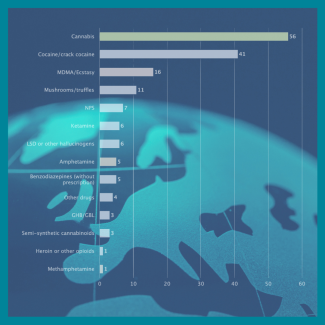
EU controls nine drug precursors following first EUDA assessments
The European Commission has introduced new controls on nine high-risk chemical precursors used in illicit drug production under Delegated Regulation (EU) 2026/314. Most of these substances are linked to synthetic cathinones, while one is...
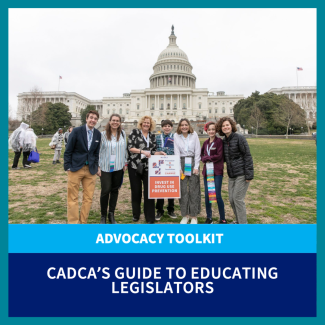
CADCA Advocacy Toolkit – A Guide to Educating Legislators
CADCA’s Guide to Educating Legislators is a practical advocacy toolkit designed to help substance use prevention professionals, coalitions, and community leaders make prevention visible to policymakers. The guide explains how advocates can educate legislators by combining credible data with powerful community stories, building relationships with legislative staff, and presenting clear, concise messages that show why prevention matters.
2026 National Drug Control Strategy - The White House
The 2026 National Drug Control Strategy outlines a comprehensive roadmap to reduce illicit drug use and protect communities across the United States. It prioritizes stopping the flow of drugs and precursor chemicals at all borders through...
Playing legislative catch-up: Drug law reform in the Pacific
Drug trafficking in the Pacific is rapidly expanding, shifting countries from transit points to consumer and production markets. However, many national laws remain outdated, as they were designed for earlier challenges like cannabis and are...

Global Organized Crime Index 2025 - Europe Overview
The 2025 Global Organized Crime Index shows that overall crime levels in Europe remain stable, and the region continues to rank among the least affected globally. However, this stability hides a more complex reality, with criminal markets...
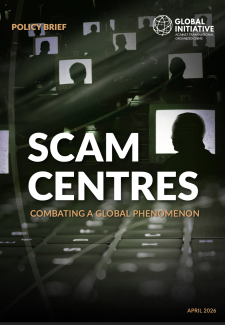
Policy Brief: Scam Centres – Combating a Global Phenomenon
Short Summary
Scam centres are a fast-growing global organized crime threat, generating over $1 trillion in losses in 2024. They use technology and psychological manipulation to target victims worldwide, supported by global criminal...
Preventina (PreventAdvisor)
On 9 March 2026, we officially launched Preventina (PreventAdvisor)—an AI chatbot designed to support prevention science, policy, and practice.
This is not a generic chatbot. Preventina is built on a curated knowledge base of verified...
Safety Starts Early: Drug Use Prevention and Violence Prevention as Public Security Investments
ISSUP Global presents a webinar on Safety Starts Early: Drug Use Prevention and Violence Prevention as Public Security Investments.
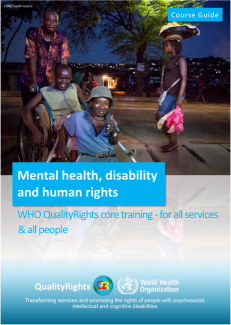
Quality Rights materials for training, guidance and transformation
Overview
As part of the QualityRights Initiative, WHO has developed a comprehensive package of training and guidance materials. The materials can be used to build capacity among mental health practitioners, people with psychosocial...
The Promotion of Alcohol, Cannabis, Gambling, Tobacco and Vaping Products: A Comparative Analysis of the Potential of Legal Frameworks to Limit Exposure Among Minors
Promotions deemed attractive to minors concerning alcohol, cannabis, gambling, tobacco and vaping are circulating in media outlets and places where minors are very active. This report examines the different legal frameworks in Canada that...
Reducing Drug‑Use–Related Offenses Through Health‑Centered Approaches
ISSUP Global, in collaboration with Proyecto Hombre, presents a webinar on Reducing Drug-Use–Related Offenses Through Health-Centered Approaches.
Professional Self-Care in Addiction Services: Ethical Practice, Compassion Fatigue, and Workforce Sustainability
ISSUP Nigeria presents the 31st session of its bi-monthly webinar in the Knowledge Update Series. This webinar focuses on the topic 'Professional Self-Care in Addiction Services: Ethical Practice, Compassion Fatigue, and Workforce Sustainability'.
Why We Serve (and Drink) Alcohol at Substance Abuse Events and Why We Should Stop: An Autoethnography
INTRODUCTION:
Alcohol consumption is fully integrated into rituals and celebrations, generating social pressures that affect individuals, especially those with a history of drug dependence. The normalization of alcohol use is evident in...
AddictologyIssue 2/2025
Perceptions of Law Enforcement Personnel and Public Health Professionals on Synthetic Drug Use in Nigeria
BACKGROUND:
Nigeria is one of the countries in the world severely impacted by synthetic drug production and use, yet lacks fundamental understanding of the synthetic drug market, how many people use, and how much they use.
AIMS:
The aims...
AddictologyIssue 2/2025
Artificial Intelligence in Addiction: Challenges and Opportunities
The article explores how artificial intelligence (AI) is currently used — and could be used — in the field of addiction research and treatment. The authors note that AI (machine learning, data mining, predictive analytics) offers...
Ethics of artificial intelligence in medicine
This article reviews the main ethical issues that arise from the use of artificial intelligence (AI) technologies in medicine. Issues around trust, responsibility, risks of discrimination, privacy, autonomy, and potential benefits and harms...
Perceptions of Law Enforcement Personnel and Public Health Professionals on Synthetic Drug Use in Nigeria
BACKGROUND: Nigeria is one of the countries in the world severely impacted by synthetic drug production and use, yet lacks fundamental understanding of the synthetic drug market, how many people use, and how much they use. AIMS: The aims of...
Mental Health Policy in the Management of Drug Abuse Disorders
The issue of drug (NAPZA) abuse at the global, regional, and national levels remains a serious public health issue, with widespread impacts on social, economic, and security domains. Based on the 2023 National Survey on Drug Abuse conducted by BNN, BRIN, and BPS, the prevalence rate of drug abuse in Indonesia among individuals aged 15–64 years was1.73%, equivalent to approximately 3.33 million people. Furthermore, the prevalence rate of drug use was 2.20%, or approximately 4.24 million people.