


Hledat
 Treatment
The range of medical, psychological, and social services designed to help individuals reduce or stop substance use and manage substance use disorders. Treatment may include assessment, counselling and behavioural therapies, medication-assisted treatment, withdrawal management, and support for co-occurring mental or physical health conditions. Effective treatment is typically person-centred and evidence-informed, and may be provided in outpatient, community, or residential settings. Treatment aims to improve health and functioning, reduce substance-related harms, and support individuals in moving toward recovery and long-term wellbeing.


Day 2, 14:00 - 15:00, Plenary 10: Treatment and Care
Panel Presented at Indonesia 2025 on the 18th of September 2025
Moderator: Tri Iswardani
Presentations:
Gina Hofert: Substance Use Disorder in Pregnancy: Navigating Confidentiality Law to Deliver Evidence-Based Collaborative Care
Julai...
Day 2, 13:00 - 14:00, Plenary 9: Community–Based Approach in Asia
Panel Presented at Indonesia 2025 on the 18th of September 2025
Moderator: Therese Castillo
Presentations:
Erniawati Lestari - Building Access To Rehabilitation Services For Substance Use Disorders In Indonesia Through Community-Based...
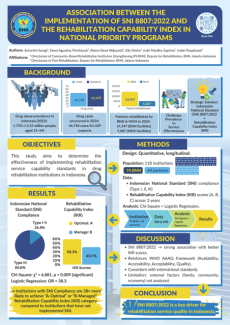
ASSOCIATION BETWEEN THE IMPLEMENTATION OF SNI 8807:2022 AND THE REHABILITATION CAPABILITY INDEX IN NATIONAL PRIORITY PROGRAMS
Background:
In 2023, the prevalence of drug abuse in Indonesia among the population aged 15–64 years reached 1.73%, equivalent to 3.33 million people. This problem has prompted The National Narcotics Board (BNN) as a government agency which...
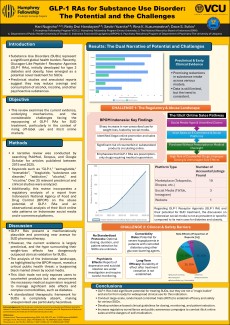
GLP-1 RAs and Substance Use Disorder Treatment: The Potential and the Challenges
| Background: Glucagon-like peptide-1 receptor agonists (GLP-1 RAs) are revolutionizing the management of type 2 diabetes and obesity. Exciting new research suggests these medications may also hold immense promise for treating... |
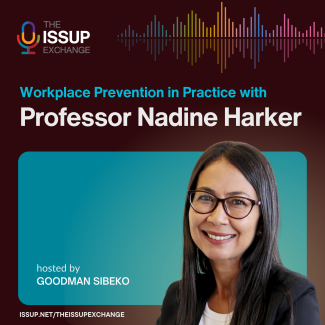
Workplace Prevention in Practice Pt.1: Shifting Workplace from Reaction to Care
In this first episode, Professor Goodman Sibeko sits down with Professor Nadine Harker to unpack what it really means for a workplace to take prevention seriously. Together, they explore how organisations can move beyond awareness campaigns...
Workplace Prevention in Practice (Intro): Getting to know Nadine Harker
Before exploring how workplaces can promote prevention and wellbeing, Professor Goodman Sibeko introduces Professor Nadine Harker, the voice and perspective behind much of this work. In this opening conversation, Professor Harker shares the...
Niñez, madres con TUS y sistemas de protección
ISSUP Argentina presenta su seminario web sobre Niñez, madres con TUS y sistemas de protección.
Navigating stigma: a qualitative study of barriers to opioid treatment engagement in Tanzania
Background
Stigma related to drug use is a well-documented barrier to engaging and remaining on medication for opioid use disorder (MOUD), yet little is known about how stigma operates across multiple social and institutional settings in...
Adherence to mHealth quit smoking application ‘stopcoach’ on top of evidence based smoking cessation counselling: association with participant characteristics and long-term abstinence
Background
Smoking is more common in lower socioeconomic position (SEP) groups, but smoking cessation interventions are less effective for these groups. StopCoach, an mHealth intervention, supports people with lower SEP in quitting smoking...
Initial stakeholder perceptions around opioid settlement funds in Pennsylvania
Background
The opioid epidemic continues to pose significant challenges in the United States, with over 75% of nearly 107,000 drug overdose deaths in 2022 involving opioids. Recently, efforts to curb the epidemic have made strides...
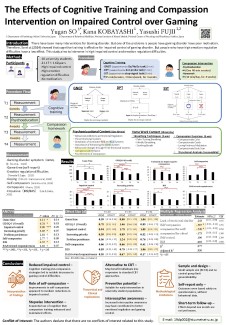
The Effects of Cognitive Training and Compassion Intervention on Impaired Control over Gaming
Background and Objectives: Cognitive behavioral therapy (CBT) is the first-line treatment for gaming disorder (GD), as it addresses background factors. However, certain limitations exist. Cognitive training has been explored as an...
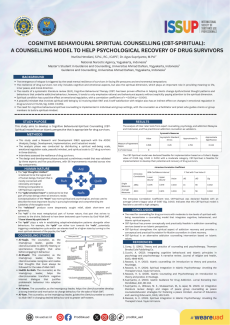
Cognitive Behavioural-Spiritual Counselling Model (CBT-Spiritual) in Resiliency Enhancement for People with Substance Abuse Disorder
Drug abuse is increasingly concerning, requiring a rehabilitative approach through effective counselling by the Indonesian Government by strengthening drug prevention and eradication, because drug abuse in Indonesia is increasingly...
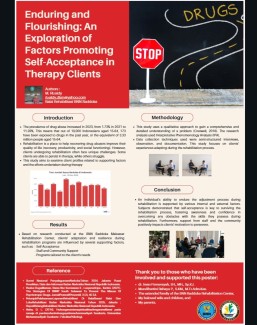
Enduring and Flourishing: An Exploration of Factors Promoting Self-Acceptance in Therapy Clients
Substance abuse in Indonesia is on the rise each year. Rehabilitation centers play a crucial role in helping individuals recover from addiction and improve their quality of life (recovery, productivity, and social functioning). However...
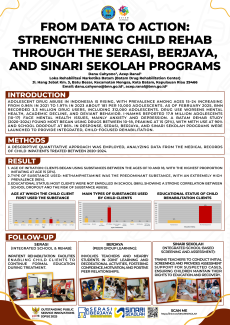
From Data to Action: Strengthening Child Rehabilitation through the SERASI, BERJAYA, and SINARI Sekolah Programs
Adolescent drug abuse in Indonesia is rising, with prevalence among ages 15-24 increasing from .96% IN 2021 to 1.97% in 2023. About 181 per 10,000 adolescents as of February 2025. BNN recorded 3.3 million drug users, including 312,000...
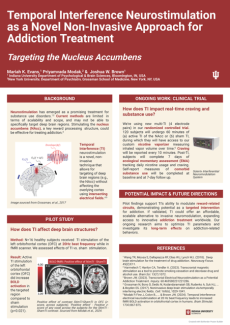
Temporal Interference Neurostimulation as a Novel Non-Invasive Approach for Addiction Treatment: Targeting the Nucleus Accumbens
Background. Substance use disorders (SUDs) remain a major global health burden. Neurostimulation has emerged as a promising treatment by directly altering brain circuits implicated in addictive behaviors, but current methods are limited in...
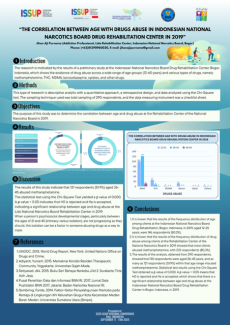
The Correlation Between Age With Drugs Abuse In Rehabilitation Center Of National Narcotics Board Lido 2019
The research is motivated by the results of a preliminary study at the Rehabilitation Center of National Narcotics Board Lido which shows the existence of drug abuse with a wide range of age groups at the age of 12-60 years and various...
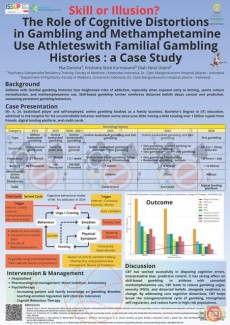
Skill or Illusion? The Role of Cognitive Distortions in Gambling Disorder and Methamphetamine Use Among Athletes with Familial Gambling Backgrounds
Introduction
Athletes with extensive sports knowledge may falsely believe that gambling outcomes can be predicted with skill. This cognitive distortion, combined with methamphetamine use and familial gambling exposure, increases the risk...
Characteristics of Patients with Substance Use Disorder and Co-occuring Disorder Underwent Inpatient Rehabilitation at RSKO Jakarta from 2022 to 2024
Co-occurring disorder is a condition where substance use disorder accompanied by other mental health problem that occur simultaneously and mutually influence disease symptom, health outcomes and risk of relapse. Around 35% people age 18 and...
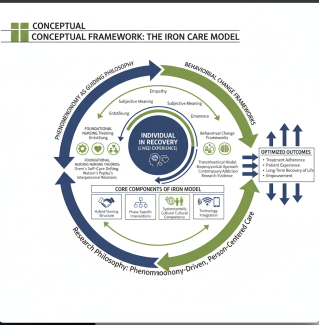
The Integrated Recovery-Oriented Nursing (IRON) Care Model: A Theoretical Framework for Optimizing Addiction Treatment Outcomes
Abstract
Title: The Integrated Recovery-Oriented Nursing (IRON) Care Model: A Theoretical Framework for Optimizing Addiction Treatment Outcomes
Authors: Ahmad Muneer, MSc, RN; Hessa Abdel Qader, MSc, RN
Affiliations: Maudsley Health, Al...
Developing a Holistic and Inclusive Competency Framework for the Addiction Workforce: Insights from a Transdisciplinary Team of Addiction Professionals
INTRODUCTION: The addiction workforce encompasses a diverse group of professionals across various sectors, such as prevention, harm reduction, treatment, and recovery. Training for this workforce is highly variable both at local and...
AddictologyIssue 1/2025