
Buscar



Connecting Sectors, Creating Impact: A United Response on Drugs
|
Substance use disorders (SUDs) pose significant challenges in academic environments, impacting students' health, academic performance, and campus well-being. This panel presentation outlines the collaborative efforts of Trinity... |

Connecting Sectors Creating Impact: A Comunity-Driver Drug Abuse Prevention Model From Ewu-Ekiti, Nigeria
|
The use of psychoactive substances by young people is a rising environmental health concern in many Nigerian communities. Prevention efforts have shown fragmentation across institutions, thus curtailing their impact. It has... |

Dream-Catchers: A Scalable Youth Mentoring Model for Substance Use Prevention in Nigeria
|
Background |

Assets Coming Together for Adolescents and Young Adult Health and Wellness (ACT NOW!!!): Engaging Community Actors in a Mapping Exercise to bridge the gap between drug prevention science and practice
|
ACT NOW!!! is a community drug prevention initiative rooted in an asset mapping exercise that serves as a foundation for identifying effective intervention strategies. The presentation emphasizes leveraging insights gained from... |

MeWeSports: A community sports-based intervention for preventing adolescent substance use and promoting mental health - Development and pilot insights from India
|
Background |

Youth Engagement as a Strategic Tool for Strengthening Evidence-Based Drug Prevention in Africa
|
Africa has the youngest population in the world, with over 60% of its population under the age of 25 (United Nations, 2022). At the same time, drug use is rising globally, with an estimated 296 million people using drugs in... |

Recent U.S. drug alerts: Turning emerging evidence into workforce preparedness
Recent United States alerts on fentanyl analogues, medetomidine, cychlorphine, drug mixtures and concentrated 7-OH products highlight evolving challenges across the substance use workforce. They invite us to review local preparedness, understand testing limitations and strengthen links between frontline services, laboratories and public-health partners. A useful response brings together clinical, prevention, recovery and peer perspectives, with clear responsibilities for turning relevant findings into action. For the global ISSUP community, these alerts offer lessons in preparedness while requiring careful consideration of local evidence, resources and service arrangements. Staying informed through trusted sources and sharing practical responses through ISSUP can help translate emerging knowledge into safer care and more responsive support for individuals, families and communities.

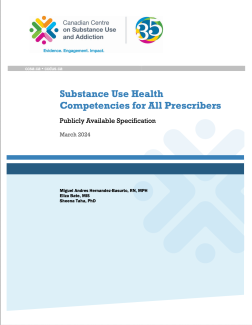
Substance Use and Health Competencies for All Prescribers
Developed by the Canadian Centre on Substance Use and Addiction (CCSA), the Workforce Competencies provide an evidence-informed framework outlining the knowledge, skills, values and behaviours needed by professionals working in substance...
Rehabilitation and Re-entry Programmes for Justice-Involved Individuals and Their Effectiveness in Social Reintegration: A Systematic Review
Prison rehabilitation and community re-entry programmes implemented during incarceration or in the transitional period serve as significant mechanisms for facilitating justice-involved individuals in their post-release adaptation. This...

The Changing Approach to Addiction — From Incarceration to Treatment and Recovery Support
It’s been more than 50 years since the United States launched a “war on drugs.” History has demonstrated the ineffectiveness of “tough-oncrime” drug-use policies, including laws requiring mandatory minimum sentencing for possession of...
Community-based substance use treatment programs for reentering justice-involved adults: A scoping review
Introduction:
For adults involved with the criminal justice system who are reentering their communities postincarceration, there is a large need for community-based substance use treatment. Little is known, however, about the types...

The product may not be what it says: What emerging synthetic drugs and dangerous mixtures mean for practice
The clearest message from our recent ISSUP Global webinar was a simple but important one: we should stop assuming that an unregulated drug product contains only what it is sold as containing. That uncertainty now has direct implications for prevention, clinical care, recovery support, toxicology, law enforcement, policy and the administration of justice.
Strengthening Public Health and Security in the new African Union Strategy and Plan of Action on Drug Control and Crime Prevention
ISSUP Global, in collaboration with the African Union, presents a webinar on Strengthening Public Health and Security: African Union Strategy and Plan of Action on Drug Control and Crime Prevention.
Is it time for Bangladesh to rejig its rehabilitation policies on mobile addiction in children
Just the other day a distraught parent came into my office looking for a rehab center for their teen. The crisis was not substance abuse but smartphone addiction. The situation has reached a level where the child experiences a great deal of...
Building Safer Communities: The Role of Community Policing in Substance Use, Violence and Crime Prevention in Uganda
ISSUP Uganda presents its webinar, " Building Safer Communities: The Role of Community Policing in Substance Use, violence and Crime Prevention in Uganda"
The Role of Faith Communities in Addressing Substance Use and Crime – Reading List (Part 2)
In this second reading list, we continue exploring the growing evidence on the role and contribution of faith communities and faith-based organisations in addressing substance use and crime, with a particular focus on treatment engagement...

Spirituality and Harmful or Hazardous Alcohol and Other Drug Use
This meta-analysis synthesises evidence from 55 longitudinal studies involving more than 540,000 participants to examine the relationship between spirituality and harmful or hazardous alcohol and other drug (AOD) use. The findings...

Association Between Religiosity and Spirituality and Cocaine Use: A Systematic Review
This systematic review examines the association between religiosity, spirituality, and cocaine use by analysing findings from 20 observational studies involving adults and adolescents. Most studies found that higher levels of religiosity...

Behavioural Addiction among Youths: Patterns and Innovative strategies for Prevention
ISSUP Nigeria presents the 34th session of its bi-monthly webinar in the Knowledge Update Series. This webinar will focus on the topic 'Behavioural Addiction among Youths: Patterns and Innovative strategies for Prevention'.
Youth Narratives Concerning Drug Trafficking in Sinaloa: Joining, Risks, and Plans
This qualitative study explores the experiences of young people involved in drug trafficking in Culiacán, Sinaloa, Mexico. Based on interviews with 16 young adults, the research examines why they joined drug trafficking, how they perceived...