
Buscar
 Tratamiento


Faith Based Recovery
Faith-based recovery refers to programmes and communities that draw on spiritual and religious resources to support the process of change. It encompasses a wide range of approaches that foster recovery through meaning, hope, responsibility...

A scoping review of spirituality in relation to substance use disorders: Psychological, biological, and cultural issues
This scoping review explores the role of spirituality in substance use disorders (SUD) across psychological, biological and cultural dimensions. It reviews research on topics including spiritual awakening, drug craving, psychedelic-assisted...
Religion and Spirituality in Addiction Recovery
This scoping review examines the role of spirituality in substance use disorders across three interconnected areas: psychology, biology, and culture. It explores topics including spiritual awakening, the relationship between spirituality...
From Darkness to Light: Spiritual Turning Points in Recovery among Former Substance Users in Norway
This qualitative study explores how spiritual experiences contribute to recovery from substance use disorders among 24 people who completed Christian faith-based rehabilitation programmes in Norway. Participants described experiencing loss...
A mosque-based methadone maintenance treatment strategy: Implementation and pilot results
This study describes an Islamic-inspired methadone maintenance treatment programme delivered in a mosque setting for 36 Muslim men who used heroin. The programme combined methadone treatment with peer support and religious counselling...
Evaluating the Efficacy of Repetitive Transcranial Magnetic Stimulation (rTMS) on Craving Reduction and Relapse Prevention in Alcohol and Opioid Use Disorders: A Randomized Controlled Trial
|
Background: High relapse rates in alcohol (AUD) and opioid (OUD) use disorders remain a major treatment challenge. This study investigated the efficacy of repetitive transcranial magnetic stimulation (rTMS) for sustained... |

Structural and Regulatory Deficits in Alcohol Control Policy: A Critical Evaluation of Advertising Governance and Treatment Systems in Nigeria’s Draft NNAP 2025
|
Nigeria ranks among countries with the highest alcohol consumption rates among individuals aged 15 and above, posing adverse public health risks. On one hand, excessive advertising, and aggressive marketing strategies has... |

Collaboration in drug treatment and rehabilitation in the Philippines
|
Introduction: Collaboration is a key strategy to enable organizations involved in drug rehabilitation to address the complex medical, mental, social, and legal problems confronting people who use drugs. One important... |

Connecting Sectors, Creating Impact: A United Response on Drugs
|
Substance use disorders (SUDs) pose significant challenges in academic environments, impacting students' health, academic performance, and campus well-being. This panel presentation outlines the collaborative efforts of Trinity... |

Strengthening Organizational Resilience to Sustain Drug Rehabilitation Services During Crisis: Evidence from Indonesia
|
Background: The COVID-19 pandemic exposed critical fragilities in drug rehabilitation systems worldwide, particularly in low-resource settings where continuity of care depends on coordination across health, social, and... |

What Should the Treatment of the Soul Be? Exploring Addiction, Alcoholism, and Overeating
“What good will it be for someone if they gain the whole world, yet forfeit their soul? Or what can anyone give in exchange for their soul?”
— Matthew 16:26
What does it mean to “damage the soul,” and what might it mean to restore it?
The...
Integrated In-Patient Rehabilitation and Community Outreach for Substance Use Disorders in a Resource-Limited Post-Conflict Setting: Experience from Liberia
|
Substance use disorders (SUDs) represent an increasing public health challenge in Liberia, particularly among vulnerable youth and individuals affected by trauma, poverty, and social instability. The National Rehabilitation... |

Resonating RecoveryThe Impact of Solfeggio Frequencies and Breathwork on Neural Stabilization and Emotional Regulation in Substance Use Disorders
|
Background: Traditional pharmacological and behavioral interventions for Substance Use Disorder (SUD) often struggle to address the persistent autonomic dysregulation and "allostatic load" that lead to relapse. Chronic... |

Recent U.S. drug alerts: Turning emerging evidence into workforce preparedness
Recent United States alerts on fentanyl analogues, medetomidine, cychlorphine, drug mixtures and concentrated 7-OH products highlight evolving challenges across the substance use workforce. They invite us to review local preparedness, understand testing limitations and strengthen links between frontline services, laboratories and public-health partners. A useful response brings together clinical, prevention, recovery and peer perspectives, with clear responsibilities for turning relevant findings into action. For the global ISSUP community, these alerts offer lessons in preparedness while requiring careful consideration of local evidence, resources and service arrangements. Staying informed through trusted sources and sharing practical responses through ISSUP can help translate emerging knowledge into safer care and more responsive support for individuals, families and communities.

The prevalence, risk and protective factors and service needs in relation to the comorbidity of substance use and neurodiversity
This report was commissioned by Citywide because Community Drugs Projects had recognised a need for support to develop better service delivery for people who were neurodivergent. Citywide Drugs Crisis Campaign is a national network of...
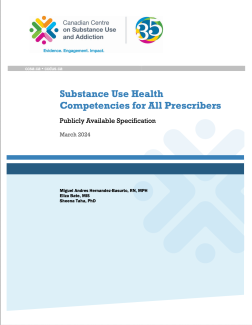
Substance Use and Health Competencies for All Prescribers
Developed by the Canadian Centre on Substance Use and Addiction (CCSA), the Workforce Competencies provide an evidence-informed framework outlining the knowledge, skills, values and behaviours needed by professionals working in substance...
Psychosocial determinants of recidivism risk among incarcerated individuals with a history of substance use: A systematic review
The prevalence of recidivism among individuals with a history of substance use and incarceration remains a significant concern for criminal justice systems worldwide. With significant social and economic ramifications, preventing people...

The Changing Approach to Addiction — From Incarceration to Treatment and Recovery Support
It’s been more than 50 years since the United States launched a “war on drugs.” History has demonstrated the ineffectiveness of “tough-oncrime” drug-use policies, including laws requiring mandatory minimum sentencing for possession of...
Community-based substance use treatment programs for reentering justice-involved adults: A scoping review
Introduction:
For adults involved with the criminal justice system who are reentering their communities postincarceration, there is a large need for community-based substance use treatment. Little is known, however, about the types...

The product may not be what it says: What emerging synthetic drugs and dangerous mixtures mean for practice
The clearest message from our recent ISSUP Global webinar was a simple but important one: we should stop assuming that an unregulated drug product contains only what it is sold as containing. That uncertainty now has direct implications for prevention, clinical care, recovery support, toxicology, law enforcement, policy and the administration of justice.