


Buscar
 Faith-Based Strategies
Initiatives that are delivered through or in partnership with faith communities and organisations. These approaches often draw on spiritual values, community networks, and pastoral support to promote wellbeing, prevent substance use, support recovery, and reduce stigma. Faith communities can play an important role in raising awareness, providing social support, facilitating referrals to professional services, and helping reintegrate individuals affected by substance use disorders. When combined with evidence-based practices and strong partnerships with health and social services, faith-based strategies can contribute meaningfully to comprehensive responses to substance use and related harms.


Advancing the science of evaluating Collegiate Recovery Program processes and outcomes: A recovery capital perspective
Collegiate recovery programs (CRPs) offer resources and programming for postsecondary students in addiction recovery to ensure they can initiate or maintain their recovery and complete college. To achieve these goals, CRPs offer a variety...
Collegiate Recovery Communities Programs: What do we know and what do we need to know?
As the broad construct of recovery increasingly guides addiction services and policy, federal agencies have called for the expansion of peer-driven recovery support services. The high prevalence of substance use and abuse in colleges and...
Are Collegiate Recovery Programs worth the investment?
The first collegiate recovery program was founded at Brown University in 1977. Since then, these programs have seen explosive growth, with 136 currently in operation. Universities are often tasked with determining whether programs are worth...
Recovery High Schools: A Descriptive Study of School Programs and Students
High schools specifically designed for students recovering from a substance use disorder (substance abuse or dependence) have been emerging as a continuing care resource since 1987. This study of 17 schools provides the first systematic...
A systematic review of recovery high schools and collegiate recovery programs for building recovery capital among adolescents and emerging adults
Introduction:
Educational settings represent a prime opportunity for reaching adolescents and young adults (ages 12–27) experiencing substance use disorders (SUD). Recovery high schools (RHSs) were established to help adolescents in...
What is a Recovery High School?
This resource from the The Association of Recovery Schools explains the role of recovery high schools, which are secondary schools designed specifically to support students recovering from substance use disorders and co-occurring mental...
Recovery schools for improving behavioral and academic outcomes among students in recovery from substance use disorders: a systematic review
This Campbell systematic review examines the effects of recovery schools on student behavioral and academic outcomes, compared to the effects of non-recovery schools. The review summarizes evidence from one quasi-experimental study (with a...
A qualitative examination of social identity and stigma among adolescents recovering from alcohol or drug use
Introduction
Alcohol and other drug (AOD) use disorders are stigmatized conditions, but little is known about youth’s experience of this stigma, which may threaten their developing social identity and recovery process. This study...
Understanding recovery capital for addiction recovery in adolescence and young adulthood
In 2017, the Recovery Capital for Adolescents Model (RCAM) was proposed to highlight needs of adolescents in recovery (1), building on the seminal work of William Cloud and Robert Granfield (2). Research since the RCAM was proposed has...
Connecting Evidence, Prevention, Law Enforcement and Community Action: Key Insights from ISSUP 2026
How do we go about translating evidence into effective action, strengthen prevention, address drug-related crime, improve access to treatment and recovery support, and build safer, healthier communities?
This age-old question was explored...

Faith-Based Approaches: The Role of Faith and Religious Institutions in Addressing Substance Use
Faith, spirituality and faith-based organisations can play an important role in addressing substance use, supporting recovery and responding to related vulnerabilities as well as crime. Across different cultural and community settings, they...
Victimisation des jeunes et dynamiques urbaines de la violence
Dans un contexte urbain marqué par des transformations sociales, économiques et technologiques rapides, la compréhension des dynamiques de victimisation chez les jeunes dans l’agglomération de Montréal apparaît essentielle pour soutenir l...
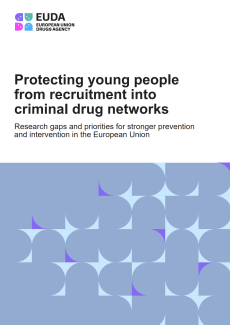
Protecting young people from recruitment into criminal drug networks: Research gaps and priorities for stronger prevention and intervention in the European Union
Safe futures is an initiative supported by the European Union Drugs Agency to strengthen shared understanding of, and responses to, the recruitment and exploitation of young people into criminal drugs networks across Europe. The initiative...
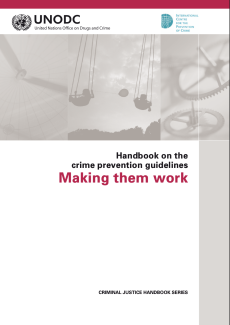
Handbook on the crime prevention guidelines: Making them work
The present Handbook is one of a series of practical tools developed by the United Nations Office on Drugs and Crime (UNODC) to support countries in the implementation of the standards and norms in crime prevention and criminal justice...
Call for Papers: Prevention Science Special Issue on Relational Health
This special issue responds to the Society for Prevention Research’s growing emphasis on multilevel prevention and systems change by advancing a global dialogue on how multilevel, relational health promoting interventions can be designed...
Session 4: Faith-Based Approaches: The Role of Faith and Religious Institutions in Addressing Substance Use
Chaired by: Mulka Nisic
- Faith in Young People? Understanding the Potential and Purpose of Faith in the Recovery and Desistance Journeys of Adolescents and Young Adults - Mr. Tim Rosier
- Latin American Pastoral Manual for Addiction Preven...
Faith, Hope and Recovery: Building a Life Worth Living
ABSTRACT
Faith communities can play a distinctive role in recovery from substance use problems, not as a substitute for evidence-based treatment, but as part of the wider social, relational and spiritual resources that help people build...
EVIDENCE BASED ASSESSMENT OF RELIGIOUS LEADERS AND INSTITUTIONS IN COMBATING DRUGS AND SUBSTANCE ABUSE IN NIGERIA
ABSTRACT
This study aligns with the conference theme “Connecting Sectors, Creating Impact: A United Response on Drugs.” It presents primary, field-generated evidence examining the preventive and community-response role of religious leaders...
"Proclaim Liberty to the Captives": Reflections on the Christian Contribution—Its Strengths and Vulnerabilities
ABSTRACT
Christians have played a significant and pioneering role in addressing substance use and supporting people on the journey of recovery. Drawing on the speaker’s experience leading addiction recovery work in the UK and Latin America...
Strengthening Faith-Based Responses to Drugs and Youth Criminal Recruitment: CICAD's Experience in the Americas
ABSTRACT
This presentation examines the experience of the Inter-American Drug Abuse Control Commission (CICAD) in strengthening the role of faith-based organizations in addressing substance use and the growing challenge of youth...