


Buscar


Victimisation des jeunes et dynamiques urbaines de la violence
Dans un contexte urbain marqué par des transformations sociales, économiques et technologiques rapides, la compréhension des dynamiques de victimisation chez les jeunes dans l’agglomération de Montréal apparaît essentielle pour soutenir l...
Protecting young people from recruitment into criminal drug networks: Research gaps and priorities for stronger prevention and intervention in the European Union
Safe futures is an initiative supported by the European Union Drugs Agency to strengthen shared understanding of, and responses to, the recruitment and exploitation of young people into criminal drugs networks across Europe. The initiative...
Handbook on the crime prevention guidelines: Making them work
The present Handbook is one of a series of practical tools developed by the United Nations Office on Drugs and Crime (UNODC) to support countries in the implementation of the standards and norms in crime prevention and criminal justice...
Call for Papers: Prevention Science Special Issue on Relational Health
This special issue responds to the Society for Prevention Research’s growing emphasis on multilevel prevention and systems change by advancing a global dialogue on how multilevel, relational health promoting interventions can be designed...
SBIRT AS A TOOL FOR PREVENTION AND REDUCING RISKY SUBSTANCE USE BEHAVIOURS AMONG YOUNG PEOPLE IN ZARIA, KADUNA STATE, NIGERIA.
ABSTRACT
Background: Screening, brief intervention, and referral to treatment (SBIRT) is an evidence-based practice that has been shown to reduce alcohol and drug use in healthcare settings, but there is a paucity of research on the...
We know what works, why don’t we use it? Some reflections from our work with Member States
For more than 15 years, UNODC has been promoting evidence-based practice on drug use, as well as treatment, harm reduction and recovery services for people who use drugs and people with drug use disorders, both in the community and when in...
Connecting Civil Society with the United Nations: Opportunities for Engagement in Drug Policy, Crime Prevention and Criminal Justice
ISSUP Global, in collaboration with the Vienna NGO Committee on Drugs (VNGOC), present a webinar on onnecting Civil Society with the United Nations: Opportunities for Engagement in Drug Policy, Crime Prevention and Criminal Justice.
Building Safer Communities: The Role of Community Policing in Substance Use, Violence and Crime Prevention in Uganda
ISSUP Uganda presents its webinar, " Building Safer Communities: The Role of Community Policing in Substance Use, violence and Crime Prevention in Uganda"
The Role of Faith Communities in Addressing Substance Use and Crime – Reading List (Part 2)
In this second reading list, we continue exploring the growing evidence on the role and contribution of faith communities and faith-based organisations in addressing substance use and crime, with a particular focus on treatment engagement...

Spirituality and Harmful or Hazardous Alcohol and Other Drug Use
This meta-analysis synthesises evidence from 55 longitudinal studies involving more than 540,000 participants to examine the relationship between spirituality and harmful or hazardous alcohol and other drug (AOD) use. The findings...

Association Between Religiosity and Spirituality and Cocaine Use: A Systematic Review
This systematic review examines the association between religiosity, spirituality, and cocaine use by analysing findings from 20 observational studies involving adults and adolescents. Most studies found that higher levels of religiosity...
Religion, Crime, and Criminal Justice
This chapter reviews the evidence on the relationship between religion, crime, and the criminal justice system. It highlights a growing body of research showing a consistent inverse association between religiosity and criminal behaviour...

Behavioural Addiction among Youths: Patterns and Innovative strategies for Prevention
ISSUP Nigeria presents the 34th session of its bi-monthly webinar in the Knowledge Update Series. This webinar will focus on the topic 'Behavioural Addiction among Youths: Patterns and Innovative strategies for Prevention'.
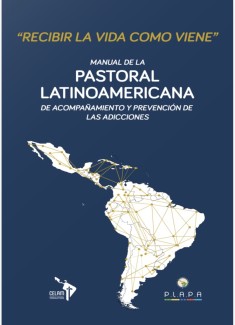
Manual de la Pastoral Latinoamericana de Acompañamiento y Prevención de las Adicciones
Nos complace compartir el lanzamiento del Manual de Pastoral de Adicciones, una iniciativa desarrollada por la Pastoral Latinoamericana de las Adicciones (PLAPA) y el CELAM.
Este manual ofrece una guía pastoral para la prevención, el...
Protecting Youth from Mexican Drug Cartel Recruitment: The Prospects of Educational Interventions
This investigation considers the impact of Mexico’s War on Drugs since 2006 and the influence of widespread cartel networks on the youth population. As both victims and perpetrators of drug-related crime, the young individuals of Mexico are...
Recruitment of minors into organised crime
The recruitment of minors into serious and organised crime has increasingly become a tactic used by criminal networks to avoid detection, capture and prosecution. By using minors, the criminal networks increase the distance between the...
Faith-Based Interventions for Reducing Gang Violence in the Caribbean: Reflections from a Professor and a Priest
This book chapter explores the role of faith-based interventions in preventing and reducing gang violence in Trinidad and Tobago. Drawing on the experiences of a criminologist and a religious leader, it argues that gang violence should be...
The Association Between Religiosity and Substance Use Patterns Among Women Involved in the Criminal Justice System
This study explores the relationship between religiosity and substance use patterns among women involved in the criminal justice system. Using data from women participating in a drug court programme in the United States, the researchers...
Religiosity and crime: Evidence from a city-wide shock
This study examines the relationship between religiosity and crime using data from the 2015 visit of Pope Francis to Philadelphia. By analysing daily crime reports before, during, and after the visit, the researchers found a significant...
The Role of Faith Communities in Addressing Substance Use and Crime – Reading List (Part 1)
In this reading list, we provide resources exploring the role of faith communities and faith-based organisations in addressing substance use, crime, violence and related social harms. Faith-based strategies draw on spiritual values...
