

Rechercher
Criminal Justice


TRAJECTOIRES SOUS EMPRISE : COMPRENDRE L’EXPLOITATION CRIMINELLE DES MINEURS DANS UN ÉCOSYSTÈME CRIMINEL FRAGMENTÉ DEPUIS 2018
Le Centre international pour la prévention de la criminalité publie Trajectoires sous emprise : comprendre l’exploitation criminelle des jeunes dans un écosystème criminel fragmenté depuis 2018, un nouveau rapport qui examine les...
Victimisation des jeunes et dynamiques urbaines de la violence
Dans un contexte urbain marqué par des transformations sociales, économiques et technologiques rapides, la compréhension des dynamiques de victimisation chez les jeunes dans l’agglomération de Montréal apparaît essentielle pour soutenir l...
Protecting young people from recruitment into criminal drug networks: Research gaps and priorities for stronger prevention and intervention in the European Union
Safe futures is an initiative supported by the European Union Drugs Agency to strengthen shared understanding of, and responses to, the recruitment and exploitation of young people into criminal drugs networks across Europe. The initiative...
Session 3: Intersectoral Collaboration for Effective Substance Use Responses
Chaired by: Goodman Sibeko
- Psychosocial Care for Offenders with Mild Substance Use Disorders - Dr. Apinun Aramrattana
- Exploring the Court-Mandated and Police Request Forms Induction at Shimo Mat Clinic for a Period of 2020-2025 - Mr...
Deflection and Cross-Sector Collaboration
ABSTRACT
Jac Charlier will explore deflection as a collaborative approach to addressing substance use, highlighting how communities can connect individuals with appropriate health, treatment, recovery, and social support services while...
La route après la prison : soins, rétablissement et communautés plus sûres avec Michael Chaple, partie 3
Dans ce troisième épisode, le professeur Goodman Sibeko et Michael Chaple examinent ce qui se passe lorsque le soutien à la réinsertion existe mais que les systèmes qui l’entourent ne fonctionnent pas ensemble. Michael partage son expérience des obstacles pouvant limiter la réussite de la réintégration, des lacunes de ressources et des priorités concurrentes aux organisations travaillant en isolement.
The Road After Prison: Care, Recovery and Safer Communities with Michael Chaple Pt.2
In this second episode, Professor Goodman Sibeko is joined by Michael Chaple to explore the critical first weeks after release and what continuity of care looks like in practice.
The Road After Prison: Care, Recovery and Safer Communities with Michael Chaple Pt.1
In this first episode of The Road After Prison: Care, Recovery and Safer Communities, Professor Goodman Sibeko is joined by Michael Chaple, an internationally recognised expert in correctional behavioural health, implementation science, and justice systems integration.
Organized crime groups: A systematic review of individual-level risk factors related to recruitment
Background:
Studies from multiple contexts conceptualize organized crime as comprising different types of criminal organizations and activities. Notwithstanding growing scientific interest and increasing number of policies aiming at...

Connecting Civil Society with the United Nations: Opportunities for Engagement in Drug Policy, Crime Prevention and Criminal Justice
ISSUP Global, in collaboration with the Vienna NGO Committee on Drugs (VNGOC), present a webinar on onnecting Civil Society with the United Nations: Opportunities for Engagement in Drug Policy, Crime Prevention and Criminal Justice.
Psychosocial determinants of recidivism risk among incarcerated individuals with a history of substance use: A systematic review
The prevalence of recidivism among individuals with a history of substance use and incarceration remains a significant concern for criminal justice systems worldwide. With significant social and economic ramifications, preventing people...
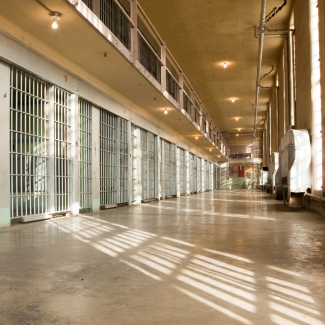
Rehabilitation and Re-entry Programmes for Justice-Involved Individuals and Their Effectiveness in Social Reintegration: A Systematic Review
Prison rehabilitation and community re-entry programmes implemented during incarceration or in the transitional period serve as significant mechanisms for facilitating justice-involved individuals in their post-release adaptation. This...

The Changing Approach to Addiction — From Incarceration to Treatment and Recovery Support
It’s been more than 50 years since the United States launched a “war on drugs.” History has demonstrated the ineffectiveness of “tough-oncrime” drug-use policies, including laws requiring mandatory minimum sentencing for possession of...
Community-based substance use treatment programs for reentering justice-involved adults: A scoping review
Introduction:
For adults involved with the criminal justice system who are reentering their communities postincarceration, there is a large need for community-based substance use treatment. Little is known, however, about the types...

Drug Diversion Schemes Linked to Lower Reoffending Rates, New Research Finds
New research examining more than 62,000 criminal incidents across 13 police forces in England found that police-led drug diversion schemes are associated with significantly lower reoffending rates than traditional prosecution for drug...

Do Drug Diversion Schemes Work? Insights from the Thames Valley Police Drugs Diversion Pilot
This paper examines the development and early outcomes of the Thames Valley Police Drugs Diversion Pilot in West Berkshire, which offers people found in possession of drugs an opportunity to engage with treatment rather than receive a...

The introduction of drug Arrest Referral schemes in London: A partnership between drug services and the police
Arrest Referral (AR) schemes in London were established to connect people who use drugs with treatment services at the point of arrest through collaboration between police and drug service providers. Based on interviews with police officers...

The Role of Faith Communities in Addressing Substance Use and Crime – Reading List (Part 2)
In this second reading list, we continue exploring the growing evidence on the role and contribution of faith communities and faith-based organisations in addressing substance use and crime, with a particular focus on treatment engagement...

Association Between Religiosity and Spirituality and Cocaine Use: A Systematic Review
This systematic review examines the association between religiosity, spirituality, and cocaine use by analysing findings from 20 observational studies involving adults and adolescents. Most studies found that higher levels of religiosity...

Religion, Crime, and Criminal Justice
This chapter reviews the evidence on the relationship between religion, crime, and the criminal justice system. It highlights a growing body of research showing a consistent inverse association between religiosity and criminal behaviour...