खोज
 Populations
Distinct groups of people within a society who share certain characteristics such as age, gender, geographic location, socioeconomic status, cultural background, or exposure to particular risk factors that may influence patterns of substance use, vulnerability to substance use disorders, and access to services. In the context of substance use systems, identifying and understanding different populations helps guide the design of prevention, treatment, recovery, and policy responses that are appropriate, equitable, and responsive to specific needs. Examples may include youth, women, people experiencing homelessness, individuals in the criminal justice system, or communities affected by specific social or economic conditions.



Addressing gender-based violence against women and people of diverse gender identity and expression who use drugs
This briefing paper aims to raise awareness about the widespread and severe impact of GBV on women and people of diverse gender identity and expression who use drugs, as well as the strong connection between GBV and the HIV epidemic within...
L B Finance Head Office at Colombo-Sri Lanka-28 Nov:24
Widespread workplace coverage is another unique aspect of drug prevention. Workplace prevention, in particular, covers a wide range of aspects of drug prevention. Prevention-based curricula address organizational policies, brief...

Connecting Research, Policy, and Prevention: Key Insights into Adolescent Substance Use from ESPAD and MedSPAD Projects
ISSUP Italy presents its webinar on Connecting Research, Policy, and Prevention: Key Insights into Adolescent Substance Use from ESPAD and MedSPAD Projects.
The assessment of drug use experiences among Junior Secondary School students: a pre-evaluation for Keepin’it REAL pilot intervention in Lagos State
Background:
The study aimed to assess junior students’ experiences with drug use to identify theneeds for the implementation of the keepin’it REAL intervention, an efficaciousschool-based program that aims to reduce drug and substance use...
Health and wellbeing of women substance users need safest spaces in Pakistan
Abstract
In Pakistan, the situation of drug usage among women is not any different, and barely one in five of them has access to health care, lacking space for women substance users. This study addresses the current situation of women's...
Self-Regulation and Risk Behavior of Adolescents Aged 15–20
INTRODUCTION: According to Brichcín (1999), a self-regulating person is someone who can resist the temptation of immediate gratification of their needs and is capable of achieving challenging goals. Self-regulation represents the ability to...
AddictologyIssue 2/2024
Risk Factors for Substance Use among University Students in Ukraine during Wartime
INTRODUCTION: The impact of ongoing conflict in the country on substance use among youth remains unclear. This study aims to identify the risk factors for substance use among university students and their association with mental health...
AddictologyIssue 2/2024

Resilience and Depressivity among Czech Adolescents in Relation to Internet Gaming Disorder: Representative Sample
INTRODUCTION: Existing research highlights current issues in youth mental health that are often related to the overuse of modern technology, the experience of depression, or reduced resilience to mental stress. The main aim of this study is...
AddictologyIssue 2/2024
Feasibility Study of Linking Anonymous Data of Children in Longitudinal School-Based Prevention Research
INTRODUCTION: Longitudinal prevention research in adolescents often involves sensitive data collection, necessitating anonymity. Self-Generated Identification Codes (SGICs) have emerged as a tool for linking anonymous data while preserving...
AddictologyIssue 2/2024
Technoference in Parents of Primary School-Aged Children and its Associations with Parental Problematic Screen Use and Sociodemographic Characteristics
INTRODUCTION: Parental technoference (PTF) refers to the behaviour of a parent who looks at the screen of their smartphone (or other electronic device) instead of their child’s face during parent-child interaction. The parent’s inattention...
AddictologyIssue 2/2024
Prevalence of Anti-Social Behavior Among Women with Substance Use Disorder in Pakistan
INTRODUCTION: Pakistan is ominously impacted by the menace of substance abuse. Women, who represent 42% of the total population, are primarily affected by the use of illicit substances with co-occurring behavioural disorders. Despite...
AddictologyIssue 2/2024
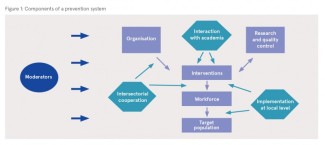
A rationale for an orientation towards systems of prevention
Prevention aligned with science and standards advocates for a person-focused rather than a drug-focused perspective when articulating responses and services. Such a perspective follows a narrative that early initiation to substance use is...

Prevention Systems: An ISSUP Scientific Council Discussion
The ISSUP Scientific Council presents its inaugural webinar, "Prevention Systems: An ISSUP Scientific Council Discussion."
A Reflection on Prevention Systems: A European perspective
Prevention science over the past years has accumulated evidence on the effectiveness of drug prevention interventions (Sloboda et al. 2014). In Europe this improvement has been a consequence of priorities defined by EU drug strategies since...
Community-based prevention systems
Community-based models form an important component in alcohol, tobacco and illicit drug (substance) abuse prevention systems. Community models target both place-based communities and distinct sub-populations (e.g., defined by common...

Community-based prevention systems
Community-based models form an important component in alcohol, tobacco and illicit drug (substance) abuse prevention systems. Community models target both place-based communities and distinct sub-populations (e.g., defined by common...

INEP Plus Training - Introduction to Evidence-based Prevention
Learn the science of evidence-based prevention and start your journey to earn global recognition as a prevention specialist.
Equip yourself with the know-how to develop and implement evidence-based prevention intervention.
No more...

Why Systemic Change, Not Personal Willpower Is Key To Prevention
Systemic Change, Not Personal Willpower, Is Key to Preventing Substance Use and Addiction
The traditional view of prevention focusing solely on individual behavior change and decision-making skills is inadequate. While individual...

The Power of Collaboration Project: Substance Use Disorder treatment for women
The Power of Collaboration is a joint project between ISSUP and the GWN. This initiative delves into three critical areas in substance use disorder (SUD) treatment for women:
-
MIND THE GAP: GLOBAL SURVEY EXAMINING ACCESS FOR SUBSTANCE...

The Relationship Between Depressive Symptomatology and Alcohol Consumption in the Latin American Population Based on Gender and Age
English:
The comorbidity between depression and alcohol consumption is a public health concern, affecting progression, treatment adherence, and outcomes. Alcohol use in Latin America exceeds the global average. This study examined the...