
खोज
 Populations
Distinct groups of people within a society who share certain characteristics such as age, gender, geographic location, socioeconomic status, cultural background, or exposure to particular risk factors that may influence patterns of substance use, vulnerability to substance use disorders, and access to services. In the context of substance use systems, identifying and understanding different populations helps guide the design of prevention, treatment, recovery, and policy responses that are appropriate, equitable, and responsive to specific needs. Examples may include youth, women, people experiencing homelessness, individuals in the criminal justice system, or communities affected by specific social or economic conditions.



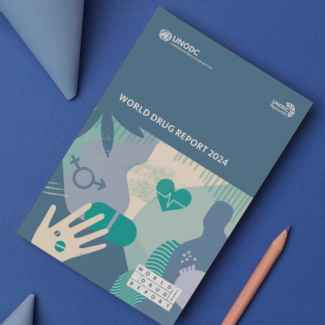
2024 UNODC World Drug Report highlights, brief reflections.
The World Drug Report (WDR) is published by the United Nations Office on Drugs and Crime (UNODC) (United Nations Office on Drugs and Crime, 2023). It serves to collate data received from United Nations member states which enables the...

Intimate Violence: Alcohol and Drug Use, and Mental Health during COVID-19 among Young Mexican Adults
Abstract
Introduction: Although the COVID-19 pandemic triggered an increase in intimate violence, drug use, and mental health problems in low- and middle-income countries, these fluctuations and the relationship directionality between...
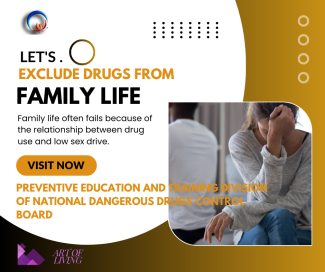
National Dangerous Drugs Control Board , Cooperate Plan of Preventive Education and Training Division
Preventive Education and Training Division
National Dangerous Drugs Control Board in Sri Lanka
Cooperate Plan
The Preventive Education and Training Division of the National Dangerous Drugs Control Board is one of the primary ones that...
Engaging Youth in Substance Use Prevention
Engaging youth in substance use prevention has proven to be a vital and effective strategy. Empowerment across all youth, but particularly among marginalised groups such as youth of colour, is a significant aspect of this involvement...

Creating Spaces for Young People to Collaborate to Create Community Change: Ohio's Youth-Led Initiative
Scholars and researchers are increasingly calling attention to the need for community-based coalitions to become more inclusive of local residents and engage those most directly affected by the issues. One population, however, often remains...
Youth Participatory Approaches and Health Equity: Conceptualization and Integrative Review
There is an array of youth participatory approaches relevant to health equity efforts in community psychology, adolescent health, youth development, and education. While they share some commonalities, they also reflect important...
Youth-Led Participatory Action Research: Developmental and Equity Perspectives
Youth-led participatory action research (YPAR) is an approach to scientific inquiry and social change grounded in principles of equity that engages young people in identifying problems relevant to their own lives, conducting research to...

Youth Participatory Action Research for Youth Substance Use Prevention: A Systematic Review
A growing body of research points to the efficacy of participatory methods in decreasing rates of alcohol, tobacco, and other drug use and other risky behaviors among youth. However, to date, no systematic review of the literature has been...
Substance Abuse Prevention
Substance Abuse Prevention
Drug prevention is an evidence-based approach built on a scientific discipline. The natural course of drug prevention is discussed in epidemiology and the phenomenon of disease carrier (Etiological model) is...
La Perspectiva de Género en el Ámbito de las Sustancias y las Adicciones
ISSUP Colombia presenta su su seminario web sobre Perspectiva de Género en el Ámbito de las Sustancias y las Adicciones.
Binational Cultural Adaptation of the keepin’ it REAL Substance Use Prevention Program for Adolescents in Mexico
Sharp increases in substance use rates among youth and the lack of evidence-based prevention interventions in Mexico are a major concern. A team of investigators from Mexico and the USA are actively addressing this gap by culturally...
Scaling the Children Immunization App (CIMA) to Support Child Refugees and Parents in the Time of the COVID-19 Pandemic: A Social Capital Approach to Scale a Smartphone Application in Zaatari Camp, Jordan
Background
Children vaccination is a key intervention for their survival, especially among refugees. Yet, children vaccination registration is done manually in refugees camps and there is no possibility to send reminders to parents to come...

UNODC World Drug Report 2024: Harms of world drug problem continue to mount amid expansions in drug use and markets
The emergence of new synthetic opioids and a record supply and demand of other drugs has compounded the impacts of the world drug problem, leading to a rise in drug use disorders and environmental harms, according to the World Drug Report 2024 launched by the UN Office on Drugs and Crime (UNODC).
Bi-Monthly Webinar: ISSUP Nigeria Knowledge Update Series (23rd Session)
ISSUP Nigeria presents the 23rd session of its bi-monthly webinar in the Knowledge Update Series. This webinar focuses on the topic of 'Relapse Prevention for a Sustained Recovery in Substance Use Disorders'
Women with Substance Use Disorders: My Insights from ISSUP 2024
Did you know that women with substance use disorders are more likely to encounter obstacles across the continuum of care? Despite the unique challenges, women are more likely to engage in help-seeking behavior. This was one of the key take...
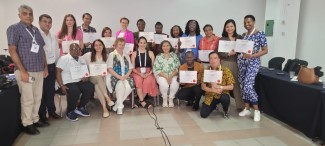
Developing and implementing a Drug reduce University Diploma for health practitioners in Uruguay: challenges and future directions
In Uruguay, there is a shortage of trained professionals in drug prevention, intervention, and resolution of drug-related issues, particularly among health personnel in domains such as rehabilitation, prevention, schools, communities, and...
Responding to an International Need: INEP Plus
The Introduction to Evidence Based Prevention (INEP) provides learners with the essential principles of substance use prevention. Developed by Charles University (CUNI) in Prague, the course content is based on the European adaptation of...

A New Dawn: Launch of the Global Women’s Network for Treatment and Recovery
Did you ever imagine that there would a forum for empowering providers of women substance use treatment and recovery? Thank you to Dr. Hendrée E. Jones and her team for officially launching the Global Women’s Network for Providers of Women...
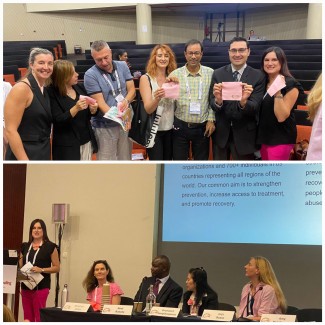
Women: Insights from the WISE Training at ISSUP Conference 2024
Did you know that women with substance use disorders are more likely to encounter obstacles across the continuum of care? Despite the unique challenges, women are more likely to engage in help-seeking behavior. This was one of the key take...