
Buscar
 Law Enforcement
The activities of authorised agencies such as police, customs, border services, and investigative bodies to enforce drug control laws and address criminal activities related to the production, trafficking, and distribution of illicit substances. These activities may include investigations, intelligence gathering, interdiction, and collaboration with national and international partners to disrupt organised crime networks. Law enforcement plays an important role in protecting public safety and maintaining the rule of law, and is most effective when coordinated with broader public health, prevention, treatment, and recovery efforts as part of a balanced and comprehensive response to substance use.


TRAJECTOIRES SOUS EMPRISE : COMPRENDRE L’EXPLOITATION CRIMINELLE DES MINEURS DANS UN ÉCOSYSTÈME CRIMINEL FRAGMENTÉ DEPUIS 2018
Le Centre international pour la prévention de la criminalité publie Trajectoires sous emprise : comprendre l’exploitation criminelle des jeunes dans un écosystème criminel fragmenté depuis 2018, un nouveau rapport qui examine les...
Victimisation des jeunes et dynamiques urbaines de la violence
Dans un contexte urbain marqué par des transformations sociales, économiques et technologiques rapides, la compréhension des dynamiques de victimisation chez les jeunes dans l’agglomération de Montréal apparaît essentielle pour soutenir l...
Protecting young people from recruitment into criminal drug networks: Research gaps and priorities for stronger prevention and intervention in the European Union
Safe futures is an initiative supported by the European Union Drugs Agency to strengthen shared understanding of, and responses to, the recruitment and exploitation of young people into criminal drugs networks across Europe. The initiative...
Session 3: Intersectoral Collaboration for Effective Substance Use Responses
Chaired by: Goodman Sibeko
- Psychosocial Care for Offenders with Mild Substance Use Disorders - Dr. Apinun Aramrattana
- Exploring the Court-Mandated and Police Request Forms Induction at Shimo Mat Clinic for a Period of 2020-2025 - Mr...
Session 2: Addressing Youth Substance Use and Crime: Risk Factors and Strategies
Chaired by: Guido Prósperi and Radolf Nortey
- Understanding Youth Recruitment to Inform Prevention: Insights from EUCPN - Dr. Maxime Hennen
- National Dialogue for Peace in Mexico: for a shared and habitable future - Dr. Ana Paula...
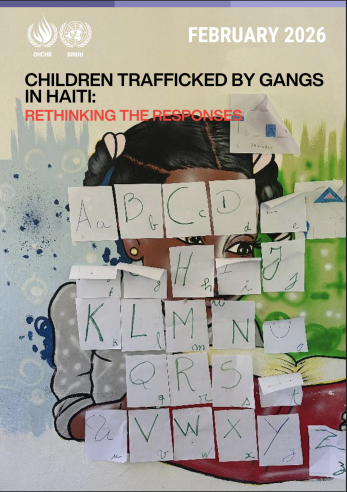
CHILDREN TRAFFICKED BY GANGS IN HAITI: RETHINKING THE RESPONSES
This joint report by the United Nations Integrated Office in Haiti (BINUH) and the Office of the United Nations High Commissioner for Human Rights (OHCHR) examines the trafficking and exploitation of children by gangs in Haiti. It...
Deflection and Cross-Sector Collaboration
ABSTRACT
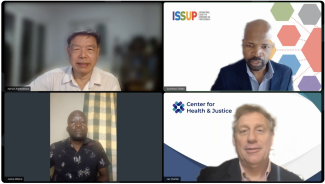
Jac Charlier will explore deflection as a collaborative approach to addressing substance use, highlighting how communities can connect individuals with appropriate health, treatment, recovery, and social support services while...
Psychosocial Care for Offenders with Mild Substance Use Disorders
ABSTRACT
Thailand’s justice system has long faced challenges in addressing drug-related offenses, as punishment alone is insufficient to address the psychological and social factors underlying repeated offending. In response to evolving...
Public Health Alert: Cychlorphine, a Highly Potent Emerging Synthetic Opioid
This public health alert from Addiction Policy Forum highlights cychlorphine, a highly potent emerging synthetic opioid detected in the unregulated drug supply in the United States, including alongside fentanyl and other substances. The...

Understanding youth recruitment to inform prevention: Insights from EUCPN
ABSTRACT
Young people are increasingly being drawn into organised crime, with criminal networks exploiting social, economic and personal vulnerabilities to involve children and young people in criminal activities. Recruitment can take many...
SBIRT AS A TOOL FOR PREVENTION AND REDUCING RISKY SUBSTANCE USE BEHAVIOURS AMONG YOUNG PEOPLE IN ZARIA, KADUNA STATE, NIGERIA.
ABSTRACT
Background: Screening, brief intervention, and referral to treatment (SBIRT) is an evidence-based practice that has been shown to reduce alcohol and drug use in healthcare settings, but there is a paucity of research on the...
Making intersectoral collaboration work: connecting people, services and communities
ISSUP’s 2026 conference session on intersectoral collaboration explored how health, justice and community services can work together to help people access and stay connected to appropriate support. Presentations from Thailand, Kenya and Ghana, alongside an introduction to deflection, highlighted clearer referral pathways, shared responsibilities, workforce wellbeing and earlier opportunities for care. These themes connected with the wider conference discussions on evidence-informed practice, youth prevention, recovery and faith-based support. Members were encouraged to adapt the learning to their roles and local circumstances, involve people using services in improvements, and assess changes in health, relationships and everyday life alongside service activity. The session recording offers a starting point for further learning, discussion across professions and practical collaboration through ISSUP National Chapters and professional networks.
Recent U.S. drug alerts: Turning emerging evidence into workforce preparedness
Recent United States alerts on fentanyl analogues, medetomidine, cychlorphine, drug mixtures and concentrated 7-OH products highlight evolving challenges across the substance use workforce. They invite us to review local preparedness, understand testing limitations and strengthen links between frontline services, laboratories and public-health partners. A useful response brings together clinical, prevention, recovery and peer perspectives, with clear responsibilities for turning relevant findings into action. For the global ISSUP community, these alerts offer lessons in preparedness while requiring careful consideration of local evidence, resources and service arrangements. Staying informed through trusted sources and sharing practical responses through ISSUP can help translate emerging knowledge into safer care and more responsive support for individuals, families and communities.

Synthetic cannabinoids: Reflections from Mauritius
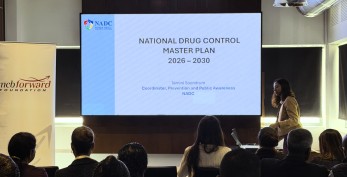
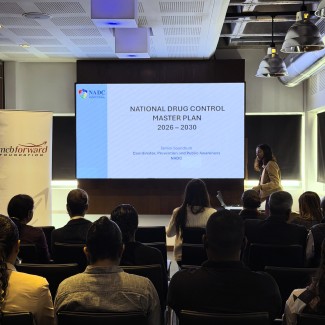
During a recent engagement in Mauritius, I had the opportunity to hear the National Agency for Drug Control (NADC) present the National Drug Control Master Plan 2026–2030 and to share the suite of resources available through ISSUP. This...
Organized crime groups: A systematic review of individual-level risk factors related to recruitment
Background:
Studies from multiple contexts conceptualize organized crime as comprising different types of criminal organizations and activities. Notwithstanding growing scientific interest and increasing number of policies aiming at...

Psychosocial determinants of recidivism risk among incarcerated individuals with a history of substance use: A systematic review
The prevalence of recidivism among individuals with a history of substance use and incarceration remains a significant concern for criminal justice systems worldwide. With significant social and economic ramifications, preventing people...

Rehabilitation and Re-entry Programmes for Justice-Involved Individuals and Their Effectiveness in Social Reintegration: A Systematic Review
Prison rehabilitation and community re-entry programmes implemented during incarceration or in the transitional period serve as significant mechanisms for facilitating justice-involved individuals in their post-release adaptation. This...

The product may not be what it says: What emerging synthetic drugs and dangerous mixtures mean for practice
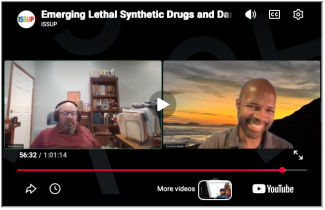
The clearest message from our recent ISSUP Global webinar was a simple but important one: we should stop assuming that an unregulated drug product contains only what it is sold as containing. That uncertainty now has direct implications for prevention, clinical care, recovery support, toxicology, law enforcement, policy and the administration of justice.
Drug Diversion Schemes Linked to Lower Reoffending Rates, New Research Finds
New research examining more than 62,000 criminal incidents across 13 police forces in England found that police-led drug diversion schemes are associated with significantly lower reoffending rates than traditional prosecution for drug...

Do Drug Diversion Schemes Work? Insights from the Thames Valley Police Drugs Diversion Pilot
This paper examines the development and early outcomes of the Thames Valley Police Drugs Diversion Pilot in West Berkshire, which offers people found in possession of drugs an opportunity to engage with treatment rather than receive a...