

بحث

UNODC (2011a), The Paris Pact Initiative — Evaluating the Achievements: From Partnership to Policy, to Action
The Paris Pact Initiative (PPI), launched in 2003, is one of the leading international coalitions tackling the illicit trafficking of opiates from Afghanistan. Bringing together 58 countries and 23 organisations, including UNODC, it serves...
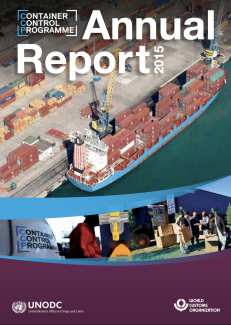
UNODC-WCO (2015), Container Control Programme — Annual Report
In 2015, the UNODC-WCO Container Control Programme (CCP) expanded its reach with new Port Control Units (PCUs) across Asia and Europe, including in Bangladesh, Bosnia and Herzegovina, Georgia, Jordan, Nepal, Thailand and Viet Nam, as well...
UNODC (2014a), Global SMART Update
The rapid rise of synthetic drugs has become one of the world’s most pressing drug-related challenges. After cannabis, amphetamine-type stimulants (ATS) are the most widely used drugs globally, now surpassing cocaine and heroin. Alongside...
UNODC (2012), In-Depth Evaluation of Paris Pact Phase III, United Nations, New York
The evaluation of Phase III of the Paris Pact Initiative (2010–2012), supported by UNODC’s Project GLO K31, examined how effectively this global partnership has addressed the trafficking and consumption of opiates, particularly those...
International Narcotics Control Board (INCB), Precursors and chemicals frequently used in the illicit manufacture of narcotic drugs and psychotropic substances, United Nations, New York
The International Narcotics Control Board’s 2015 report on precursors highlights global efforts to stop chemicals being diverted into the illicit manufacture of drugs. It points to successes achieved through international cooperation...
Council of the European Union (2013d), The Council of the European Union
The Council of the European Union is the forum where national ministers from all EU countries come together to make decisions that shape Europe. It is responsible for negotiating and adopting EU laws, approving the budget, concluding...
Council of the European Union (2013c), EU‑CELAC Action Plan 2013–2015
The EU-CELAC Action Plan 2013–2015 sets out a framework for strengthened cooperation between the European Union and Latin American and Caribbean countries. Building on priorities agreed at the EU-LAC and EU-CELAC Summits, it focuses on key...
Council of the European Union (2013b), EU-Central Asia Action Plan on Drugs (2014–2020)
The European Union and Central Asian countries have joined forces through the EU–Central Asia Action Plan on Drugs 2014–2020, building on earlier cooperation dating back to 2002. This plan recognises the shared challenges posed by drug...
Council of the European Union (2013a), EU Action Plan on Drugs 2013–2016
In 2012, the Council of the European Union adopted the EU Drugs Strategy for 2013–2020, setting a long-term framework to reduce both drug demand and supply. To put this into practice, the Irish Presidency developed the first EU Drugs Action...
Council of the European Union (2012b), Consolidated versions of the Treaty on European Union and the Treaty on the Functioning of the European Union and the Charter of Fundamental Rights of the European Union
The Publications Office of the European Union provides open access to a broad collection of official EU works. Covering everything from policy updates and statistical analyses to educational tools and research findings, the platform gathers...
Council of the European Union (2012b), Consolidated versions of the Treaty on European Union and the Treaty on the Functioning of the European Union and the Charter of Fundamental Rights of the European Union
The Publications Office of the European Union offers free access to a wide range of official EU publications. From research reports and educational resources to policy overviews and statistical studies, the site brings together knowledge...
Council of the European Union (2012a), European Union Drugs Strategy 2013–2020
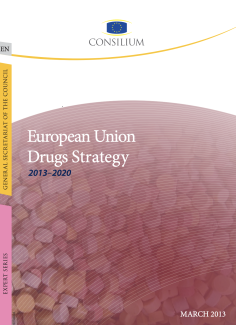
The EU Drugs Strategy (2013–2020) set out a shared political framework to guide the European Union’s approach to drugs policy. Grounded in the principles of EU law and international conventions, it focused on protecting public health...
The Future Of Drug Supply Monitoring In Europe (Poster)
his EMCDDA paper explores how better data can help us understand and respond to Europe’s illicit drug markets. Traditional indicators like seizures, prices, purity, and offences provide only part of the picture, so the agency is expanding...
Drug Supply Reduction: An Overview Of EU Policies And Measures
This EMCDDA paper introduces the European Union’s approach to drug supply reduction, explaining how policies, structures, and actions are designed to disrupt drug markets and limit the availability of illicit substances. It highlights the...
Public Expenditure On Supply Reduction Policies
This report takes an important step towards understanding how European countries fund efforts to tackle illicit drugs. By examining public spending on supply reduction measures, it highlights how resources are allocated, the gaps in...
Council of the European Union (1999), Point of Departure and Work Programme of the Horizontal Working Party on Drugs (HDG) for the First Half of 1999 under the German Presidency
In 1999, the EU highlighted the growing threat of drug abuse and trafficking, noting a sharp rise in cocaine, amphetamines, and synthetic drugs like ecstasy. Reports at the time showed that no Member State was spared from these challenges.
...
Council of the European Union (2010), Draft Council Conclusions on the Creation and Implementation of an EU Policy Cycle for Organised and Serious International Crime
In 2010, the EU introduced a new policy cycle to strengthen the fight against organised and serious international crime. This cycle provides a structured way for Member States to work together, set shared priorities, and respond to cross...

Council of the European Union (2009), Draft Action Plan on Drugs Between the EU and the Western Balkan Countries (2009–2013)
The European Union and Western Balkan countries share a strong interest in tackling drug trafficking and abuse—challenges made more pressing by the region’s location on a key route from Afghanistan to Europe.
Since 2003, a dedicated EU...

Council of the European Union (2007), Fourth EU‑Africa Summit
On 2–3 April 2014, African and European leaders met in Brussels for the Fourth EU–Africa Summit under the theme “Investing in People, Prosperity and Peace.” The meeting reaffirmed the strong partnership between the two continents, built on...
Substance Control Ecosystem
Psychoactive substances are regulated under three key United Nations conventions, agreed by Member States to safeguard public health and prevent illegal drug production:
-
1961 Single Convention on Narcotic Drugs – focused on substances...
