


بحث
Justice and Diversion
Programmes that redirect individuals with substance use disorders away from the traditional criminal justice system into community-based treatment and support services, reducing incarceration rates. e.g., drug courts, deflection schemes.


Effectiveness of a computerized motivational intervention on treatment initiation and substance use: Results from a randomized trial
Highlights
- Motivational computer intervention (MAPIT) increased treatment initiation at 2-month follow-up.
- The significance of MAPIT diminished by the 6-month follow-up.
- Motivational interviewing (MI) was not significant in any model. ...
Substance Involvement and Probation Outcomes: Evidence From a Cohort Study
Abstract
Substance use disorders are common among justice-involved populations, the majority of whom are under community supervision in the form of probation. Substance involvement can amplify the challenges of complying with requirements...
A randomized study of the use of screening, brief intervention, and referral to treatment (SBIRT) for drug and alcohol use with jail inmates
Abstract
Background
Screening, brief intervention, and referral to treatment (SBIRT) is an evidence-based practice that has been shown to reduce alcohol and drug use in healthcare, educational, and other settings, but research on the...
A randomized study of the use of screening, brief intervention, and referral to treatment (SBIRT) for drug and alcohol use with jail inmates
Abstract
Background: Screening, brief intervention, and referral to treatment (SBIRT) is an evidence-based practice that has been shown to reduce alcohol and drug use in healthcare, educational, and other settings, but research on the...
Considerations for Introducing SBIRT into a Jail Setting.
INTRODUCTION
Nearly all chronic substance users enter the criminal justice system at some time in their use career. Drug use is closely associated with crime, and its prevalence among offenders is high (MacCoun et al., 2003; Newcomb et al...
Lessons Learned from a Mixed Methods Evaluation of a Jail-based Co-Occurring Disorders Treatment Program.
ABSTRACT
This study evaluated the planning, implementation, and preliminary outcomes of a US Bureau of Justice Assistance funded justice mental health focused reentry program for offenders with co-occurring substance use and mental health...
Overdose education and naloxone distribution in jails: Examining the impact of the Communities That HEAL intervention in 4 states
Abstract
Background
Opioid-related overdose is the leading cause of mortality among individuals recently released from incarceration in the U.S. Naloxone is an FDA-approved opioid antagonist medication designed to rapidly reverse opioid...
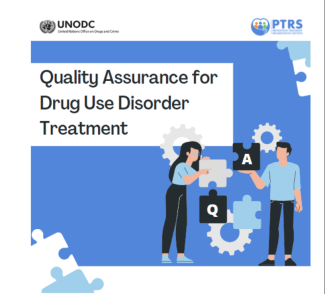
Quality Assurance for Drug Use Disorder Treatment
Over 38 million people worldwide are living with drug use disorders, yet only a fraction have access to appropriate treatment. These disorders place a heavy burden on individuals, families and communities, and their wider social costs –...
Treating drug abuse and addiction in the criminal justice system: improving public health and safety.
ABSTRACT
Despite increasing evidence that addiction is a treatable disease of the brain, most individuals do not receive treatment. Involvement in the criminal justice system often results from illegal drug-seeking behavior and...
Providing substance use disorder treatment in correctional settings: knowledge gaps and proposed research priorities—overview and commentary.
ABSTRACT
This manuscript is the product of the authors’ discussions, literature overview, and consultation with experts in the field, and identifies important gaps in the evidence base for substance use disorder (SUD) treatment...
Criminal Justice Professionals’ Attitudes Toward Mental Illness and Substance Use
ABSTRACT
Despite the high prevalence of behavioral health disorders in justice settings and prior research on the importance of attitudes in successful treatment outcomes for behavioral health populations, few studies have examined...
Evidence-based treatment practices for drug involved adults in the criminal justice system.
Abstract
Objective
The aim of this study was to estimate the extent and organizational correlates of evidence-based practices (EBPs) in correctional facilities and community-based substance abuse treatment programs that manage drug...
Community-Based Approaches in Substance Use Disorder Treatment: Field Experiences from Jammu & Kashmir, India
Title: Community-Based Approaches in Substance Use Disorder Treatment: Field Experiences from Jammu & Kashmir, India.
Introduction
Substance use has become a growing concern across India, with youth being disproportionately affected. In...
From Standards to Action: Ensuring Quality in Drug Treatment Services
ISSUP Global, in collaboration with UNODC, presents its webinar titled 'From Standards to Action: Ensuring Quality in Drug Treatment Services'
Justice Decisions that Impact Drug Related Crime
Talking Points:
Learn about the connection between drug use and crime.
Identify key legal distinctions that (should) drive justice responses.
Understand how applying the appropriate approach reduces crime.
Community-Based Drug Treatment in the Justice System: What Works in Reducing Crime?
Every year, over 6 million persons globally are in contact with the criminal justice system for drug-related offences. Significant increases in prison populations worldwide are largely caused by the arrest and incarceration of persons whose crimes are related to drug use.
Many countries are exploring different options to reduce crime and incarceration through the use of community-based drug treatment.
Helpline – Entrance Door To (Un)Sustainable Recovery Paths
This presentation explores the pivotal role of addiction recovery helplines in enabling more sustainable recovery pathways and nurturing positive, recovery-oriented environments within communities. Drawing on nine years of data from recovery helpline services operated by local NGOs in Bosnia and Herzegovina, Serbia, and Montenegro, the evaluation offers valuable insights into the needs, challenges, and experiences...
Words Matter: Language and Stigma Reduction
ISSUP Global, in collaboration with Faces & Voices of Recovery, presents its webinar titled 'Words Matter: Language and Stigma Reduction.'
New Psychoactive Substances: Studies from Central Asia and China
Recommended Reading: New Psychoactive Substances: Studies from Central Asia and China
We are pleased to present the book "New Psychoactive Substances: Studies from Central Asia and China", prepared by an international team of experts and...
Impact of opioid maintenance therapy in the community on re-incarceration in individuals with opioid use disorder—A linked cohort study
Abstract
Introduction
Studies have found associations between Opioid Agonist Maintenance Treatment during incarceration and reduced recidivism among recently released formerly incarcerated persons. However, the role of community-based Opi...