ISSUP Chile presenta un seminario web 'Implementación de un modelo de prevención universal para reducir el consumo de sustancias en adolescentes del municipio de San Fernando del valle de Catamarca, Argentina'
ISSUP, en colaboración con la CICAD/OEA, continúa fortaleciendo la cooperación regional en enfoques basados en la fe para abordar los desafíos relacionados con el consumo de sustancias y los delitos relacionados a las drogas en América Latina.
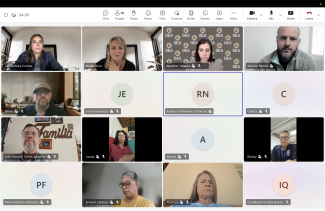
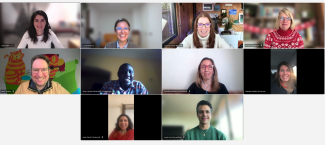
Como parte de estos esfuerzos continuos, representantes de los Capítulos Nacionales de la ISSUP en toda la región se reunieron el martes 12 de mayo de 2026 para una sesión regional de intercambio de conocimientos, enfocada en fortalecer la colaboración, compartir experiencias y explorar oportunidades para futuras actividades conjuntas de...
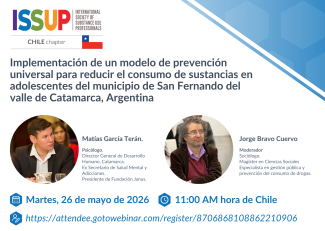
ISSUP Chile te invita a su seminario web sobre 'Implementación de un modelo de prevención universal para reducir el consumo de sustancias en adolescentes del municipio de San Fernando del valle de Catamarca, Argentina'
ISSUP, en colaboración con la Comisión Interamericana para el Control del Abuso de Drogas (CICAD), organizará una Sesión de Intercambio de Conocimientos de alta prioridad sobre Enfoques Basados en la Fe, reuniendo a los Capítulos Nacionales de ISSUP de toda América Latina para fortalecer la colaboración, compartir experiencias y avanzar en respuestas comunitarias y basadas en la fe frente a los desafíosrelacionados con el consumo de sustancias y la delincuencia. La sesión se llevará a cabo en línea a través de Microsoft Teams el martes 12 de mayo de 2026, en los siguientes horarios:
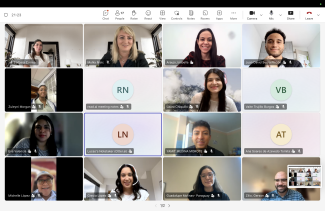
La ISSUP y la OEA/CICAD siguen fortaleciendo sus esfuerzos conjuntos para establecer y coordinar una Red Latinoamericana de Jóvenes Líderes. Esta iniciativa reúne a representantes juveniles de 10 países de la región, cada uno en representación de su respectivo Capítulo Nacional de la ISSUP.
La red busca garantizar que las voces de los jóvenes sean escuchadas activamente y se integren de manera significativa en las respuestas globales al consumo de sustancias y los desafíos relacionados con las drogas. Un enfoque clave es abordar la vulnerabilidad de la juventud al consumo de drogas y la...
Global Initiative Against Transnational Organized and Crime
The 2025 Global Organized Crime Index shows that overall crime levels in Europe remain stable, and the region continues to rank among the least affected globally. However, this stability hides a more complex reality, with criminal markets and actors evolving and expanding.
Financial crime is the most widespread threat, driven by online fraud and cross-border schemes, while cybercrime continues to grow, often linked to state-backed or hybrid actors. Drug markets are also shifting, with cocaine and synthetic drugs increasing, while trafficking and smuggling networks remain deeply entrenched.
Global Initiative Against Transnational Organized Crime.
Short Summary
Scam centres are a fast-growing global organized crime threat, generating over $1 trillion in losses in 2024. They use technology and psychological manipulation to target victims worldwide, supported by global criminal networks and easy-to-access tools.
Despite enforcement efforts, scams are expanding and adapting, often moving to low-governance environments and exploiting geopolitical gaps.
Key Actions
Increase international coordination and intelligence sharing
Pressure safe havens and strengthen regulation of tech and financial platforms
The Central East ATTC-
Addiction
Technology Transfer Center Network managed by the Danya Institute
This guide highlights the critical importance of maintaining personal well-being in a field that is both highly rewarding and emotionally demanding. The guide explores common workplace stressors, such as high caseloads, complex client needs, and organisational pressures, and how these can lead to burnout, compassion fatigue, and reduced effectiveness if left unaddressed.
It presents a whole-health approach to well-being, emphasising multiple dimensions including emotional, physical, social, and occupational health, and underscores the shared responsibility between individuals and...
A new chapter in training has begun at ISSUP. A new Training Team has been formed with the goal of improving the accessibility and relevance of ISSUP’s training, while ensuring it reflects the learning needs of members worldwide.
In the early months of its work, the team carried out a training needs assessment to better understand members’ online learning needs. At the same time, the team engaged with several Learning Management System (LMS) providers to explore options for a new platform that supports accessible, high-quality learning. The proposals received are now being reviewed.
ISSUP was honoured to participate in the 78th Regular Session of the Inter-American
Drug Abuse
Control Commission (CICAD), where Joanna Travis Roberts, Chief Executive of the International Society of Substance Use Professionals (ISSUP), delivered remarks to representatives of Member States, civil society organisations, experts, and partners from across the Americas.
Speaking to the importance of collective and evidence-informed responses to substance use, Joanna highlighted that challenges related to drugs intersect with public health, social development, community safety, and human rights...
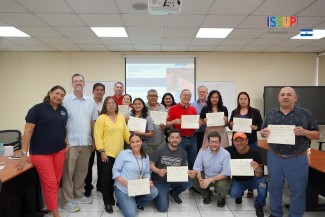
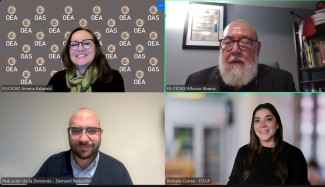
Jimena Kalawski, Jefa de la Unidad de Reducción de la Demanda de la Comisión Interamericana para el Control del Abuso de Drogas (CICAD), de la Organización de los Estados Americanos (OEA), y Barbara Correa, Coordinadora Regional de la Sociedad Internacional de Profesionales del uso de Sustancias (ISSUP, por sus siglas en inglés), brindaron palabras de bienvenida en la clausura de una capacitación para jóvenes líderes basada en el Currículo Universal de Prevención (UPC, por sus siglas en inglés).
Veintisiete jóvenes de nueve Estados miembros de Latinoamérica participaron en esta capacitación...
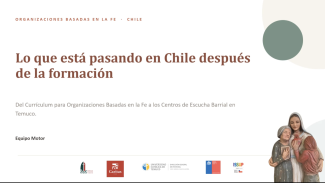
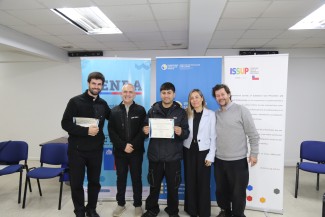
Entre el 6 y el 9 de octubre se desarrolló en el Obispado de Temuco la Capacitación del Currículum de Prevención, Tratamiento y Recuperación del Uso de Drogas para Organizaciones Basadas en la Fe.
La actividad reunió a agentes pastorales, trabajadores del Estado vinculados a la temática del consumo de sustancias y representantes de organizaciones no gubernamentales que trabajan con poblaciones vulnerables en el territorio, en un espacio de diálogo y aprendizaje conjunto.
El objetivo fue fortalecer las capacidades para acompañar y atender a personas con uso problemático de sustancias...
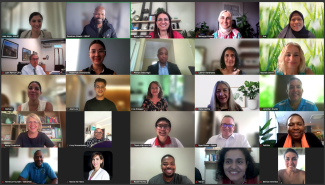
We’re excited to share that ISSUP has successfully launched the pilot of the Investing in Evidence-Based Prevention (IEP) Workshop, attended by 18 participants from 17 countries. The workshop was delivered in two online sessions, held on 14 and 21 August, bringing together policy-makers, decision-makers and funders.
The IEP workshop was developed by Jeff Lee, and Rachele Donini, together with the Scientific Support Team (SST). The pilot was delivered by Rachele Donini as trainer.
The first session, Introduction to Prevention Science, focused on the fundamentals of prevention...
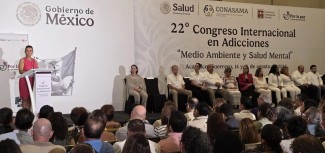
22° Congreso Internacional de Centros de Integración Juvenil (CIJ), celebrado bajo el lema “Medio Ambiente y Salud Mental”, reuniendo a autoridades, especialistas y representantes internacionales para reflexionar sobre la relación entre los entornos ambientales y el bienestar psicológico de las personas.
El evento contó con la presencia de la Gobernadora de Guerrero, Evelyn Salgado Pineda, y de la Presidenta Municipal de Acapulco, Abelina López Rodríguez, quienes resaltaron la relevancia de colocar la salud mental como prioridad en las políticas públicas, particularmente en comunidades...
Recovery
is not a one-size-fits-all process—it is dynamic, multifaceted, and deeply individual. To truly support individuals on their recovery journey, practitioners must access tools, systems, and knowledge that reflect the realities of those they serve.
The WHO Global Status Report on Alcohol and Health and
Treatment
of Substance Use Disorders provides a comprehensive snapshot of global trends in alcohol consumption, related harms, and national policy responses, alongside the availability and quality of treatment services for alcohol and drug use disorders.
Key Highlights:
Presents the latest data from WHO Member States, aligned with SDG Health Target 3.5: “Strengthen prevention and treatment of
substance abuse
, including narcotic
drug abuse
and harmful use of alcohol.”
Offers updated insights on global alcohol consumption patterns...
This survey is a collaborative effort by ICUDDR, NECPAM and ISAM. Together, we are trying to assess the impact recent reductions in funding have had to the workforce of fields dealing with substance use related issues.
The International Drug Policy Academy (IDPA), established by the Council of Europe's Pompidou Group, is dedicated to enhancing the capabilities of professionals involved in drug policy and
addiction
services. With over 50 years of international cooperation and capacity building, the IDPA aims to bridge the gap between policy, research, and practice across various sectors, fostering the development of coherent and sustainable drug policies.
Objectives of the IDPA
Capacity Building: Strengthening the skills of professionals for effective design, management and evaluation of drug...
Lee, EH., Yu, HJ. Effectiveness of nurse-initiated smoking cessation intervention: a systematic review and meta-analysis. Subst Abuse Treat Prev Policy 20, 18 (2025). https://doi.org/10.1186/s13011-025-00648-8
Background
Smoking is one of the top causes of preventable death and is linked to many serious health problems, including cancer and chronic diseases. Nurses can play a big role in helping people quit smoking by offering support through counselling, education, and mental health care. These nurse-led programs have been shown to increase quit rates. Training nurses to deliver these programs is important, and reviewing past studies helps us understand what works best.
Methods
Researchers searched eight major health databases between March 27 and August 1, 2024, to find studies on nurse-led...