

खोज
 Psychoactive Substances
Psychoactive substances are natural or synthetic substances that act on the central nervous system and alter mental processes such as mood, perception, cognition, consciousness, and behaviour. These substances may be legally prescribed medications (e.g., pain medications or sedatives), legally available substances such as alcohol or caffeine, or controlled or illicit drugs. Psychoactive substances can be used for medical, social, cultural, or recreational purposes, but some carry risks of misuse, dependence, and health or social harms when used in harmful ways.

Repetitive transcranial magnetic stimulation (rTMS) is associated with increased abstinence in substance use disorders and comorbid depression
BACKGROUND: Substance use disorders (SUDs) are associated with high rates of comorbid depression. Finding effective treatments for many of the substances of abuse is still an area of developing research. Repetitive transcranial magnetic...
SSA Podcast- Relapse: what is it and what does it mean to people who experience it?
In the latest episode of the Addictions Edited podcast, Rob Calder talks to Dr Maike Klein from the University of Bath about her qualitative research into relapse.
They discuss how relapse can be perceived as part of recovery or...
New Psychoactive Substances – Designer Benzodiazepines
ISSUP Pakistan present their Webinar on New Psychoactive Substances – Designer Benzodiazepines.
Gamma Hydroxybutyrate (GHB) as a new storm for Mental Health and Addiction Professionals: Insight from Developing Countries
ISSUP Pakistan are pleased to present their webinar on Gamma Hydroxybutyrate (GHB).
Substance Use Outcomes For Sexual and Gender Minority Adults With a History of Adverse Childhood Experiences: A Scoping Review
Abstract
Purpose
The impacts of Adverse Childhood Experiences (ACEs) on behavioral, mental, and physical health have been extensively investigated. As such, it is paramount to synthesize their quantified effects, especially within...
Profiles of quality of outpatient care use, associated sociodemographic and clinical characteristics, and adverse outcomes among patients with substance-related disorders
Abstract
Background
This study identified patient profiles in terms of their quality of outpatient care use, associated sociodemographic and clinical characteristics, and adverse outcomes based on frequent emergency department (ED) use...
Nature and Course of Clinician and Self-Rated Depressive Features in Persons with Alcohol Use Disorders: A Preliminary Prospective Study among Men Seeking Treatment
INTRODUCTION: The trajectory and nature of depression in patients with alcohol use disorder as they enter treatment needs to be understood better. This study assessed the nature and course of depressive features among male patients with...
AddictologyIssue 3/2022
Psychological factors and the use of psychoactive substances in relation to sexual orientation: A study on Israeli young adults.
In the context of sexual minorities and the distress they may experience, recent years have witnessed a trend emphasizing the idea that protective factors may curb risk behaviors, while stressing that not all sexual minorities do experience...
The need to establish the first safe consumption site in Israel
The paper presents the case for establishment of safe consumption sites (SCS) in Israel. An SCS, also known as a drug consumption room (DCR), provides a safe and medically supervised setting for people who inject drugs (PWID) to use drugs...
NIDA INVEST Postdoctoral Research Fellowship
NIDA INVEST Postdoctoral Research Fellowship for International Scholars: Now Accepting Applications
Special Deadline: April 1, 2023
The NIDA International Program is accepting applications from international postdoctoral researchers for...
ISAM at Lisbon Addictions 2022
Here you can find a collection of ISAM presentation recordings that took place during Lisbon Addictions 2022
Recording 1: An introduction to ISAM Global Expert Network (ISAM-GEN) – Hamed Ekhtiari
Recording 2: Development of a Global...
ISAM neuroscience interest group webinar series
In ISAM-NIG's new monthly talk series "In Love with Addiction Neuroscience”, addiction neuroscientists from across the world share their personal stories/experiences on the beauty of addiction neuroscience and how/why they have decided to...
ISAM Neuroscience Interest Group in collaboration with ENIGMA Addiction Working Group
Here, you can find a series of webinar recordings put together by ISAM Neuroscience Interest Group in collaboration with ENIGMA Addiction Working Group.
Webinar 1: International Network on Neuroscience for Addiction Medicine
Webinar 2: Co...
ISAM Webinar Series on COVID-19 and Substance Use Disorders: : A Global Perspective on Challenges and Solutions
As you all know, the current COVID-19 pandemic has profoundly affected various populations globally. The International Society of Addiction Medicine (ISAM) believes that the impact of this pandemic on people struggling with Substance Use...
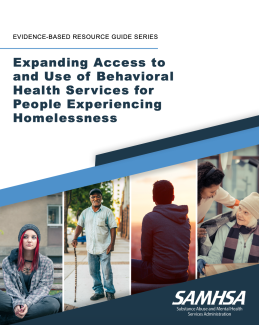
Expanding Access to and Use of Behavioural Health Services for People At Risk for or Experiencing Homelessness
This guide highlights strategies for behavioural health and housing providers to conduct outreach and engage with individuals experiencing homelessness, initiate use of behavioural health treatment as they wait to receive stable housing and...
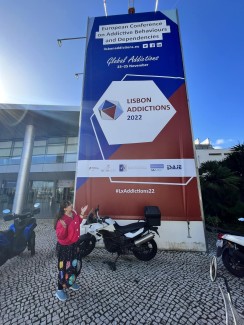
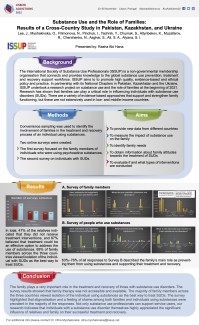
ISSUP Poster for Lisbon Addictions 2022: Study on substance use and the role of families in Kazakhstan, Pakistan and Ukraine
The fourth European Conference on Addictive Behaviours and Dependencies took place in Lisbon from 23-25 November 2022.
Under the overarching theme of Global Addictions, LxAddictions22 showcased cutting-edge research to help characterise...
Registration Open: NAADAC's Assessment, Diagnosis, and Treatment of Co-occurring Disorders & SUD Specialty Online Training Series
NAADAC's Assessment, Diagnosis, and Treatment of Co-occurring Disorders & SUD Specialty Online Training Series is designed for helping professionals who are dedicated to learning about co-occurring disorders in the field of addiction...
The risk matrix: Drug-related deaths in prisons in England and Wales, 2015–2020
This article explores the factors contributing to drug-related deaths in English and Welsh prisons between 2015 and 2020.
Drug use and associated factors in a North Eastern region of Tanzania: a cross-sectional study
The article ‘Drug use and associated factors in a North Eastern region of Tanzania: a cross-sectional study’ published in the PanAfrican Medical Journal’ on 11/10/2022 by a number of authors coordinated by Dr Harrieth Peter and Castory...
Inter-glam Bursary Award for Pakistani Delegate Participation in Lisbon Addictions
During the second last month of 2022, November 22-24 an international conference was held successfully at the Lisbon Congress Center in Portugal with the collaboration of SICAD, EMCDDA and the Portuguese Directorate. Organized by Clinic in...