


खोज
 Psychoactive Substances
Psychoactive substances are natural or synthetic substances that act on the central nervous system and alter mental processes such as mood, perception, cognition, consciousness, and behaviour. These substances may be legally prescribed medications (e.g., pain medications or sedatives), legally available substances such as alcohol or caffeine, or controlled or illicit drugs. Psychoactive substances can be used for medical, social, cultural, or recreational purposes, but some carry risks of misuse, dependence, and health or social harms when used in harmful ways.

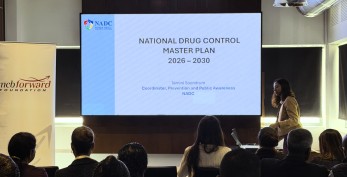
Viet Nam - UNODC Discussing Cooperation in Drug Prevention and Treatment
Currently, relevant ministries and agencies in Vietnam are studying, supplementing and amending the Law on Drug Prevention and Control to meet the current situation and practical requirements, including the section on drug prevention and...

Evidence in Action: CCSA Annual Report, 2018-2019
In 2018–2019, CCSA worked with partners across Canada and internationally to gather and share the newest, best practices and advice on substance use to drive action where it matters for Canadians — tackling stigma, informing cannabis policy...
International Drug Abuse Research Training Opportunities
The National Institute on Drug Abuse (NIDA) has put together a list of research and training opportunities for available for the U.S. and International scientists.
Find out more about the different opportunities below.

UNODC Conducts Training on Psychoactive Substance Use for Policymakers
The United Nations Office on Drugs and Crime (UNODC) held a training for high-level participants to address the nature, prevention and treatment of drug use disorders from 22-24 October 2019, in Brasilia, Brazil. The meeting gathered about...

Drug Use Series from the Lancet Journals
Executive Summary
The drug use landscape is dynamic and changing. Changes in public attitudes and laws towards drug use have occurred in an increasing number of countries.
Global drug production and consumption are increasing as are the...
Alcohol Use Disorder Series from the Lancet Journals
Executive Summary
Alcohol use disorders are a major cause of morbidity and mortality worldwide, and of immense importance to all mental health professionals. This new Series puts heavy drinking and alcohol use disorder in clinical and...
Technology-Delivered CBT to Treat Alcohol Use Disorder
Cognitive Behaviour Therapy (CBT) is one of the most researched treatment options for Alcohol Use Disorder. In order to make CBT as accessible and effective as possibles, researchers have been investigating different versions and ways to...
Khat - A Substance of Abuse Common in East Africa Rocking Youth in Uganda
Click on the link below to view the 3 minute video:
Decisions to Use E‐cigarettes or Behavioural Support to Quit Tobacco
Tobacco contains nicotine, which is highly addictive and can cause dependence. Although many people understand the negative health consequences of smoking for themselves and those around them, cutting down or stopping smoking can be highly...

Addiction in Bhutan
Bhutan is recognised for its development philosophy of Gross National Happiness, which places the well-being of people above gross domestic product. However, over the last few years, the number of patients with mental disorder seeking help...

Motivational Interviewing for Substance Use
Harmful use of alcohol kills more than 3 million people each year. 35 million people are estimated to be suffering from drug use disorders. Tobacco contributes to the death of more than 8 million people a year around the world.
It is...

CLOUD - The Curated Library about Opioid Use for Decision-makers
In partnership with the National Governors’ Association and Milbank Memorial Fund, the Center for Evidence-based Policy has created CLOUD: Curated Library about Opioid Use for Decision-makers.
CLOUD's mission is to curate high quality...

Journal for Advancing Justice Volume II
Opioid-related morbidity and mortality in the U.S. has been steadily increasing over the last two decades. In 2017 alone, 2.1 million Americans suffered from opioid use disorder (OUD), and 47,600 died from opioid overdose.
Predictably, the...

Pharmacotherapy for Methamphetamine/Amphetamine Use Disorder — A Systematic Review and Meta-Analysis
This meta-analysis of research on medication to treat methamphetamine use disorder finds that only one medication, methylphenidate, has any efficacy in reducing use.
Recovery Month 2019
Every September the Recovery Month Campaign aims to increase awareness and understanding of mental and substance use disorders and celebrate the people who recover.
Over the years, Recovery Month has promoted and supported new evidence...
Prevention of Drug-Related Deaths
Opioids are a class of drugs that act on the nervous system to produce feelings of pleasure and pain relief. Opioids have a high potential for causing addiction in some people and can cause life-threatening health problems, including the...
Criminal Justice Continuum for Opioid Users at Risk of Overdose
Worldwide, there has been a dramatic rise in the number of opioid-involved overdose deaths.
Certain sections of the population are more vulnerable to the risk of developing opioid use disorder and overdosing. One such group are those in...
Use of Medication-Assisted Treatment for Opioid Use Disorder in Criminal Justice Settings
The success of treatment and recovery of individuals with opioid use disorder (OUD) can vary. Most often, a combination of factors adds complexities to evaluating the effectiveness of services and interventions.
Worldwide, overdose is the...
Classification of Drugs: When Science Was Left Behind
In Classification of Drugs: when science was left behind, the Global Commission on Drug Policy explains how the historical classification of psychoactive substances has contributed to the "world drug problem".
It is the first-ever...
SPR 2020 Call for Papers Now Open!
This year's conference theme, Why Context Matters: Towards a Place-Based Prevention Science, challenges prevention scientists to explicitly recognize the central role that geographical concepts such as location, distance, distribution...