


खोज
 Psychoactive Substances
Psychoactive substances are natural or synthetic substances that act on the central nervous system and alter mental processes such as mood, perception, cognition, consciousness, and behaviour. These substances may be legally prescribed medications (e.g., pain medications or sedatives), legally available substances such as alcohol or caffeine, or controlled or illicit drugs. Psychoactive substances can be used for medical, social, cultural, or recreational purposes, but some carry risks of misuse, dependence, and health or social harms when used in harmful ways.


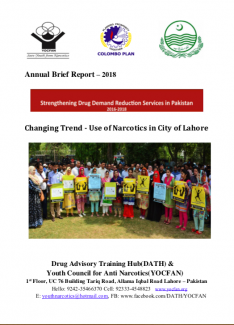
Annual Report: Use of Narcotics in City of Lahore
The Drug Advisory Training Hub (DATH) & Youth Council for Anti Narcotics (YOCFAN) have published the latest annual report on the use of narcotics in Lahore.
The report gives an overview of the current situation in Lahore and outlines the...
Barriers in Substance Use Disorder Treatment
The US is experiencing a public health crisis. In the US in 2016 alone, there were over 63,000 drug poisoning deaths. Despite these concerning figures, it is estimated that fewer than 20% (3.8 million) receive treatment and for those who do...
Website: End of Life Care for People with Problematic Substance Use
This website offers resources developed from a two-year research programme on end of life care for people with alcohol and other drug problems. The research programme was the first of its kind to explore current practice and service...
Overdose Deaths Involving Fentanyl and Fentanyl Analogs — New York City, 2000–2017
Summary
What is already known about this topic?
During 1999–2017, the rate of drug overdose deaths nationally approximately tripled; approximately 70,000 overdose deaths occurred nationally in 2017, with nearly 68% involving an opioid.
W...
ICUDDR Training Sessions at ISSUP Conference in Kenya
The International Consortium of Universities for Drug Demand Reduction (ICUDDR) ran multiple sessions during the joint NACADA, ISSUP and African Union Drug Demand Reduction Conference & Workshop and have produced a selection of videos of...
Age‐Varying Effects of Cannabis Use Frequency and Disorder on Symptoms of Psychosis, Depression and Anxiety in Adolescents and Adults
A recent study, published in the Journal of Addiction, has examined the association of cannabis use, cannabis use disorder and symptoms of psychosis, depression and anxiety in an adolescent and adult sample. The researchers also examined...
Cognitive and Mindfulness‐Based Therapy for Adolescents with Co‐Occurring Post‐Traumatic Stress and Substance Use Disorder
Early life experiences of trauma are known to significantly increase the risk of substance use in adolescence and adulthood. It has been suggested that individuals may use alcohol or drugs as a means of temporarily relieving themselves from...
The Evidence Podcasts
The Canadian Centre on Substance Use and Addiction (CCSA) has produced a new series of podcasts that are investigating and reviewing the evidence on alcohol, cannabis, opioids, stigma and more.
Each month, The Evidence podcast will feature...

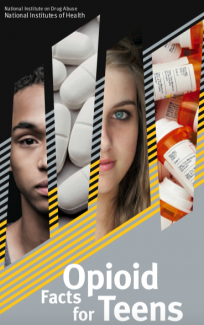
NIDA Resource: Opioid Facts for Teens
The National Institute on Drug Abuse has published a new resource to provide teenagers with accurate information about opioids.
The publication includes a selection of facts on opioids, a section on opioids and heroin, and a helpful list...
ICUDDR Conference: Call for Proposals
The International Consortium of Universities for Drug Demand Reduction (ICUDDR) is soliciting proposals for presentations at its 4th Annual Conference.

Managing Alcohol-Related Attendances in Emergency Care: Can Diversion to Bespoke Services Lessen the Burden?
Abstract
Acute alcohol intoxication (AAI) has a long history of burdening emergency care services. Healthcare systems around the world have explored a variety of different services that divert AAI away from EDs to better manage their...
Addiction Journal Podcast - January 2019
The Addiction Journal Podcast takes the listener through the content of the January edition of the journal, selects and discusses some of the highlights and includes interviews, which have been conducted with some of the authors.
Risk Factors for Neonatal Abstinence Syndrome
Recent studies carried out by researchers from Vanderbilt University and Johns Hopkins University have examined characteristics linked with the heightened risk NAS.
The researchers found that boys are more likely to receive a diagnosis of...
Conditional Probabilities of Substance Use Disorders and Associated Risk Factors
Highlights
Pre-existing mental disorders increases the risk of developing SUD.
Dopamine Neurons Projecting to Medial Shell of the Nucleus Accumbens Drive Heroin Reinforcement
Abstract
The dopamine (DA) hypothesis posits the increase of mesolimbic dopamine levels as a defining commonality of addictive drugs, initially causing reinforcement, eventually leading to compulsive consumption. While much experimental...
Access to Care for People with Alcohol Use Disorder in France
Abstract
Introduction: Alcohol use disorder (AUD) is a major public health concern worldwide. In France, only 10% of people with AUD (PWAUD) receive medical care. General practitioners (GP) are one of the main entry points for AUD care...
Adfam Survey: State of the Family Support Sector
Adfam is running an important survey to examine the state of drug and alcohol family support sector and provide important data for Adfam’s advocacy and influencing work.
Overcoming Clinician and Parent Ambivalence: General Practitioners' Support of Children of Parents with Physical or Mental Illness and/or Substance Abuse
Children who are next of kin to parents with physical or mental illness and/or substance abuse need access to mental health support and several cost-effective interventions are available. Because most parents in the target group often...
Adversity, Cannabis Use and Psychotic Experiences
Abstract
Background
There is robust evidence that childhood adversity is associated with an increased risk of psychosis. There is, however, little research on intervening factors that might increase or decrease risk following childhood...
Substance Use Disorders among Veterans

It is recognised that veterans are more likely to experience a range of mental health conditions such as anxiety, major depression, substance use disorder and post-traumatic stress disorder. Many individuals use substances as a coping...