खोज
 Law Enforcement
The activities of authorised agencies such as police, customs, border services, and investigative bodies to enforce drug control laws and address criminal activities related to the production, trafficking, and distribution of illicit substances. These activities may include investigations, intelligence gathering, interdiction, and collaboration with national and international partners to disrupt organised crime networks. Law enforcement plays an important role in protecting public safety and maintaining the rule of law, and is most effective when coordinated with broader public health, prevention, treatment, and recovery efforts as part of a balanced and comprehensive response to substance use.

Measuring gang membership in England and Wales: A latent class analysis with Eurogang survey questions
This study examines how gang membership is measured among young people using the Eurogang Network’s survey approach. Drawing on nationally representative data from England and Wales, the researchers used statistical analysis to identify...
Child Criminal Exploitation and the Interactional Emergence of Victim Status
This article draws on observations and interviews with youth justice practitioners and young people involved in county lines drug dealing to explore the processes by which young people are identified as victims of child criminal...
Protecting Youth from Mexican Drug Cartel Recruitment: The Prospects of Educational Interventions
This investigation considers the impact of Mexico’s War on Drugs since 2006 and the influence of widespread cartel networks on the youth population. As both victims and perpetrators of drug-related crime, the young individuals of Mexico are...
Recruitment of minors into organised crime
The recruitment of minors into serious and organised crime has increasingly become a tactic used by criminal networks to avoid detection, capture and prosecution. By using minors, the criminal networks increase the distance between the...
Addressing the recruitment of young people into criminal drugs networks
This report examines how and why young people are recruited into criminal drug networks across Europe. It highlights the range of factors that can increase vulnerability to recruitment, including social and economic disadvantage, peer...
Faith-Based Interventions for Reducing Gang Violence in the Caribbean: Reflections from a Professor and a Priest
This book chapter explores the role of faith-based interventions in preventing and reducing gang violence in Trinidad and Tobago. Drawing on the experiences of a criminologist and a religious leader, it argues that gang violence should be...
Religiosity and crime: Evidence from a city-wide shock
This study examines the relationship between religiosity and crime using data from the 2015 visit of Pope Francis to Philadelphia. By analysing daily crime reports before, during, and after the visit, the researchers found a significant...
The Role of Faith Communities in Addressing Substance Use and Crime – Reading List (Part 1)
In this reading list, we provide resources exploring the role of faith communities and faith-based organisations in addressing substance use, crime, violence and related social harms. Faith-based strategies draw on spiritual values...

Law Enforcement and Prevention of Problem Behaviors: An Important Connection to Improve the Health and Safety of Our Communities
Why is the connection between law enforcement and prevention of problem behaviors such as substance use important? Perhaps it is Safety within our communities.
While law enforcement is responsible for enforcing laws and maintaining public...
Drug production and precursors — EUDA ongoing activities
The European Union Drugs Agency (EUDA) continues to monitor illicit drug production and precursor chemicals across Europe to improve understanding of how drug markets are evolving. Production within the European Union is primarily focused...
Youth Voices for Prevention: Creative Pathways to Address Violence, Crime, and Build Safer Communities
ISSUP Global, in collaboration with UNODC, present 'Youth Voices for Prevention: Creative Pathways to Address Violence, Crime, and Build Safer Communities.'
The Role of Law Enforcement in the Reduction of Substance Use and Other Behavioral Health Risks: Substance Use as a Focus: United States as an Example
This paper explores how law enforcement can contribute to the prevention of substance use and other behavioural health risks beyond their traditional enforcement role. Using the United States as an example, it argues that police and other...

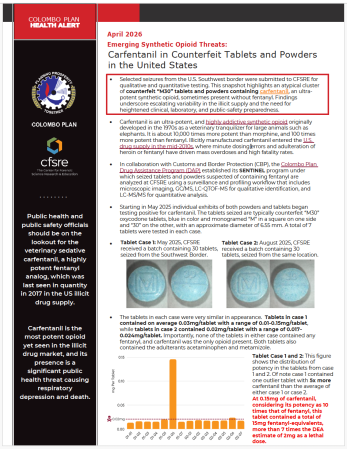
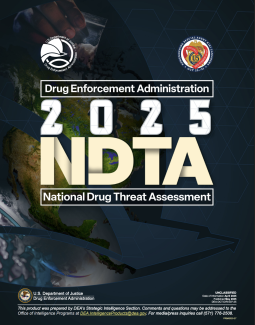
2025 National Drug Threat Assessment (NDTA) - Drug Enforcement Administration (DEA)
The U.S. Drug Enforcement Administration (DEA) has released its 2025 National Drug Threat Assessment (NDTA), providing an overview of the threats posed by illicit drugs and the transnational criminal organizations involved in their production and trafficking. The report highlights the continuing impact of synthetic drugs, particularly fentanyl and methamphetamine, on public health, public safety, and national security.
Health Problems from Emissions of Cannabis Cultivation
Join us for the IASIC Speaker Series on Jul 23rd at 12:00 PM Eastern Time where we will explore an often-overlooked public health concern—the release of airborne toxins from cannabis cultivation and their potential impact on surrounding...
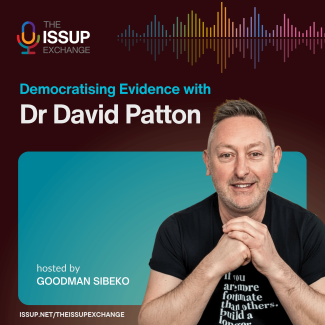
Democratising Evidence with David Patton: From Experience to Leadership Pt. 1
Professor Goodman Sibeko speaks with Dr David Patton about the experiences that shaped his journey into criminology, recovery research, and the movement to centre lived experience in knowledge production.
David reflects on growing up in a...
UN Toolkit on Synthetic Drugs
The UN Toolkit on Synthetic Drugs is a practical online resource coordinated by UNODC that brings together tools, guidance, and operational resources from across the UN system to support responses to the global synthetic drug problem...
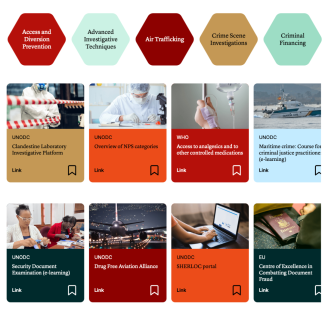
NEW Security Document Examination module in the UN Toolkit on Synthetic Drugs
UNODC has launched a new Security Document Examination module within the UN Toolkit on Synthetic Drugs, developed in collaboration with the UNODC Laboratory and Scientific Services. The module aims to help law enforcement, border control...

EU controls nine drug precursors following first EUDA assessments
The European Commission has introduced new controls on nine high-risk chemical precursors used in illicit drug production under Delegated Regulation (EU) 2026/314. Most of these substances are linked to synthetic cathinones, while one is...
Feasibility and tolerability of group cognitive behavioral therapy on improving functioning and managing craving and psychosocial factors among incarcerated women with methamphetamine use disorder
Women with methamphetamine use disorder (MUD) in correctional settings often face complex challenges, including trauma histories, stigma, mental health difficulties, and limited access to evidence-based treatment. In Indonesia, structured...
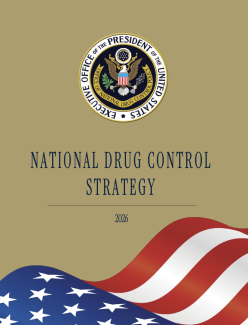
2026 National Drug Control Strategy - The White House
The 2026 National Drug Control Strategy outlines a comprehensive roadmap to reduce illicit drug use and protect communities across the United States. It prioritizes stopping the flow of drugs and precursor chemicals at all borders through...