All Resources for 'Research, Data & Evaluation'

Making intersectoral collaboration work: connecting people, services and communities

Publication Date
Format
Report
Themes
Treatment
Populations
Mental Health
Workforce Mental Health and Well-Being
Policy
Law Enforcement
Responding to Drug-Related Offending 
Health & Justice Responses 
Justice and Diversion
Rehabilitation and Re-Entry Services
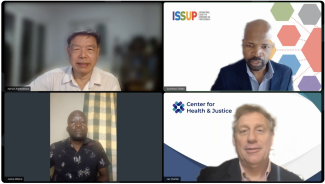
ISSUP’s 2026 conference session on intersectoral collaboration explored how health, justice and community services can work together to help people access and stay connected to appropriate support. Presentations from Thailand, Kenya and Ghana, alongside an introduction to deflection, highlighted clearer referral pathways, shared responsibilities, workforce wellbeing and earlier opportunities for care. These themes connected with the wider conference discussions on evidence-informed practice, youth prevention, recovery and faith-based support. Members were encouraged to adapt the learning to their roles and local circumstances, involve people using services in improvements, and assess changes in health, relationships and everyday life alongside service activity. The session recording offers a starting point for further learning, discussion across professions and practical collaboration through ISSUP National Chapters and professional networks.

New Synthetic Drugs Increase Overdose Risks in Scotland

Publication Date
Format
Website
Themes
Psychoactive Substances
Addiction
Public Health
Statistics
Data
Emerging substances 
Epidemiology, Aetiology and Statistics
Supply & Market Disruption

Scotland’s illicit drug market is becoming increasingly complex with the emergence of highly potent synthetic substances, including synthetic cannabinoids and opioids such as nitazenes. Some of these substances can be considerably more...

Recent U.S. drug alerts: Turning emerging evidence into workforce preparedness

Format
Community update
Themes
Prevention
Treatment
Recovery Support
Psychoactive Substances
Populations
Professional Development
Public Health
Policy
Emerging substances 
Law Enforcement
Emergency Resources
Recent United States alerts on fentanyl analogues, medetomidine, cychlorphine, drug mixtures and concentrated 7-OH products highlight evolving challenges across the substance use workforce. They invite us to review local preparedness, understand testing limitations and strengthen links between frontline services, laboratories and public-health partners. A useful response brings together clinical, prevention, recovery and peer perspectives, with clear responsibilities for turning relevant findings into action. For the global ISSUP community, these alerts offer lessons in preparedness while requiring careful consideration of local evidence, resources and service arrangements. Staying informed through trusted sources and sharing practical responses through ISSUP can help translate emerging knowledge into safer care and more responsive support for individuals, families and communities.

Synthetic cannabinoids: Reflections from Mauritius

Format
Community update
Themes
Psychoactive Substances
Mental Health
Policy
Data
Law Enforcement
Supply & Market Disruption

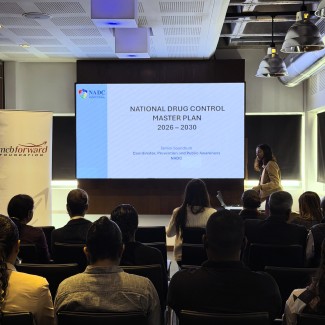
During a recent engagement in Mauritius, I had the opportunity to hear the National Agency for Drug Control (NADC) present the National Drug Control Master Plan 2026–2030 and to share the suite of resources available through ISSUP. This...

Carfentanil Detected in Counterfeit Tablets and Powders: What the Substance Use Workforce Should Know

Format
Community update
Themes
Policy
Data
Criminal Justice 
Emerging substances 
Law Enforcement
Border Control
Police 
Prisons / Corrections
Supply & Market Disruption
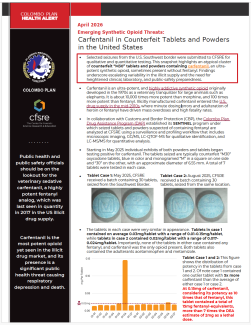
A new health alert reports carfentanil in counterfeit “M30” tablets and powders seized at the United States Southwest border. Carfentanil is an extremely potent synthetic opioid, and some tablets contained it without any fentanyl. The findings highlight how the appearance of an illicit tablet or powder cannot reliably indicate its contents or strength. Prevention, treatment and recovery professionals should reinforce overdose awareness, naloxone access and timely connections to care. Law enforcement, laboratories and public health partners should follow safe handling protocols, test comprehensively and share emerging drug market information quickly.

Substance Use and Health Competencies for All Prescribers

Publication Date
Format
Guide
Themes
Prevention
Treatment
Recovery Support
Quality Assurance
Best Practice Guidelines
Professional Development
Resilience and Coping Strategies

Developed by the Canadian Centre on Substance Use and Addiction (CCSA), the Workforce Competencies provide an evidence-informed framework outlining the knowledge, skills, values and behaviours needed by professionals working in substance...

Rehabilitation and Re-entry Programmes for Justice-Involved Individuals and Their Effectiveness in Social Reintegration: A Systematic Review

Publication Date
Format
Scientific article
Themes
Community-Based
Recovery Support
Peer and Community Support
Policy
Law
Criminal Justice 
Service Provision & Engagement 
Law Enforcement
Police 
Prisons / Corrections
Probation & Parole
Responding to Drug-Related Offending 
Health & Justice Responses 
Justice and Diversion
Rehabilitation and Re-Entry Services

Prison rehabilitation and community re-entry programmes implemented during incarceration or in the transitional period serve as significant mechanisms for facilitating justice-involved individuals in their post-release adaptation. This...

Connecting Civil Society with the United Nations: Opportunities for Engagement in Drug Policy, Crime Prevention and Criminal Justice

Publication Date
Format
ISSUP Webinar
Themes
Prevention
Policy
Criminal Justice 
Partner Organisation
ISSUP Global, in collaboration with the Vienna NGO Committee on Drugs (VNGOC), present a webinar on onnecting Civil Society with the United Nations: Opportunities for Engagement in Drug Policy, Crime Prevention and Criminal Justice.

Do Drug Diversion Schemes Work? Insights from the Thames Valley Police Drugs Diversion Pilot

Format
Scientific article
Themes
Ancillary Services
Data
Criminal Justice 
Service Provision & Engagement 
Law Enforcement
Police 
Responding to Drug-Related Offending 
Health & Justice Responses 
Justice and Diversion
Rehabilitation and Re-Entry Services

This paper examines the development and early outcomes of the Thames Valley Police Drugs Diversion Pilot in West Berkshire, which offers people found in possession of drugs an opportunity to engage with treatment rather than receive a...

Drug Diversion Schemes Linked to Lower Reoffending Rates, New Research Finds

Format
News
Themes
Data
Criminal Justice 
Service Provision & Engagement 
Law Enforcement
Police 
Responding to Drug-Related Offending 
Health & Justice Responses 
Justice and Diversion
Rehabilitation and Re-Entry Services

New research examining more than 62,000 criminal incidents across 13 police forces in England found that police-led drug diversion schemes are associated with significantly lower reoffending rates than traditional prosecution for drug...

Compartilhe o conhecimento: membros ISSUP podem postar no Compartilhamento de Conhecimento - Entre ou torne-se um membro