

Buscar
Theories and Science
Application of scientific theories and research to understand and prevent substance use, including prevention science.


Substance Use Prediction Using Artificial Intelligence Techniques
The study examines whether artificial intelligence can reliably predict the use of specific substances in Finland, including cannabis, ecstasy, amphetamine, cocaine and non-prescribed medicines. Using data from the 2022 Finnish National...
digiPREV: Where Theory Meets Practice
The Czech national IPREV (Interactive Platform for Mental Health Support and Risk Behaviour Prevention) platform, which supports mental health and the prevention of risky behaviour, is becoming an important tool used by more and more...

From Parenting to Polysubstance Use: The Role of Attachment and Psychosocial Mechanisms in Addiction Vulnerability
Background:
Polysubstance use disorder (PSUD) in adolescents and young adults is often rooted in early family dynamics. Baumrind’s typology—later extended by Maccoby & Martin and the integrative model of Darling & Steinberg—offers a...

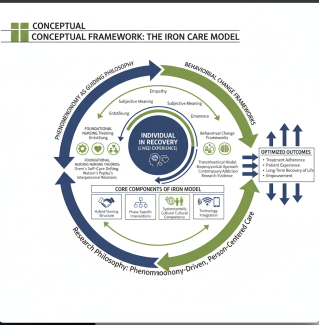
The Integrated Recovery-Oriented Nursing (IRON) Care Model: A Theoretical Framework for Optimizing Addiction Treatment Outcomes
Abstract
Title: The Integrated Recovery-Oriented Nursing (IRON) Care Model: A Theoretical Framework for Optimizing Addiction Treatment Outcomes
Authors: Ahmad Muneer, MSc, RN; Hessa Abdel Qader, MSc, RN
Affiliations: Maudsley Health, Al...
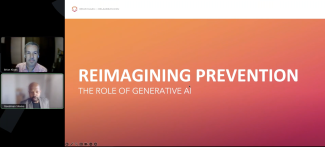
Webinar Reflection: Reimagining Prevention, The Role of Generative Artificial Intelligence
ISSUP, in partnership with the International Consortium of Universities for Drug Demand Reduction (ICUDDR), recently hosted an engaging and forward-looking webinar titled “Reimagining Prevention: The Role of Generative Artificial...
Teachers Training workshop at Hambanthota NDDCB Ministry of Health Ministry of Education
About programme The Preventive Education and Training Division of the National Dangerous Drugs Control Board (NDDCB), Sri Lanka, successfully conducted the Guru Shiksha Teachers Training Programme from 22nd to 24 September 2025 at the...
Reimagining Prevention: The Role of Generative AI
ISSUP, in collaboration with ICUDDR, present a webinar on Reimagining Prevention: The Role of Generative AI.
The Power of Storytelling
ISSUP Global, in collaboration with Faces & Voices of Recovery, presents its webinar titled 'The Power of Storytelling'
The Evidence Speaks: What Research Says About MI Today Pt.4
What does the evidence tell us about Motivational Interviewing (MI), and what might the future of research hold?
In the final episode of the ISSUP Exchange series, Dr. Goodman Sibeko and Professor Stephen Rollnick explore the research...

Reducing Drug-Related Crime
Drug-related crime remains a major challenge for many countries, including Indonesia. The concept of reducing drug-related crime refers to efforts aimed at lowering crime rates that are directly or indirectly triggered by the abuse and trafficking of narcotics. This approach not only emphasizes law enforcement against drug dealers and criminal syndicates, but also includes preventive strategies, user rehabilitation, disruption of criminal networks, and community-based interventions.
Applying the theory of planned behavior to predict online addiction treatment intention
Abstract
Scant research has been published on online addiction treatment, with few studies focusing on the Theory of Planned Behavior (TPB) in relation to addiction treatment. Therefore, this study aims to explain the TPB's predictability...
Time to think: A cognitive model of delinquency prevention and offender rehabilitation.
SUMMARY
In this groundbreaking book, "A Time to Think," author dives deep into a comprehensive cognitive model for delinquency prevention and offender rehabilitation. Drawing on years of research and practical experience, the author...
Thinking for a change 4.0.
About the program:
Thinking for a Change 4.0 (T4C) is an innovative cognitive behavioral change program crafted by experts Jack Bush, Ph.D., Barry Glick, Ph.D., and Juliana Taymans, Ph.D., in partnership with the National Institute of...
The psychology of criminal conduct.
DESCRIPTION
The Psychology of Criminal Conduct, Seventh Edition, provides a psychological and evidence-informed perspective of criminal behavior that sets it apart from many criminological and mental health explanations of criminal...
Measuring recovery capital for people recovering from alcohol and drug addiction: a systematic review.
Abstract
Background:
Recovery capital theory provides a biopsychosocial framework for identifying and measuring strengths and barriers that can be targeted to support recovery from alcohol and drug addiction. This systematic review...
Recovery capital: a systematic review of the literature.
Abstract
Background: Recovery from a substance use disorder involves various supports addressing multiple interrelated factors. Recovery capital (RC) is a lens that could help identify distinct areas of assets that could be enhanced and...
Defining and operationalizing the phenomena of recovery: a working definition from the recovery science research collaborative.
Abstract
A number of definitions exist for the concept of “recovery” in both the substance use disorder (SUD) and mental health (MH) fields. Previous attempts to define recovery have not reached consensus among experts within the field...
MI in Action: Turning Conversations into Change Pt. 2
What does it really mean to “step back” in a helping conversation? And how can practitioners cultivate genuine curiosity and empathy while still focusing on change?
In this second episode of our four-part ISSUP Exchange series, Dr. Goodman...

The Integrated Recovery-Oriented Nursing (IRON) Care Model: A Theoretical Framework for Optimizing Addiction Treatment Outcomes
The Integrated Recovery-Oriented Nursing (IRON) Care Model: A Theoretical Framework for Optimizing Addiction Treatment Outcomes
The Integrated Recovery-Oriented Nursing (IRON) Care Model is a comprehensive theoretical framework designed...
CALL FOR PAPERS – Health Policy and Planning supplment: Changing Health Systems: Advancing Justice and Sustainability through Research, Policy and Practice
Health systems are undergoing rapid and often unpredictable transformations. These changes are driven by technological advancements, shifting demographic patterns, climate change, and geopolitical tensions. The COVID-19 pandemic, for...