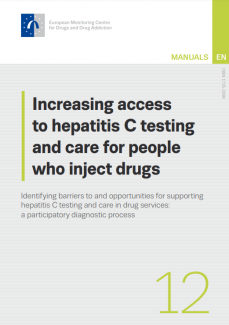
This manual provides a step-by-step guide for those involved in planning and managing infectious diseases and drug services, focusing on how to identify barriers to and opportunities for improving provision of HCV testing and access to treatment for people who use drugs.

Guerrero, E., Amaro, H., Kong, Y. et al. Gender disparities in opioid treatment progress in methadone versus counseling. Subst Abuse Treat Prev Policy 16, 52 (2021). https://doi.org/10.1186/s13011-021-00389-4
The high dropout rate (75%) in opioid use disorder (OUD) treatment among women and racial/ethnic minorities in the United States necessitates a better knowledge of the factors that contribute to treatment success. While therapy and medication for OUD are considered the top standard of care in substance use disorder (SUD) treatment, many people with OUD receive just counseling or methadone-only therapies. This study compares gender inequalities in methadone-based treatment plan progress to counseling-based programs in one of the biggest SUD treatment systems in the United States.
Herring AA, Vosooghi AA, Luftig J, et al. High-Dose Buprenorphine Induction in the Emergency Department for Treatment of Opioid Use Disorder. JAMA Netw Open. 2021;4(7):e2117128. doi:10.1001/jamanetworkopen.2021.17128
In response to the rising efficacy of the illicit opioid drug supply and often observed delays in access to follow-up therapy, emergency departments (EDs) occasionally utilize a high-dose buprenorphine induction method for the treatment of opioid use disorder (OUD). The objective of this study is to investigate the safety and tolerability of high-dose (>12 mg) buprenorphine induction for patients with OUD presenting to an ED.
Data were manually extracted from electronic health records for all ED patients with OUD treated with buprenorphine at a single, urban, safety-net hospital in Oakland...
Watson, D.P., Staton, M.D., Dennis, M.L. et al. Variation in brief treatment for substance use disorder: a qualitative investigation of four federally qualified health centers with SBIRT services. Subst Abuse Treat Prev Policy 16, 58 (2021). https://doi.org/10.1186/s13011-021-00381-y
Brief treatment (BT) or regular outpatient alcohol use or substance use disorder (SUD) treatment is a key element of the Screening, Brief Intervention, and Referral to Treatment (SBIRT) model. It can be an effective, short-term, and low-cost treatment option for many people who misuse alcohol and drugs. Nevertheless, inconsistent BT implementation often costs similar to regular outpatient care. Prior research is also prevalent with inconsistent operationalizations regarding the measurement of BT received by patients. Therefore, there is a need to more explicitly identify and document...
Ramzi G Salloum, Alana M Rojewski, Megan E Piper, Janice A Blalock, Belinda Borrelli, Lindsay M Boyce, Jennifer A Minnix, Omara Dogar, Rachel L Tomko, Douglas E Jorenby, Chris Kotsen, Jamie S Ostroff, Treatment Fidelity Workgroup of the SRNT Treatment Network, Reporting Treatment Fidelity in Behavioral Tobacco Treatment Clinical Trials: Scoping Review and Measurement Recommendations, Nicotine & Tobacco Research, 2021;, ntab140, https://doi.org/10.1093/ntr/ntab140
Abstract
Introduction:
Adoption of rigorous standards for reporting treatment fidelity is essential for advancing discovery, validation, and implementation of behavioral treatments. Whereas the NIH Behavior Change Consortium (BCC) developed an assessment tool to assess quality of reporting and monitoring of treatment fidelity across health behavior change interventions, it has not yet been applied specifically to treatment fidelity in behavioral tobacco treatment trials.
Methods:
We conducted a scoping review of peer-reviewed, clinical trials of behavioral adult tobacco treatment...
Hildebrandt, M.K., Dieterich, R. & Endrass, T. Disentangling substance use and related problems: urgency predicts substance-related problems beyond the degree of use. BMC Psychiatry 21, 242 (2021). https://doi.org/10.1186/s12888-021-03240-z
Background:
Substance use disorders are reliably associated with high impulsivity and sensation seeking. Importantly, both precede problematic substance use, implicating them as risk factors. Individuals with substance use disorders show variable degrees of substance use (combined quantity and frequency) and substance-related problems and differ in both aspects from healthy controls. Dimensional research has indicated differential associations of impulsivity-related traits as well as sensation seeking with the degree of substance use and substance-related problems. The current study aimed to...
Fuente: Organización Mundial de la Salud. (2021). Orientaciones y módulos técnicos sobre los servicios comunitarios de salud mental: promover los enfoques centrados en las personas y basados en los derechos: resumen. Organización Mundial de la Salud. https://apps.who.int/iris/handle/10665/341641...
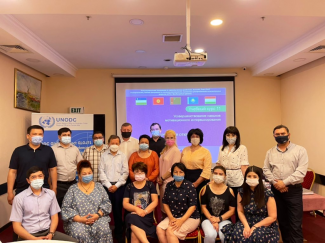
UNODC Regional Office for Central Asia supported regional training of trainers (ToT) on Course 11 “Enhancing Motivational Interviewing Skills”. This course is part of the Advanced Level of the Universal Treatment Curriculum for Substance Use Disorders (UTC training package) for national trainers from Tajikistan and Uzbekistan which took place offline in Tashkent, Uzbekistan on 24-28 May 2021.
16 members of national teams of trainers from Tajikistan (5) and Uzbekistan (11) took part in the training. The main objectives of this training were to provide a comprehensive understanding of the role...
Galanter, Marc MD; White, William L. MA; Hunter, Brooke MS Virtual Twelve Step Meeting Attendance During the COVID-19 Period, Journal of Addiction Medicine: April 15, 2021 - Volume Publish Ahead of Print - Issue - doi: 10.1097/ADM.0000000000000852
Abstract
Objectives:
Face-to-face meetings are key components of Twelve Step (TS) fellowships’ support of members’ abstinence. Home confinement during COVID-19 made this less feasible. Our objective was to ascertain whether a transition to virtual online meetings among TS members took place, and whether it was potentially effective.
Methods:
Two thousand one hundred fifty-two long-standing USA members of Narcotics Anonymous (NA) were surveyed to ascertain their recovery-related experiences and their relation to the transition to virtual meetings.
Source: https://store.samhsa.gov/product/tap-34-disaster-planning-handbook-for-behavioral-health-service-programs/pep21-02-01-001 This Technical Assistance Publication (TAP), updated in 2021, provides guidance for behavioral health service and substance use disorder treatment programs wanting to...
In this article Khary Rigg, Ph.D and Kelly Miller, NTMC introduce us to the importance of nutrition in addictionrecovery and highlight some practical, evidence-based actions to consider when advocating for nutritional interventions in recovery care.
Source: https://mhttcnetwork.org/sites/default/files/2020-09/7tips_maya_Families_V2.pdf Publication Date: August 1, 2020 Developed By: National Hispanic and Latino MHTTC Guatemalans were the sixth-largest Hispanic group living in the United States in 2017, and along with Venezuelans and Dominicans...
Guidance insists child welfare is paramount, even if your client is not the child, but their parent. The temptation is to sideline this uncomfortable but important work, placing the onus on managers to counter this through training, support, monitoring and supervision. Place yourselves in their shoes; how you would reconcile prioritising child protection with targets and expectations related to their parents’ substance use?
To go direct to the featured section click the link below or paste it in to your web browser address box...
Online course on "Science of Substance Use Disorder, Treatment and Recovery", as per the Universal Treatment Curriculum by the Colombo Plan Drug Advisory Programme, starting from 6 March 2021, every Saturday from 9 am to 1.30 pm (Indian...