
بحث
 Psychoactive Substances
Psychoactive substances are natural or synthetic substances that act on the central nervous system and alter mental processes such as mood, perception, cognition, consciousness, and behaviour. These substances may be legally prescribed medications (e.g., pain medications or sedatives), legally available substances such as alcohol or caffeine, or controlled or illicit drugs. Psychoactive substances can be used for medical, social, cultural, or recreational purposes, but some carry risks of misuse, dependence, and health or social harms when used in harmful ways.

Male Patient Drop-Out from Addiction Inpatient Treatment in the Czech Republic: A Study Protocol
BACKGROUND: The dropout rate from the treatment of patients with substance use disorders (SUD) negatively affects overall treatment outcomes. Little is known about the specific role of various psychiatric and psychosocial factors in the...
AddictologyIssue 2/2023
Sports Betting and Depression among Youths in the SouthSouth Region of Nigeria
BACKGROUND: It has been noted that those addicted to gambling are at a high risk of developing mental health problems such as depression.
AIMS: This study was designed to determine the effect of participating in sports betting on...
AddictologyIssue 2/2023
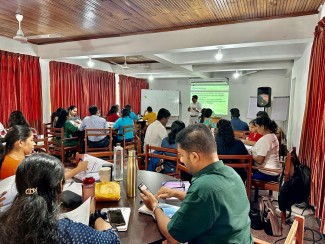
Training on UTC 03 - Sri Lanka
Psychoactive substance use and substance use disorders (SUDs) remains remain to be a major problem around the world. Which is negatively effect on global health and social and economic functioning. Though people who suffer from SUDs must...
The absence of data on driving under the influence of alcohol in road traffic studies: a scoping review of non-randomized studies with vote counting based on the direction of effects of alcohol policies
Background
Data concerning driving under the influence of alcohol (DUIA) are frequently characterised by their lack of availability, accuracy, or reliability. This inherent limitation poses challenges in the examination of the influence of...
Association between vmPFC gray matter volume and smoking initiation in adolescents
Abstract
Smoking of cigarettes among young adolescents is a pressing public health issue. However, the neural mechanisms underlying smoking initiation and sustenance during adolescence, especially the potential causal interactions between...
HEAL Connections Sharing Session Two-Part Series: Inclusive Language, Imagery, and Storytelling for Addiction and Pain Researcher Teams
Overview
This Sharing Session was part one of a two-part series focusing on helping HEAL addiction researchers use language, imagery, and storytelling in respectful ways that engage all stakeholders.
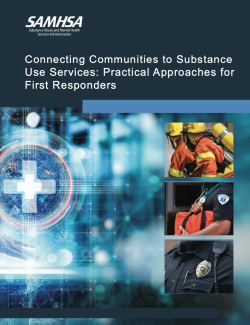
Connecting Communities to Substance Use Services: Practical Approaches for First Responders
Abstract
During their day-to-day work, first responders such as law enforcement officers, firefighters, and emergency medical services (EMS) personnel often encounter people who use drugs (PWUD), including alcohol, opioids, stimulants, and...
Supporting displaced people from Afghanistan and host communities in neighbouring countries – UNODC regional workshop on drug use prevention, treatment and care
From 5th to 9th June, UNODC organized a hybrid regional workshop with a total of 42 participants from the government, civil society organizations (CSOs) and UN agencies, to assist the strengthening of evidence-based prevention, treatment...
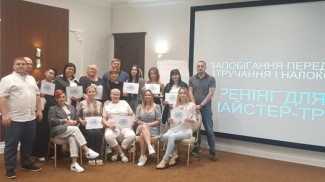
Stop Overdose Safely: UNODC successfully trained Ukrainian CSOs on emergency management of opioid overdose
From 6th to 8th June 2023, the UNODC Programme Office for Ukraine (POUKR) and the UNODC Prevention, Treatment and Rehabilitation Section (PTRS), jointly with Ukrainian NGOs, “Club Eney” and “Conviktus”, organized an in-person “Stop Overdose...
Extended-release pharmacotherapies for Substance Use Disorders in incarcerated populations
A history of harmful substance use or dependence is common among people in Criminal Justice Systems (CJSs) around the world. The time after an individual has left the CJS is of elevated risk for those with harmful substance use - with high...
Sex and gender differences in HCV risk and cascade of care among people who inject drugs
This seminar explored why it is important to study sex and gender differences in people who inject drugs, with reference to examples relevant to hepatitis C risk and the cascade of care. It included an overview of why we study sex and...
التدبير الدوائي لانسحاب الميثامفيتامين الحاد
حول الندوة عبر الإنترنت:
قدمت هذه الندوة لمحة عامة عن دراسات الدكتوراه الخاصة ب Liam ، بدءا من المراجعة المنهجية والتحليل التلوي للعلاجات الدوائية التي تم بحثها سابقا لسحب الميثامفيتامين.
ثم اقترحت خيارا علاجيا جديدا ، lisdexamfetamine ،...
Stigmatising imagery for substance use disorders
Stigma is a barrier to treatment for individuals with substance use issues. Although there has been research conducted exploring the impact of stigmatising language, less is known about the effects of stigmatising images.
This qualitative...

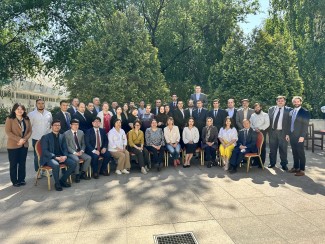
UNODC conducted Regional Training of Trainers on UTC 20 in Central Asia
The UNODC Regional Office for Central Asia in collaboration with Prevention, Treatment and Rehabilitation Section, UNODC HQ held a Regional Training of Trainers (ToT) on Course 20 – “Populations with Special Clinical Needs” which took place...
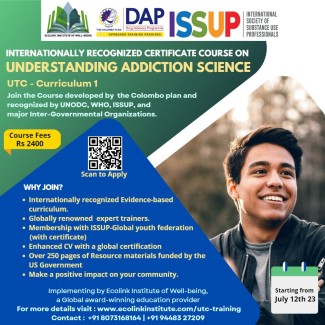
Ecolink concludes short courses on Science of addiction among youths
Ecolink Institute has concluded two batches on the science of addiction among youths, mostly from Universities, with the intention to provide them an introduction to psychoactive substances and how it affects their brain and cause addiction...
ندوة نصف شهرية عبر الإنترنت: سلسلة تحديث المعرفة ISSUP Nigeria (الدورة الثامنة عشرة)
يسر ISSUP Nigeria أن تقدم ندوة الويب نصف الشهرية القادمة في سلسلة تحديث المعرفة. ستركز هذه الندوة عبر الإنترنت على موضوع "قيادة التغيير من خلال الدعوة للوقاية من الإدمان: استراتيجيات للتأثير الدائم والرسائل الفعالة".
Provision of addiction treatment services during the war in Ukraine
This webinar is held under the joint initiative of ISSUP Ukraine, the Center for Public Health of the Ministry of Health of Ukraine and ICF "Alliance for Public Health".
Children and families affected by parental drug use
ISSUP are pleased to present their webinar on Children and families affected by parental drug use.
كفاءات تمريض الإدمان: مجموعة أدوات شاملة لممرضة الإدمان
تجريدي
مع زيادة دور الممرضات في رعاية المرضى الذين يعانون من إدمان المخدرات ، كانت هناك حاجة واضحة لتطوير كفاءات تمريض الإدمان لتوجيه ودعم القوى العاملة التمريضية.
كشف بحث في الأدبيات عن نقص في الأدوات الرسمية لتقييم وتوجيه الممرضات في...