
खोज
 Treatment
The range of medical, psychological, and social services designed to help individuals reduce or stop substance use and manage substance use disorders. Treatment may include assessment, counselling and behavioural therapies, medication-assisted treatment, withdrawal management, and support for co-occurring mental or physical health conditions. Effective treatment is typically person-centred and evidence-informed, and may be provided in outpatient, community, or residential settings. Treatment aims to improve health and functioning, reduce substance-related harms, and support individuals in moving toward recovery and long-term wellbeing.


Bi-Monthly Webinar: ISSUP Nigeria Knowledge Update Series (Fourth Session)
On January 28th, ISSUP Nigeria held the Fourth Webinar in their Knowledge Update Series. This Webinar focused on the topic of Substance Abuse among Adolescents: The Influence of Sexual Behaviour.
Registration Open For FREE Virtual Summit: Reframing Global Prevention Practices and Policies During COVID 19
Join us for this free virtual summit featuring Ms. Giovanna Campello, Chief, UNODC Prevention, Treatment and Rehabilitation Section, and Dr. Robert DuPont, President, Institute for Behavior and Health, Inc. and First Director, U.S. National...

An Outcome Evaluation of Drug Treatment in Afghanistan
The results of the Afghanistan drug abuse treatment evaluation show positive change in illegal drug use and criminal behaviour.
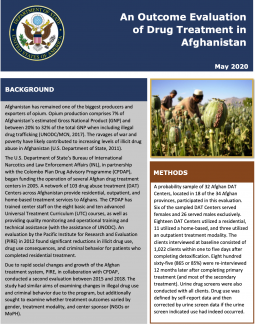
The Lived Experiences of Recovering Filipino Persons who Use Drugs (PWUDS) without Family Support
The Philippines’s war on drugs brought about an influx or people of who use drugs (PWUDs) availing of community-based drug rehabilitation services for treatment. Programs have been created to develop skills to avoid relapse and improve...
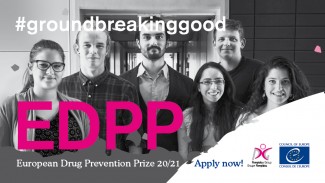
European Drug Prevention Prize 2021
The Pompidou Group calls for youth projects to submit applications for the 2021 edition of the European Drug Prevention Prize.
The Prevention Prize is awarded to highlight outstanding drug prevention projects that have proved successful in...
Australian Guidelines to Reduce Health Risks from Drinking Alcohol
The guidelines provide health professionals, policy makers and the Australian community with evidence-based advice on the health effects of drinking alcohol.
The guidelines aim to help individuals make informed decisions about drinking...
Congratulations to Kenya ICAP Credentialed Professionals
Congratulations to 39 candidates who passed their ICAP exams last month! Kenya leads the world in ICAP credentialed professionals with over 230! GCCC commends all of them for their dedication and passion to the field of Addiction...
The Common Core of Effective Therapies. Highlight from Effectiveness Bank Alcohol Treatment Matrix Row 4
See this message as a web page.
THE COMMON CORE OF EFFECTIVE THERAPIES
The first cell of row 4 dedicated to psychosocial therapies took a research-illuminated journey to the core of those therapies, guided by the American Psychological...
EMCDDA Technical Report on New Psychoactive Substance
The purpose of this technical report is to provide an analysis of the available information on methyl 2-{[1-(4-fluorobutyl)-1H-indole-3-carbonyl]amino}-3,3-dimethylbutanoate (commonly known as 4F-MDMB-BICA), a synthetic receptor cannabinoid...
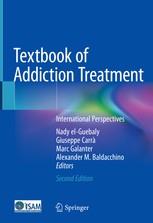
Textbook of Addiction Treatment: International Perspectives
Addiction is increasingly being recognized as a major global public health issue, and an ever-growing number of medical specialties, psychological and social science training programs, and professional associations are including addiction...
Drink Wise, Age Well Professional Resources
The Drink Wise, Age Well programme supported people to make healthier choices about alcohol as they age.
The programme was designed to change attitudes, combat stigma and reduce alcohol harm in the over 50s so they can live longer...
Adapting an Internet-Delivered Intervention for Depression for a Colombian College Student Population: An Illustration of an Integrative Empirical Approach
Abstract
Background
Culturally adapted psychotherapy (CAP) studies are limited and until now there are few published examples that illustrate the process of cultural adaptation with internet-delivered treatments.
Aim
This paper aims to...
UNODC-WHO International Standards for the Treatment of Drug Use Disorders, Revised 2020 edition (Ukrainian Translation)
UNODC/WHO International Standards for the Treatment of Drug Use Disorders - Ukrainian Translation
Revised Edition
2020
The Talking Route to Recovery. Effectiveness Bank Alcohol Treatment Matrix Row 4
View this message as a web page
Time to consolidate the lessons of row 4 of the Alcohol Treatment Matrix, all about therapies in which human interaction is intended to be the main active ingredient -...
Building Capacity in Tobacco Control by Establishing the Eastern Europe Nurses’ Center of Excellence for Tobacco Control
ABSTRACT
Introduction:
Properly educated nurses delivering evidence-based tobacco dependence treatment could contribute to improving health and reducing regional disparities in tobacco-related disease and death in Central and Eastern...
Treatment Experiences with Norwegian Health Care among Immigrant Men Living with Co-Occurring Substance Use- and Mental Health Disorders
Abstract
Immigrants are considered at risk of psychological distress and therefore involvement in substance abuse, due to a variety of pre- and post-migration factors. Further, there is lower treatment engagement, a higher dropout rate...
Motivations for Treatment Engagement in a Residential Substance Use Disorder Treatment Program: A Qualitative Study
Abstract
Aims:
The aim of this study was to explore perspectives on motivations for treatment engagement from substance use disorder (SUD) clients in a long-term residential rehabilitation program.
Design and Methods:
A...
MCA Alcohol & Covid Webinar 11 November 2020
The MCA Alcohol and Covid Free Webinar took place at 12.30pm on Wednesday 11 November 2020 in the UK.
The next MCA Annual Symposium is on the theme of 'Interventions & Recovery' on 17 November 2021 at the British Medical Association...
«Міжнародні стандарти лікування розладів, пов’язаних із вживанням наркотичних речовин»
«Міжнародні стандарти лікування розладів, пов’язаних із вживанням наркотичних речовин»
(далі - Стандарти) є результатом спільної роботи УНЗ ООН і ВООЗ, спрямованої на надання підтримки країнам-членам у розробленні та налагодженні...