

खोज
 Law Enforcement
The activities of authorised agencies such as police, customs, border services, and investigative bodies to enforce drug control laws and address criminal activities related to the production, trafficking, and distribution of illicit substances. These activities may include investigations, intelligence gathering, interdiction, and collaboration with national and international partners to disrupt organised crime networks. Law enforcement plays an important role in protecting public safety and maintaining the rule of law, and is most effective when coordinated with broader public health, prevention, treatment, and recovery efforts as part of a balanced and comprehensive response to substance use.

Attitudes and views regarding law enforcement activity at large outdoor raves in Israel: a cross-sectional survey
ABSTRACT
Harm reduction services, such as drug testing kiosks and ‘safe zones’ are often advocated for reducing the harms of drug use among rave and festival attendees. However, interaction with law enforcement can undermine efforts at...
Impact of opioid maintenance therapy in the community on re-incarceration in individuals with opioid use disorder—A linked cohort study
Abstract
Introduction
Studies have found associations between Opioid Agonist Maintenance Treatment during incarceration and reduced recidivism among recently released formerly incarcerated persons. However, the role of community-based Opi...
Moral norms and risk perceptions toward driving under the influence of recreational versus medical cannabis among Israeli young adults
ABSTRACT
Many studies have compared individuals who use cannabis for recreational versus medical purposes, but little is known about the moral norms and risk perceptions toward recreational versus medical cannabis while driving. This study...
A Deeper Look into the Roots of Substance Use Disorders
Addiction is often seen through the lens of poor choices or lack of willpower, but this view oversimplifies what is, in reality, a highly complex mental health condition. Through my academic journey in addiction counseling, I’ve come to...

A Deeper Look into the Roots of Substance Use Disorders
Addiction is often seen through the lens of poor choices or lack of willpower, but this view oversimplifies what is, in reality, a highly complex mental health condition. Through my academic journey in addiction counseling, I’ve come to...

A Call for Trauma-Informed Justice Reform in Nigeria: Breaking the Cycle of Substance Use, Mental Illness, and Incarceration
By Seye Omiyefa
Across Nigeria and many parts of the world, thousands of individuals, particularly youth and economically marginalized people, are trapped in a revolving door of arrest, incarceration, and reentry. Much of this cycle is...
Making a Difference Across Illinois
BOOSTING TREATMENT SUCCESS & VALUE
People referred to substance use treatment by the justice system (courts, probation, parole) are significantly more likely to complete it when they also receive TASC (Treatment Accountability for Safer...
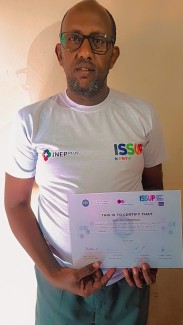
A PREVENTIONIST AND HERO IN THE MAKING!
The inspiring journey of Adan Noor – INEP Plus graduate, cohort 3 (2025)
Adan Noor, a graduate of the INEP Plus Cohort 3 (2025) in Kenya, is a powerful example of how prevention education has the potential to transform not only individuals...
Psychological interventions for antisocial personality disorder.
Abstract
Background: Antisocial personality disorder (AsPD) is associated with poor mental health, criminality, substance use and relationship difficulties. This review updates Gibbon 2010 (previous version of the review).
Objectives: To...
A systematic review of motivational interviewing to address substance use with justice-involved adults.
Background: Motivational Interviewing (MI) is widely used in substance abuse treatment, possibly due to the short sessions and the treatment’s cost-effectiveness. Previous research has established the efficacy of MI among a broad range of...
Assessing the delivery of the thinking for a change program in modified formats: An experimental approach.
Abstract
This paper evaluates whether participation in the Thinking for a Change cognitive behavioural program produces improvement in social problem solving skills in a prison context. Data are derived from a randomised experiment, with a...
Evidence-based treatment and supervision practices for co-occurring mental and substance use disorders in the criminal justice system.
ABSTRACT
Background:
Over seven million persons in the United States are supervised by the criminal justice system, including many who have co-occurring mental and substance use disorders (CODs). This population is at high risk for...
A meta-analysis of moral reconation therapy.
Abstract
This study reports on a meta-analysis of moral reconation therapy (MRT). Recipients of MRT included adult and juvenile offenders who were in custody or in the community, typically on parole or probation. The study considered...
Meta-analysis of moral reconation therapy recidivism results from probation and parole implementations.
A meta-analysis of nine published outcome studies detailing the effects of Moral Reconation Therapy on recidivism in parolees and probationers is presented. The studies included in the meta-analysis had a total of 2,460 MRT-treated...
A meta‐analytic review of the efficacy of psychological treatments for violent offenders in correctional and forensic mental health settings.
Abstract
This meta‐analysis examined whether psychological treatments with adult violent offenders in correctional and forensic mental health settings are effective in preventing community recidivism and institutional (hospital/prison)...
Effectiveness of psychological interventions in prison to reduce recidivism: A systematic review and meta-analysis of randomised controlled trials.
Summary
Background
Repeat offending, also known as criminal recidivism, in people released from prison has remained high over many decades. To address this, psychological treatments have been increasingly used in criminal justice settings...
Evidence-based treatment and supervision practices for co-occurring mental and substance use disorders in the criminal justice system.
Abstract
Background: Over seven million persons in the United States are supervised by the criminal justice system, including many who have co-occurring mental and substance use disorders (CODs). This population is at high risk for...
Diverting homeless substance users from hospitalization and incarceration: an innovative agency collaboration.
ABSTRACT
In Washington State, U.S., 29 of every 10,000 individuals were homeless in 2019. It has been estimated that over 80% of chronically homeless individuals have experienced substance use disorders. Snohomish County Diversion Center...
A scoping review of community-based post-opioid overdose intervention programs: implications of program structure and outcomes.
Abstract
Background:
An emergent intervention to address the opioid epidemic is the use of multidisciplinary outreach teams which connect an individual in the community to healthcare resources after the experience of an opioid overdose...
Seattle’s law enforcement assisted diversion (LEAD): Program effects on criminal justice and legal system utilization and costs.
Abstract
Objectives We evaluated a prebooking law enforcement assisted diversion (LEAD) program (i.e., initial diversion from the criminal justice system paired with harm-reduction case management and legal assistance to individuals with...