
Why Sustainability Matters in Prevention
School-based prevention and mental health promotion initiatives frequently invest substantial resources in training, awareness activities and capacity building.
However, an important question remains after implementation ends: To what extent are the knowledge, skills, practices and support structures sustained within participating institutions?
For prevention practitioners, this question is fundamental.
Programme completion and positive immediate outcomes do not necessarily demonstrate long-term sustainability.
Monitoring, Learning and Evaluation (MLE) provides an opportunity to examine whether programme components continue, how they are integrated into institutional practices, and which factors support or hinder their continuation.
The Wellness Champion Programme HSG 5.0
The Wellness Champion Programme HSG 5.0, implemented by ISSUP Malaysia through its host organization, OAPTAR in four secondary schools in Bau, Sarawak, adopted a school-based approach to strengthening mental health awareness, social-emotional competencies and supportive school environments.
The participating schools were SMK Bau, SMK Singai, SMK Lake and SMK Paku.
Programme components included social-emotional learning activities, Peer Supporter (PRS) development, Mental Health Corners, and capacity-building initiatives for teachers and school counsellors.
Following programme completion, ISSUP Malaysia initiated an MLE process to examine continuity, institutional ownership and sustainability.
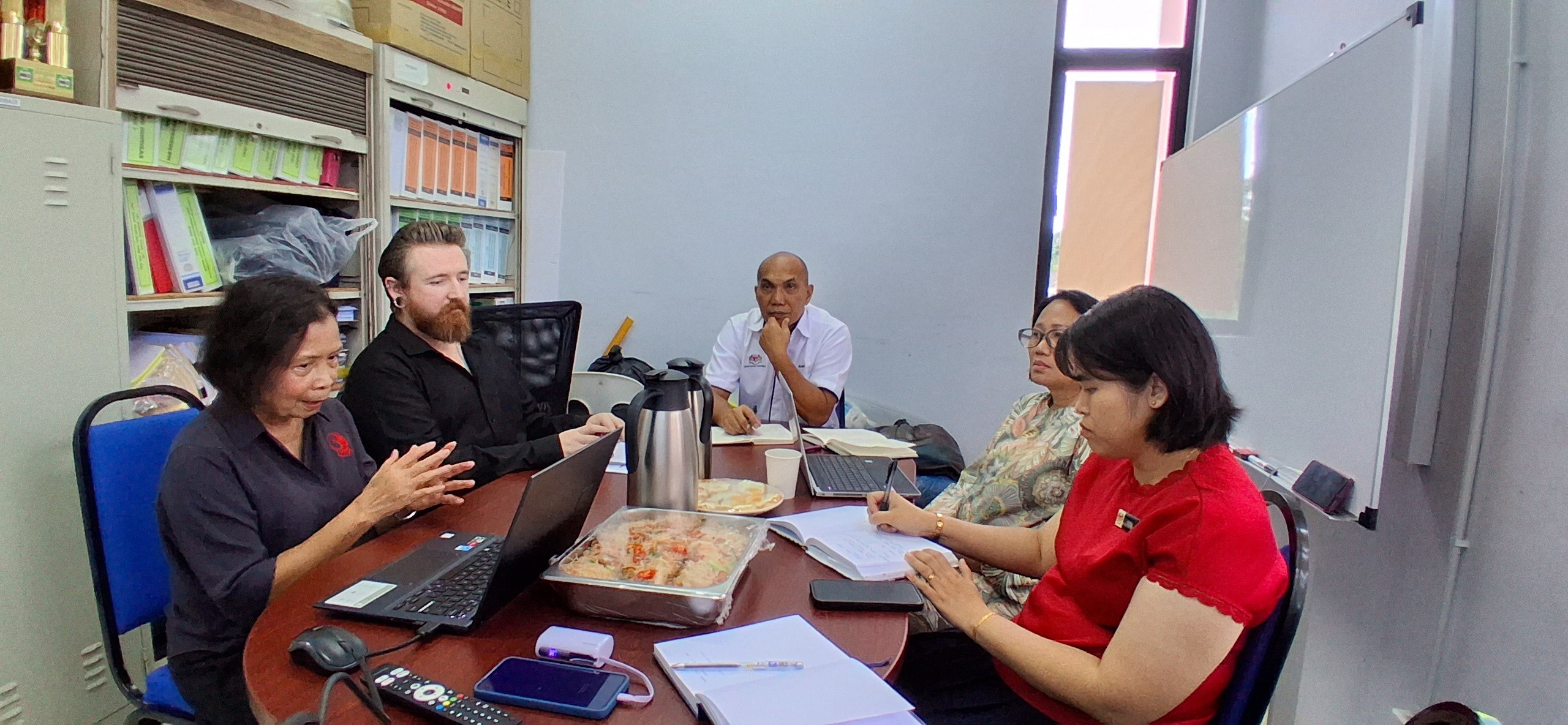
On 16 November 2026, ISSUP Malaysia met with Pejabat Pendidikan Daerah (PPD) Bau to present findings from the completed programme's evaluation and discuss the next phase of the MLE.
The meeting demonstrated continued institutional interest in strengthening school mental health initiatives.
Examining Continuity and Institutional Ownership
The MLE seeks to understand whether programme activities and structures have continued beyond the period of external implementation support.
Preliminary information obtained through informal discussions with school counsellors and school social media updates suggests that some mental health initiatives remain active and that new Peer Supporters are being recruited.
These observations provide useful starting points for further investigation but should not be interpreted as confirmed evidence of programme sustainability.
The next phase will gather information from PRS and non-PRS students, teachers and school counsellors, alongside visits to the schools' Mental Health Corners.
Focus group discussions will provide further qualitative insights into programme implementation, continuity and the conditions that influence sustainability.
Of particular interest is the extent to which school personnel and management have incorporated programme practices into their regular responsibilities.
This distinction is important because sustainable prevention requires more than the continuation of individual activities. It requires institutional capacity, leadership commitment and mechanisms for maintaining quality over time.
Engaging Parents and Caregivers
An important issue raised during the meeting with PPD Bau was the difficulty of engaging parents and caregivers in school activities involving their children.
This highlights a challenge relevant to school-based prevention: the need to strengthen connections between schools and families.
Children's well-being and resilience are influenced by multiple environments, including family relationships, peer networks, schools and communities.
The MLE will therefore include parent and caregiver questionnaires, with opportunities for interested respondents to participate in focus group discussions.
Their perspectives may help identify practical barrierTheir perspectives may help identify practical barriers to engagement and inform approaches that encourage more meaningful participation.
Importantly, low attendance at school activities should not automatically be interpreted as a lack of parental interest or commitment. Understanding the reasons for limited participation is essential before designing appropriate responses.
From Evaluation to Evidence-Informed Programme Development
The purpose of MLE extends beyond documenting achievements.
It should generate actionable learning that informs programme improvement, institutional capacity building and future resource allocation.
For the Wellness Champion Programme, the findings will help identify which components have been sustained, which require strengthening and what form of support maybe needed.
PPD Bau has indicated its willingness to continue collaborating with OAPTAR, including facilitating coordination with relevant education authorities and supporting future implementation arrangements.
However, decisions concerning a subsequent phase will be informed by the completed MLE findings.
This approach seeks to avoid unnecessary duplication and ensure that future interventions respond to demonstrated needs.
Implications for Prevention Practice
The experience in Bau highlights several considerations for organisations implementing school-based prevention and mental health promotion initiatives.
First, sustainability should be examined beyond programme completion, with attention to the continuation and quality of activities.
Second, institutional ownership is essential. School management, teachers and counsellors need the capacity and support to maintain effective practices within existing systems.
Third, the involvement of parents and caregivers deserves greater attention, particularly where participation has been difficult to achieve.
Finally, partnerships between civil society organisations and education authorities can provide an important foundation for strengthening implementation, learning and long-term continuity.
These are emerging considerations rather than final conclusions from the Bau MLE. Their relevance and implications will be examined further as the evaluation progresses.
Conclusion
The long-term contribution of school-based prevention initiatives should be assessed not only through immediate programme outputs, but also through their capacity to influence institutional practices and sustain supportive environments.
OAPTAR's ongoing MLE of the Wellness Champion Programme HSG 5.0 represents an effort to better understand these processes and apply the learning to future programme development.
Sustainable prevention is not achieved simply by delivering effective activities. It requires developing the institutional ownership, capacity and partnerships that allow beneficial practices to continue.
The findings from Bau are expected to provide useful insights for strengthening school-based mental health promotion and prevention practice in Malaysia.