
Buscar


Anti-Stigma Language Guide
We’re really pleased to launch our first report on stigma and language, which you can read on this page or download here.
We hope it will be a useful guide for organisations that are less familiar with the drug and alcohol treatment sector...
Stigma, Substance Use, and the Struggle to Access Rehab
Phoenix Futures provide a wide range of harm reduction, treatment and advocacy services. We have a keen interest, and long history, in addressing stigma and on behalf of the Anti-Stigma Network we seek to broader anti-stigma movement. In...

Stimulant Use and Related Harms in Canada: Recent Trends
This issue is a special two-part series. The first part features a regional breakdown of reports from seven Canadian Community Epidemiology Network on Drug Use (CCENDU) nodes and five drug checking services from across the country. It...
Addressing Cannabis Hyperemesis Syndrome in Canada
Cannabis is one of the most commonly used substances in Canada. In 2024, about one in four people (26%) people living in Canada said they had used cannabis within the past year, and 6% said they used it daily or almost daily (Health Canada...
Why We Serve (and Drink) Alcohol at Substance Abuse Events and Why We Should Stop: An Autoethnography
INTRODUCTION:
Alcohol consumption is fully integrated into rituals and celebrations, generating social pressures that affect individuals, especially those with a history of drug dependence. The normalization of alcohol use is evident in...
Addictology
Issue 2/2025
Strengthening Leadership in Prevention: Sharing Insights from the Development of an Evidence-Based Workshop
ISSUP Global presents its webinar titled “Strengthening Leadership in Prevention: Sharing Insights from the Development of an Evidence-Based Workshop.”
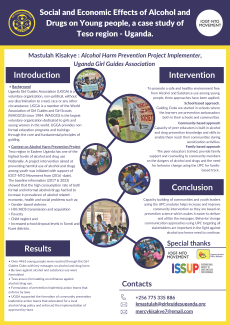
Social and Economic Effects of Alcohol and Drugs on Young People: A case study of Teso region - Uganda.
Context: Teso region in Eastern Uganda has one of the highest levels of alcohol and drug use Nationally. A project intervention aimed at preventing harmful use of alcohol and drugs among youth was initiated with support of Movendi /IOGT-NTO...
Developing a Holistic and Inclusive Competency Framework for the Addiction Workforce: Insights from a Transdisciplinary Team of Addiction Professionals
INTRODUCTION: The addiction workforce encompasses a diverse group of professionals across various sectors, such as prevention, harm reduction, treatment, and recovery. Training for this workforce is highly variable both at local and...
Addictology
Issue 1/2025
El Poder de Contar Historias
ISSUP Global, en colaboración con Faces & Voices of Recovery, presenta su seminario web, "El Poder de Contar Historias".
Fellowship in the International Academy of Addictions Nursing
Mission & Purpose
The mission of the FIAAN Leadership Assembly is to promote the vision of IntNSA’s high standards of addiction nursing care by advancing and disseminating addiction science through evidence-based practice, education...
Development of Curricula and Sustainability of University-Based Master’s Programmes in Addiction Studies: A Pilot Comparative Study
INTRODUCTION:
Addiction studies programmes are very diverse around the world. To respond to the public health perspective needs to decrease problems related to drug use, empowering the addiction workforce in a sustainable way is a relevant...
Addictology
Issue 3/2024
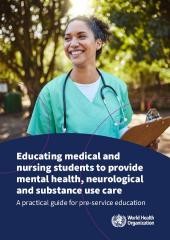
Educating medical and nursing students to provide mental health, neurological and substance use care: A practical guide for pre-service education
Pre-service education sets the foundation for preparing health professionals to provide services within health systems. Educating medical and nursing students to provide mental health, neurological and substance use care: A practical guide...
Gestión de los servicios de tratamiento de los trastornos por consumo de sustancias en línea con los “Estándares Clave de Calidad” internacionales: Manual para gestores
Este recurso está diseñado para ayudar a líderes y gestores a aplicar en la práctica las tecnologías actuales sobre "lo que funciona" y sobre lo que constituye una gestión eficiente y ética en el tratamiento de drogas.
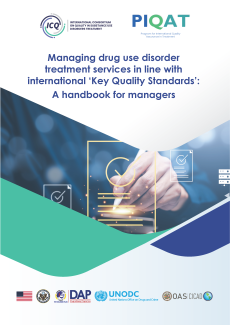
Gestión de los Servicios de Tratamiento de los Trastornos por Consumo de Sustancias en Línea con los ‘Estándares Clave de Calidad’ Internacionales.
ISSUP and the International Consortium on Quality (ICQ) present the launch webinar of Managing Drug Use Disorder Treatment Services in Line with International ‘Key Quality Standards’: A Handbook for Managers.
Supporting the Journey: A Reading List for Addiction Nurses
As we celebrate International Nurses Week, we honour the dedication, expertise, and compassion of nurses around the globe—especially those working on the frontlines of substance use prevention, treatment, and recovery support. Addiction nurses play a crucial role not only in clinical care but also in education, advocacy, and research.

Evidence-Based Nursing Practice and Drug Demand Reduction
In Recognition of Nurses’ Week (May 6–12, 2025)
This global health, nursing-led initiative highlights the vital role of nurses in addressing substance use disorders (SUD) through evidence-based practice. The effort promotes improved health...

Lifelong learning and nurses’ continuing professional development, a metasynthesis of the literature
Background
Continuing Professional Development (CPD) is important for helping nurses keep their skills and knowledge up to date. While it’s well known that CPD is essential, we know less about how nurses feel about it and what challenges or...

In-country INEP Plus Training by ISSUP Malaysia: Journey and Lessons
ISSUP Malaysia presents its webinar: "In-country INEP Plus Training: Journey and Lessons"
Responding to an International Need: INEP Plus
The Introduction to Evidence Based Prevention (INEP) provides learners with the essential principles of substance use prevention. Developed by Charles University (CUNI) in Prague, the course content is based on the European adaptation of...

Experiences of UTC-Trained Addiction Professionals
INTRODUCTION: In response to the emerging recognition of the need for Evidence-Based Practices (EBPs) for treating PSUDs, the Universal Treatment Curriculum (UTC) was conceptualised as a training series that is being conducted globally...
Addictology
Issue 1/2024