

Search
 Law Enforcement
The activities of authorised agencies such as police, customs, border services, and investigative bodies to enforce drug control laws and address criminal activities related to the production, trafficking, and distribution of illicit substances. These activities may include investigations, intelligence gathering, interdiction, and collaboration with national and international partners to disrupt organised crime networks. Law enforcement plays an important role in protecting public safety and maintaining the rule of law, and is most effective when coordinated with broader public health, prevention, treatment, and recovery efforts as part of a balanced and comprehensive response to substance use.

Substance use disorders in prisoners: an updated systematic review and meta-regression analysis in recently incarcerated men and women
Abstract
Aims
The aims were to (1) estimate the prevalence of alcohol and drug use disorders in prisoners on reception to prison and (2) estimate and test sources of between study heterogeneity.
Methods
Studies reporting the 12-month...
Global Estimates of the Prevalence of Depression among Prisoners: A Systematic Review and Meta‐analysis
Background. Prison populations tend to be marginalized and disadvantaged of the rights and freedoms that other people in the community benefit from. Their separation from families, a narrow room and lack of privacy in the prison, violence...
Indicators of Mental Health Problems Reported by Prisoners and Jail Inmates, 2011–12
About 1 in 7 state and federal prisoners (14%) and 1 in 4 jail inmates (26%) reported experiences that met the threshold for serious psychological distress (SPD) in the 30 days prior to a survey conducted between February 2011 and May 2012...
Severe mental illness and substance use disorders in prisoners in low-income and middle-income countries: a systematic review and meta-analysis of prevalence studies
Summary
Background
Although more than two thirds of the world's incarcerated individuals are based in low-income and middle-income countries (LMICs), the burden of psychiatric disorders in this population is not known. This review...
The prevalence of comorbid serious mental illnesses and substance use disorders in prison populations: a systematic review and meta-analysis
Summary
Background
Comorbid mental illnesses and substance use disorders are associated with adverse criminal, social, and health outcomes. Yet, their burden is not reliably known among prison populations. We therefore aimed to estimate...
Prevalence of severe mental illness among people in prison across 43 countries: a systematic review and meta-analysis
Summary
Background
Prison populations have been increasing worldwide. Previous studies suggest that there is a high burden of psychiatric morbidity in people in prison, but, to our knowledge, the last published meta-analysis of prevalence...
UNODC World Drug Report 2025: Global instability compounding social, economic and security costs of the world drug problem
A new era of global instability has intensified challenges in addressing the world drug problem, empowering organized crime groups and pushing drug use to historically high levels, says the UN Office on Drugs and Crime (UNODC) in the World Drug Report 2025 launched today.
Transforming Primary Care in Lagos: How SBIRT Training is Addressing Nigeria's Substance Use Crisis
Breaking barriers and building capacity in Africa's most populous city.

What is the ISSUP Nurses Network?
A New Era for the ISSUP Nurses Network: Rekindling a Global Force for Addiction Care

Towards an Empowered Future
As the first quarter of 2025 comes to an end, the ISSUP Philippine Chapter continues to strengthen its partnerships and broaden its influence across national and international platforms. The past months have been marked by crucial...
The changing DNA of serious and organised crime
Europol’s EU Serious and Organised Crime Threat Assessment (EU-SOCTA) 2025, published today, reveals how the very DNA of crime is shifting – reshaping the tactics, tools and structures employed by criminal networks.
The EU-SOCTA offers one...

Release of Global Coalition to Address Synthetic Drug Threats Report
The latest report from the Global Coalition to Address Synthetic Drug Threats highlights the significant progress made since its launch in July 2023.

Teacher Training Program Series - Collage of Teacher Training, Sariputta
Preventive Education and Training Division of National Dangerous Drugs Control Board collaborate with Collage of Teacher Training – Sariputta has Conducted three one day training programs on 09th ,10th and 11th of December 2024 at...

Teacher Training Program Series - Collage of Teacher Training, Sariputta
Preventive Education and Training Division of National Dangerous Drugs Control Board collaborate with Collage of Teacher Training – Sariputta has Conducted three one day training programs on 09th ,10th and 11th of December 2024 at...

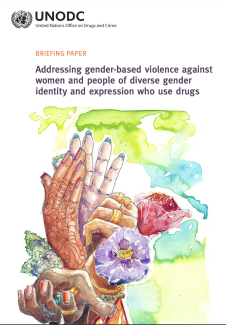
Addressing gender-based violence against women and people of diverse gender identity and expression who use drugs
This briefing paper aims to raise awareness about the widespread and severe impact of GBV on women and people of diverse gender identity and expression who use drugs, as well as the strong connection between GBV and the HIV epidemic within...
Prevention Program Series - Mahaweli System "E" and "Digana" - Sri Lanka
National Dangerous Drugs Control Board has collaborated with Mahaweli Authority of Sri Lanka to enhance the quality of lives their farmers and reduce the use of substance in their areas since 2016.
In 2024 November, Mahaweli Authority of...

Prevention Program Series - Mahaweli System "E" and "Digana" - Sri Lanka
National Dangerous Drugs Control Board has collaborated with Mahaweli Authority of Sri Lanka to enhance the quality of lives their farmers and reduce the use of substance in their areas since 2016.
In 2024 November, Mahaweli Authority of...

Community-based prevention systems
Community-based models form an important component in alcohol, tobacco and illicit drug (substance) abuse prevention systems. Community models target both place-based communities and distinct sub-populations (e.g., defined by common...

Community-based prevention systems
Community-based models form an important component in alcohol, tobacco and illicit drug (substance) abuse prevention systems. Community models target both place-based communities and distinct sub-populations (e.g., defined by common...

Why Systemic Change, Not Personal Willpower Is Key To Prevention
Systemic Change, Not Personal Willpower, Is Key to Preventing Substance Use and Addiction
The traditional view of prevention focusing solely on individual behavior change and decision-making skills is inadequate. While individual...