
Search
 Regulatory Control of Substances
The legal and administrative systems used to manage the classification, production, distribution, prescribing, and availability of controlled substances. These regulatory frameworks aim to ensure that substances with psychoactive properties are safely produced, distributed, and used for legitimate medical and scientific purposes, while preventing diversion, misuse, and illegal distribution. Regulatory control may include drug scheduling, licensing of manufacturers and prescribers, prescription monitoring systems, import and export controls, and pharmaceutical supply oversight. These mechanisms help balance access to essential medicines with the protection of public health and safety.
WHO Expert Committee on Drug Dependence: forty-eighth report
The forty-eighth meeting of the WHO Expert Committee on Drug Dependence (ECDD) was convened from 20 to 22 October 2025 and was coordinated from WHO headquarters in Geneva. The forty-eighth WHO ECDD critically reviewed four substances...
Organized crime groups: A systematic review of individual-level risk factors related to recruitment
Background:
Studies from multiple contexts conceptualize organized crime as comprising different types of criminal organizations and activities. Notwithstanding growing scientific interest and increasing number of policies aiming at...

Strengthening Public Health and Security in the new African Union Strategy and Plan of Action on Drug Control and Crime Prevention
ISSUP Global, in collaboration with the African Union, presents a webinar on Strengthening Public Health and Security: African Union Strategy and Plan of Action on Drug Control and Crime Prevention.
Is it time for Bangladesh to rejig its rehabilitation policies on mobile addiction in children
Just the other day a distraught parent came into my office looking for a rehab center for their teen. The crisis was not substance abuse but smartphone addiction. The situation has reached a level where the child experiences a great deal of...
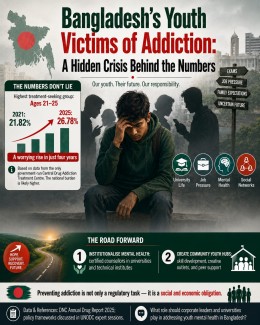
Bangladesh’s Youth Victims of Addiction: A Hidden Crisis Behind the Number
Introduction
In Bangladesh, drug addiction has ceased to be only a law enforcement problem. It has become a serious social and psychological disaster. Its principal victims are the most promising population of the country: the youth. A...
The New Drug World: Strengthening Collaboration to Address Synthetic Drug Threats
This report examines how the rapid growth of synthetic drug markets is transforming the global drug landscape and challenging traditional approaches to drug control. Unlike plant-based drugs such as cocaine and heroin, synthetic drugs can...
Bangladesh’s Youth Victims of Addiction: A Hidden Crisis Behind the Number
Introduction
In Bangladesh, drug addiction has ceased to be only a law enforcement problem. It has become a serious social and psychological disaster. Its principal victims are the most promising population of the country: the youth. A...
Beyond Borders: Is the Synthetic Drug Crisis Outrunning Our Public Health Infrastructure
I had the chance to review a compelling research presentation hosted by the International Society of Substance Use Professionals (ISSUP), which revealed significant data from a large-scale study on methamphetamine (‘Crystal Meth/Ice’) use...
The Invisible Crisis: Female Substance Use Disorder, Psychological Trauma, and Policy Gaps in Bangladesh.
Although the public health theme often dominates conversations on Substance Use Disorder (SUD) in Bangladesh, an important and strongly gendered factor is dangerously obscured: female substance use. What was once a hushed family secret...

Suboxone, Kratom, and 7-Hydroxymitragynine (7-OH): A Guide to Withdrawal Risks, Buprenorphine Treatment, and Clinical Considerations
Kratom, 7-OH, and Suboxone: Withdrawal, Blocking Effects, and Treatment Options
Quick answer: Yes, Suboxone can block the effects of kratom because buprenorphine binds strongly to the brain’s opioid receptors. However, taking Suboxone too...
Advancing Drug Policy, Mental Health, and Tobacco Control
From Stigma to Treatment: A Forum on Medical Cannabis Legalization in the Philippines
The University of the Philippines Law Center Institute of Human Rights (UP IHR) hosted the public forum "From Stigma to Treatment: A Forum on Medical...
Drug production and precursors — EUDA ongoing activities
The European Union Drugs Agency (EUDA) continues to monitor illicit drug production and precursor chemicals across Europe to improve understanding of how drug markets are evolving. Production within the European Union is primarily focused...
Highlights from the 2026 UNODC World Drug Report
This webinar highlighted key findings from the 2026 edition of the UNODC World Drug Report. The session was presented by Giovanna Campello, Chief of the Prevention, Treatment and Rehabilitation Section at the United Nations Office on Drugs and Crime (UNODC).
2025 National Drug Threat Assessment (NDTA) - Drug Enforcement Administration (DEA)
The U.S. Drug Enforcement Administration (DEA) has released its 2025 National Drug Threat Assessment (NDTA), providing an overview of the threats posed by illicit drugs and the transnational criminal organizations involved in their production and trafficking. The report highlights the continuing impact of synthetic drugs, particularly fentanyl and methamphetamine, on public health, public safety, and national security.
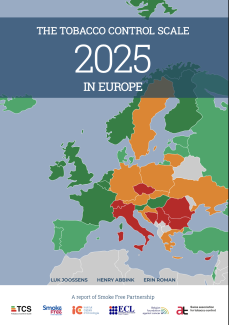
The Tobacco Control Scale 2025 in Europe
The Tobacco Control Scale 2025 shows that progress in tobacco control across Europe has slowed, with more countries recording lower scores than in previous years. Key reasons include the failure to regulate heated tobacco products in the same way as cigarettes and the lack of adjustments to tobacco taxes and prices to keep pace with inflation.
NEW Security Document Examination module in the UN Toolkit on Synthetic Drugs
UNODC has launched a new Security Document Examination module within the UN Toolkit on Synthetic Drugs, developed in collaboration with the UNODC Laboratory and Scientific Services. The module aims to help law enforcement, border control...
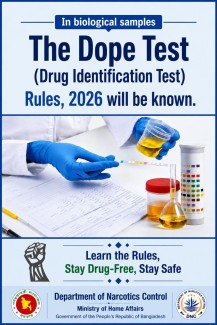
The Dope Test
Understanding Drug Testing
What Is a Drug Test?
A drug test is the scientific analysis of biological samples to determine whether narcotic drugs, psychoactive substances, or their metabolites are present in the body. Samples may include...
EU controls nine drug precursors following first EUDA assessments
The European Commission has introduced new controls on nine high-risk chemical precursors used in illicit drug production under Delegated Regulation (EU) 2026/314. Most of these substances are linked to synthetic cathinones, while one is...
2026 National Drug Control Strategy - The White House
The 2026 National Drug Control Strategy outlines a comprehensive roadmap to reduce illicit drug use and protect communities across the United States. It prioritizes stopping the flow of drugs and precursor chemicals at all borders through...
Policy Brief: Scam Centres – Combating a Global Phenomenon
Short Summary
Scam centres are a fast-growing global organized crime threat, generating over $1 trillion in losses in 2024. They use technology and psychological manipulation to target victims worldwide, supported by global criminal...