


Search
Connecting Evidence, Prevention, Law Enforcement and Community Action: Key Insights from ISSUP 2026
How do we go about translating evidence into effective action, strengthen prevention, address drug-related crime, improve access to treatment and recovery support, and build safer, healthier communities?
This age-old question was explored...

Addressing Youth Substance Use and Crime: Risk Factors and Strategies
Protecting young people from substance use and crime: building safer communities and pathways to support
Young people's involvement in substance use and crime cannot be understood without considering the environments in which they grow up...
Protecting young people from recruitment into criminal drug networks: Research gaps and priorities for stronger prevention and intervention in the European Union
Safe futures is an initiative supported by the European Union Drugs Agency to strengthen shared understanding of, and responses to, the recruitment and exploitation of young people into criminal drugs networks across Europe. The initiative...
Handbook on the crime prevention guidelines: Making them work
The present Handbook is one of a series of practical tools developed by the United Nations Office on Drugs and Crime (UNODC) to support countries in the implementation of the standards and norms in crime prevention and criminal justice...
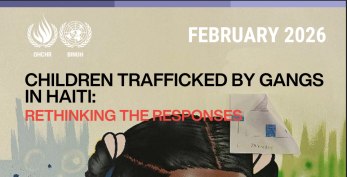
Children Trafficked by Gangs in Haiti: Rethinking the Responses
This joint report by the United Nations Integrated Office in Haiti (BINUH) and the Office of the United Nations High Commissioner for Human Rights (OHCHR) examines the trafficking and exploitation of children by gangs in Haiti. It...
Organized crime groups: A systematic review of individual-level risk factors related to recruitment
Background:
Studies from multiple contexts conceptualize organized crime as comprising different types of criminal organizations and activities. Notwithstanding growing scientific interest and increasing number of policies aiming at...

Rehabilitation and Re-entry Programmes for Justice-Involved Individuals and Their Effectiveness in Social Reintegration: A Systematic Review
Prison rehabilitation and community re-entry programmes implemented during incarceration or in the transitional period serve as significant mechanisms for facilitating justice-involved individuals in their post-release adaptation. This...

Drug Diversion Schemes Linked to Lower Reoffending Rates, New Research Finds
New research examining more than 62,000 criminal incidents across 13 police forces in England found that police-led drug diversion schemes are associated with significantly lower reoffending rates than traditional prosecution for drug...

Do Drug Diversion Schemes Work? Insights from the Thames Valley Police Drugs Diversion Pilot
This paper examines the development and early outcomes of the Thames Valley Police Drugs Diversion Pilot in West Berkshire, which offers people found in possession of drugs an opportunity to engage with treatment rather than receive a...

The introduction of drug Arrest Referral schemes in London: A partnership between drug services and the police
Arrest Referral (AR) schemes in London were established to connect people who use drugs with treatment services at the point of arrest through collaboration between police and drug service providers. Based on interviews with police officers...

Heroin Trafficking Along the Northern and Southern Routes: Emerging Trends and Strategic Implications
This paper examines how heroin trafficking routes from Afghanistan into Europe have evolved following the Taliban's return to power in 2021. It explores the changing dynamics of the northern and southern trafficking routes, highlighting how...
The Role of Faith Communities in Addressing Substance Use and Crime – Reading List (Part 2)
In this second reading list, we continue exploring the growing evidence on the role and contribution of faith communities and faith-based organisations in addressing substance use and crime, with a particular focus on treatment engagement...

Association Between Religiosity and Spirituality and Cocaine Use: A Systematic Review
This systematic review examines the association between religiosity, spirituality, and cocaine use by analysing findings from 20 observational studies involving adults and adolescents. Most studies found that higher levels of religiosity...

Religion, Crime, and Criminal Justice
This chapter reviews the evidence on the relationship between religion, crime, and the criminal justice system. It highlights a growing body of research showing a consistent inverse association between religiosity and criminal behaviour...

Measuring gang membership in England and Wales: A latent class analysis with Eurogang survey questions
This study examines how gang membership is measured among young people using the Eurogang Network’s survey approach. Drawing on nationally representative data from England and Wales, the researchers used statistical analysis to identify...
Protecting Youth from Mexican Drug Cartel Recruitment: The Prospects of Educational Interventions
This investigation considers the impact of Mexico’s War on Drugs since 2006 and the influence of widespread cartel networks on the youth population. As both victims and perpetrators of drug-related crime, the young individuals of Mexico are...
Recruitment of minors into organised crime
The recruitment of minors into serious and organised crime has increasingly become a tactic used by criminal networks to avoid detection, capture and prosecution. By using minors, the criminal networks increase the distance between the...
Addressing the recruitment of young people into criminal drugs networks
This report examines how and why young people are recruited into criminal drug networks across Europe. It highlights the range of factors that can increase vulnerability to recruitment, including social and economic disadvantage, peer...
Faith-Based Interventions for Reducing Gang Violence in the Caribbean: Reflections from a Professor and a Priest
This book chapter explores the role of faith-based interventions in preventing and reducing gang violence in Trinidad and Tobago. Drawing on the experiences of a criminologist and a religious leader, it argues that gang violence should be...
Religiosity and crime: Evidence from a city-wide shock
This study examines the relationship between religiosity and crime using data from the 2015 visit of Pope Francis to Philadelphia. By analysing daily crime reports before, during, and after the visit, the researchers found a significant...