
From Rooftop Parties to Overdoses: Medellín’s Growing Tusi Emergency
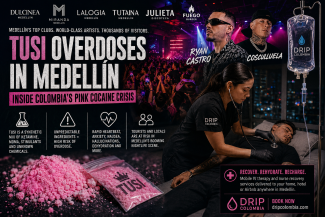
Medellín’s Cocaine Economy and the Human Cost Behind the Headlines
An investigative look into cocaine culture, nightlife tourism, addiction, and the growing recovery movement emerging in Medellín, Colombia.
Medellín has spent years rebuilding its global image. Once internationally associated almost exclusively with cartel violence and cocaine trafficking, the city is now promoted as a center for innovation, tourism, nightlife, luxury development, and entrepreneurship.
Every month, thousands of international visitors arrive looking for rooftop parties, reggaeton concerts, electronic music festivals, luxury Airbnb apartments, and Medellín’s increasingly famous nightlife scene.
But beneath the social media content and tourism boom, addiction and cocaine-related substance abuse continue affecting vulnerable communities throughout the city.
Public health workers, addiction specialists, and harm reduction advocates warn that Medellín now faces a complicated dual reality: a booming entertainment economy alongside growing mental health challenges, synthetic drug use, stimulant dependency, and nightlife-related medical emergencies.
The Evolution of Cocaine Culture in Medellín
Cocaine has long shaped Medellín’s international identity, but today the drug culture surrounding the city looks very different from previous decades.
Instead of large-scale cartel violence dominating headlines, modern cocaine culture is increasingly connected to:
- Nightlife tourism
- Luxury party culture
- Synthetic party drugs
- Digital nomad tourism
- Social media influence
- Private party economies
- Underground nightlife scenes
In tourist-heavy areas like El Poblado and Provenza, nightlife environments often expose both visitors and locals to cocaine, Tusi (pink cocaine), ketamine, MDMA, and other stimulant mixtures.
Many users underestimate the physical and psychological risks associated with repeated stimulant consumption, especially when combined with alcohol, dehydration, sleep deprivation, and synthetic substances.
The Hidden Public Health Crisis
While Medellín’s nightlife economy generates millions in tourism revenue, addiction specialists increasingly warn that stimulant abuse is contributing to a growing public health challenge affecting both affluent nightlife users and vulnerable populations.
Cocaine use can contribute to:
| Short-Term Risks | Long-Term Risks |
|---|---|
| Rapid heart rate | Cardiovascular disease |
| Anxiety and panic attacks | Depression and emotional instability |
| Sleep deprivation | Neurological decline |
| Paranoia | Substance dependency |
| Dehydration | Social isolation |
| Impulsive behavior | Mental health deterioration |
Public health workers report increasing cases involving exhaustion, panic attacks, psychosis, dehydration, stimulant crashes, and dangerous drug combinations involving cocaine and synthetic substances.
Substance Abuse and Vulnerable Communities
Outside Medellín’s luxury nightlife districts, cocaine-related addiction also affects many vulnerable populations struggling with poverty, homelessness, trauma, displacement, and untreated mental illness.
Cheap smokable cocaine products such as basuco continue impacting marginalized neighborhoods throughout Colombia.
Addiction experts increasingly emphasize that substance abuse cannot be separated from larger issues involving:
- Economic inequality
- Housing instability
- Trauma
- Violence
- Mental health access
- Social exclusion
Many individuals battling stimulant addiction are also coping with severe emotional distress, family instability, and lack of long-term healthcare support.
The Rise of Harm Reduction and Recovery Services
As nightlife-related medical emergencies and stimulant-related health issues increase, Medellín has also seen growing demand for harm reduction services, wellness recovery support, and private healthcare alternatives.
Harm reduction focuses on reducing preventable physical harm while encouraging individuals to seek long-term recovery treatment and mental health support.
| Recovery Support | Purpose |
|---|---|
| Mental Health Counseling | Addresses anxiety, trauma, and emotional instability |
| Addiction Treatment Programs | Supports long-term recovery and rehabilitation |
| Hydration and Wellness Support | Helps address dehydration and physical exhaustion |
| Street Outreach | Connects vulnerable populations with healthcare services |
| Housing Assistance | Improves recovery stability and reintegration |
Private Recovery and Mobile Wellness Services in Medellín
Medellín’s expanding tourism economy has also created demand for private wellness and mobile recovery services designed for travelers and nightlife visitors experiencing exhaustion, dehydration, and stimulant-related physical stress.
Companies such as Drip Colombia mobile IV therapy in Medellín provide nurse-administered hydration and wellness support delivered directly to hotels, luxury apartments, and Airbnb properties throughout the city — you can also find Drip Colombia on Google Maps for hours and reviews.
These services are commonly used after extended nightlife sessions, alcohol consumption, dehydration, or stimulant-related exhaustion.
While IV therapy is not a treatment for addiction or overdose, healthcare professionals note that hydration support and wellness monitoring may help reduce immediate physical stress while encouraging individuals to seek proper medical and psychological care.
Can Medellín Balance Tourism and Public Health?
Medellín’s rapid growth as an international nightlife destination presents both economic opportunities and public health challenges.
Tourism, entertainment, and nightlife continue generating major revenue for the city, but addiction specialists warn that sustainable growth also requires stronger investment in:
- Mental health infrastructure
- Addiction recovery services
- Public health education
- Harm reduction programs
- Healthcare accessibility
- Support for vulnerable populations
Medellín’s future depends not only on economic development but also on how effectively the city supports recovery, mental health care, and long-term community stability.
Frequently Asked Questions About Cocaine and Recovery in Medellín
Why is cocaine use associated with Medellín nightlife?
Medellín’s global nightlife tourism industry has increased exposure to stimulant use, party drugs, and synthetic substances in entertainment environments.
What is Tusi or pink cocaine?
Tusi is usually a synthetic party drug mixture that may contain ketamine, MDMA, stimulants, or other unknown chemicals.
What are signs of stimulant overuse?
Symptoms may include anxiety, paranoia, panic attacks, dehydration, rapid heartbeat, hallucinations, insomnia, and psychological instability.
What is harm reduction?
Harm reduction focuses on reducing preventable health risks while encouraging long-term treatment and recovery support.
What is mobile IV therapy in Medellín?
Mobile IV therapy services provide hydration and wellness support delivered by nurses directly to homes, hotels, and Airbnb locations.
What is Drip Colombia?
Drip Colombia is a mobile nurse wellness company in Medellín providing hydration IV therapy and recovery support throughout the city.
Luxury Airbnb Culture and Medellín’s Nightlife Economy
Medellín’s nightlife growth is also closely connected to the rise of luxury Airbnb tourism, influencer travel culture, bachelor parties, private events, and short-term mansion rentals throughout the city.
High-end villas, penthouses, and party properties in neighborhoods such as El Poblado and Provenza have become central parts of Medellín’s tourism economy, attracting international visitors looking for exclusive nightlife experiences.
Properties such as the BNZ Mansion and Luxury Airbnb Mansion Medellin have become associated with Medellín’s growing luxury travel and nightlife scene, hosting private events, influencer gatherings, content creators, music artists, and international guests visiting the city.
While luxury tourism contributes significantly to Medellín’s economy, healthcare workers and harm reduction advocates also warn that high-energy nightlife environments can increase exposure to excessive alcohol consumption, stimulant use, sleep deprivation, and synthetic party drugs such as Tusi.
Long nightlife sessions combined with dehydration, alcohol, cocaine, or synthetic substances may create serious physical stress and increase the risk of panic attacks, exhaustion, cardiovascular strain, and overdose-related emergencies.
As a result, private wellness and recovery services throughout Medellín have expanded rapidly to support tourists, nightlife travelers, and visitors staying in luxury Airbnb properties across the city.