
What Does ❄️ Mean in Drug Slang? Snowflake Emoji and Cocaine
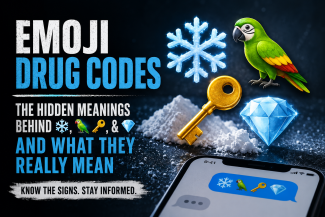
Common Emoji Drug Codes Associated with Cocaine
People searching for terms like ❄️ meaning drugs, 🦜 emoji meaning, 🔑 drug slang, or 💎 cocaine emoji are often trying to understand whether emojis in a text message or social media post could be related to drug slang. While emojis can have many innocent meanings, some have also been adopted as coded language in online drug conversations.
Although no single emoji proves drug use or drug trafficking, some emojis have become commonly associated with cocaine in certain online conversations. Their meaning always depends on the surrounding context, including the conversation, platform, and accompanying text.
❄️ Snowflake Emoji Meaning in Drug Slang
The ❄️ snowflake emoji is one of the best-known emoji references to cocaine because "snow" has long been a street name for the drug. The emoji may appear in text messages, direct messages, or social media posts discussing cocaine. However, it can also simply refer to winter, weather, or holidays, so context is essential.
🦜 Parrot Emoji Meaning in Drug Slang
In texting and social media, the 🦜 parrot emoji is frequently used as a secret code to represent cocaine. It is often used alongside other drug-related emojis like the ❄️ snowflake, 🔑 key, or 💎 diamond to signify the substance or to arrange illicit transactions.
In Colombia and other parts of Latin America, cocaine is commonly known by the slang term perico, which literally translates to "parrot." This linguistic connection explains why the 🦜 parrot emoji may appear in cocaine-related conversations. Other regional slang terms, including escama and Pablito, may also be encountered, although slang varies between regions and communities.
🔑 Key Emoji Meaning in Drug Slang
In the context of illicit drug slang, the 🔑 key emoji most commonly refers to cocaine or a kilo of drugs. It is a very common symbol used in coded messages for buying and selling contraband.
💎 Diamond Emoji Meaning in Drug Slang
The 💎 diamond emoji may also be used to represent cocaine, often suggesting purity, value, or the appearance of a white crystalline substance. Like other emoji slang, its meaning depends on the surrounding conversation.
What emoji represents cocaine?
Cocaine: Various snowflake (❄️) or diamond (💎)emojis can imply cocaine. Methamphetamine: Crystals or blue hearts sometimes signify meth. Marijuana: Represented by trees, clover, or smoke emojis
What is the emoji code for cocaine?
There are many emojis used when talking about cocaine, with the most common being snowflake (❄️), snow cloud (🌨️), and parrot (🦜) emojis.
What Are Other Names for Cocaine in Spanish?
In Spanish-speaking countries, cocaine is known by many street names that vary by region. One of the most common terms is "escama," short for "escama de pescado" ("fish scale"), which typically refers to exceptionally high-purity cocaine.
Escama (Fish Scale Cocaine)
The nickname escama comes from the drug's appearance. Highly refined cocaine can form shiny, pearly flakes that resemble the reflective scales of a fish, giving rise to the English slang term "fish scale cocaine."
Unlike lower-quality street cocaine, which is often diluted with other substances, cocaine sold as escama is marketed as being significantly more pure. However, there is no guarantee that any cocaine sold under this name is actually high purity. Illicit drugs are frequently mixed with unknown adulterants, including levamisole, local anesthetics, synthetic stimulants, or fentanyl, making potency and composition unpredictable.
Because products marketed as escama may contain higher concentrations of cocaine—or dangerous contaminants—they carry an increased risk of:
-
Overdose
-
Heart attack and stroke
-
Seizures
-
Sudden cardiac arrest
-
Accidental poisoning from undisclosed substances
- ❄️ Copo de nieve: El más utilizado para representar la cocaína en polvo.
- 👃 Nariz: Hace alusión directa a la vía de consumo habitual de esta sustancia.
- ⛽ Bomba de gasolina o 🔌 Enchufe: Representan el "gas", la "energía" o la conexión para conseguir la droga.
- 🐎 Caballo: Referencia al "caballo" (nombre coloquial que también se le da a la heroína en algunos países).
- 🐟 Pescado: Utilizado comúnmente para referirse a la cocaína de mayor pureza, conocida en la jerga como "escama de pescado".
Other Spanish Cocaine Slang
Street terminology differs across Latin America, Spain, and Hispanic communities in the United States. Common slang terms include:
-
Perico – One of the most widely used names for cocaine in Colombia, Mexico, and several other Latin American countries.
-
Coca – A shortened version of cocaine.
-
Blanca – Literally "white," referring to the drug's appearance.
-
Nieve – "Snow."
-
Harina – "Flour," describing its white powdery appearance.
-
Pablito – A less common regional nickname that references Pablo Escobar and may be used in some areas to describe cocaine. Usage varies widely and is not universally recognized.
Street slang changes constantly and often varies by city, country, and local drug markets. The same term may mean different things depending on where it is used.
Common Cocaine Emoji Meanings
| Emoji | Possible Drug Slang Meaning | Common Association | Notes |
|---|---|---|---|
| ❄️ | Cocaine | "Snow" | One of the most recognized emoji references to cocaine because "snow" is a common street name. |
| 🦜 | Cocaine | "Perico" | Used because perico is Colombian slang for cocaine and literally means "parrot" in Spanish. |
| 🔑 | Cocaine / Kilo | "Key" | Often refers to a kilogram of drugs, especially cocaine, or a drug transaction. |
| 💎 | Cocaine | Purity / Value | Sometimes used to suggest high-quality or valuable cocaine. |
| ⚪ | Cocaine | White Powder | May visually represent cocaine because of its white appearance. |
| ⛷️ | Cocaine Use | "Skiing" | References the long-standing slang phrase "going skiing." |
| 🏂 | Cocaine Use | Snowboarding | Sometimes appears with snow-related emojis in cocaine conversations. |
| ☃️ | Cocaine | Snowman | Occasionally used as another visual reference to "snow." |
| 🌨️ | Cocaine | Snowfall | Another variation of snow imagery associated with cocaine slang. |
According to the Drug Enforcement Administration, here are the other most widely used emojis that represent cocaine and drug dealing:
- ❄️ / 🌨️ / ⛄: Snowflake, Snow cloud, or Snowman – Refer to cocaine's street name, "snow."
- 🎱: Eight ball – Represents 3.5 grams (an eighth of an ounce) of cocaine.
- 🔑: Key – Represents a kilo of cocaine or the act of snorting the drug off a key.
- 💎: Diamond – Refers to the drug's value, purity, or white crystalline look.
- 🐡: Blowfish – Refers to the long-standing street name, "blow".
- 🦜: Parrot – Represents the Spanish slang perico, which translates to parrot (a common term for cocaine in Latin America).
- Note: Emojis like the electrical plug 🔌 are often used to identify a drug dealer, while emojis like the rocket 🚀 or bomb 💣 are sometimes used to advertise a product's high potency.
Cocaine is a highly addictive stimulant that poses significant health risks, including severe cardiovascular complications, respiratory issues, and potential for overdose. Recognizing these coded symbols can be a step in understanding the risks associated with online substance markets.
Important: A single emoji should never be considered proof that someone is using, buying, or selling drugs. Emoji meanings vary widely depending on the platform, culture, region, and conversation. Parents, educators, clinicians, and law enforcement should evaluate emojis alongside other behavioral, contextual, and communication patterns rather than relying on any one symbol alone.
The UNODC World Drug Report tracks global drug trends, including cocaine production, trafficking, and use patterns.
The National Institute on Drug Abuse cocaine resource explains the health risks of cocaine, addiction, and treatment considerations.
The DEA Emoji Drug Code guide explains how emojis may be used in online drug conversations and why context matters.
By Benjamin Zohar, NCACIP
Addiction Interventionist
This is for informational purposes only. For medical advice or a diagnosis, consult a professional.